Due to the war in Israel, shipments may be delayed. Thank you for standing with Israel.

Baking Shlissel Challah for Prosperity and Tradition

A Symbolic Bread for Hope and Blessings
Explore the rich tradition of Shlissel Challah, a symbolic bread baked with a key shape to invite prosperity and blessings. Learn how to create this meaningful bread at home, connecting with a cherished cultural heritage.
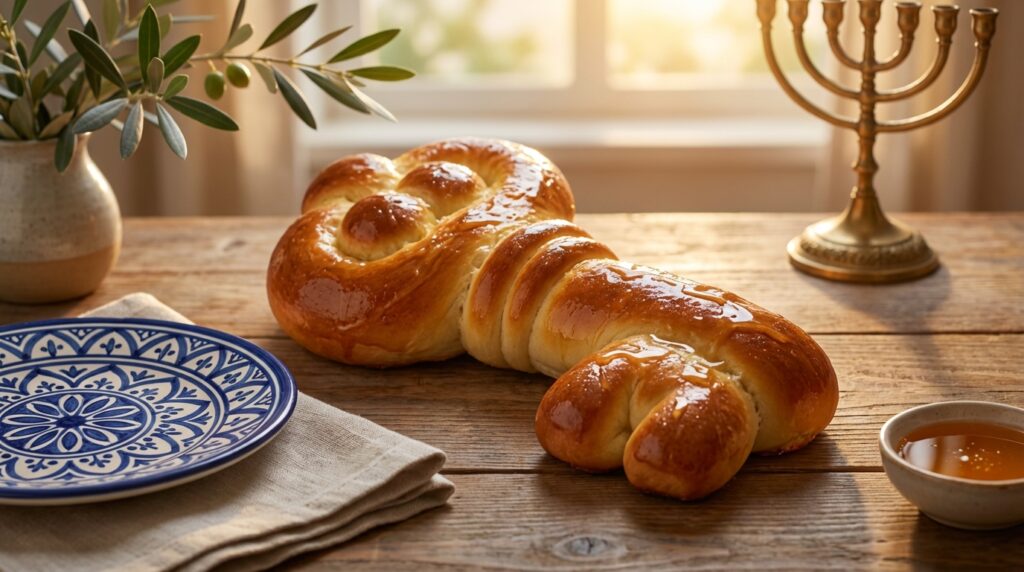
Image illustrating:Baking Shlissel Challah for Prosperity and Tradition
5
David Pliner
Culinary & Israeli Heritage Enthusiast
Discover the tradition of Shlissel Challah, a symbolic bread baked with love and hope for prosperity. Learn how to make this special challah at home.

Health Benefits of Shlissel Challah

  • Rich in carbohydrates for energy.
  • Contains protein from eggs, supporting muscle health.
  • Honey adds natural sweetness and antioxidants.

Ingredients for Shlissel Challah

All-purpose flour
6 cups
Warm water
2 cups
Active dry yeast
2 tablespoons
Sugar
1/2 cup
Salt
1 tablespoon
Eggs
3 large
Vegetable oil
1/2 cup
Honey
2 tablespoons

Chef's Tips for Perfect Shlissel Challah

For a perfect Shlissel Challah, ensure your yeast is fresh and active. Let the dough rise in a warm place until it doubles in size. When shaping the dough, be gentle to maintain its airy texture. Adding a touch of honey to the dough can enhance the flavor, giving it a subtle sweetness that complements the traditional taste.

Instructions for Making Shlissel Challah

  • 1
    1
    Prepare the Yeast Mixture
    In a large bowl, combine warm water, yeast, and a tablespoon of sugar. Stir gently and let it sit for about 10 minutes until the mixture becomes frothy.
  • 2
    2
    Mix the Dough
    In another bowl, beat the eggs and add sugar, oil, and honey. Gradually add the yeast mixture. Slowly incorporate the flour and salt, mixing until a dough forms.
  • 3
    3
    Knead the Dough
    Turn the dough onto a floured surface and knead for about 10 minutes until smooth and elastic. Place the dough in a greased bowl, cover with a damp cloth, and let it rise in a warm place for about 1.5 hours.
  • 4
    4
    Shape the Challah
    Punch down the risen dough and divide it into three equal parts. Roll each part into a long rope and braid them together. Shape the braid into a key form, tucking the ends underneath.
  • 5
    5
    Second Rise
    Place the shaped dough on a baking sheet lined with parchment paper. Cover it with a cloth and let it rise again for about 30 minutes.
  • 6
    6
    Bake the Challah
    Preheat the oven to 350°F (175°C). Brush the challah with a beaten egg for a glossy finish. Bake for 30-35 minutes until golden brown and hollow-sounding when tapped.

The Story Behind Shlissel Challah

Shlissel Challah is a unique bread baked with a key shape, symbolizing hope and prosperity.

The tradition of baking Shlissel Challah dates back centuries, rooted in the Jewish communities of Eastern Europe. This special bread is prepared during the first Shabbat after Passover, marking a time of renewal and new beginnings. The key shape is believed to open the gates of blessings, inviting prosperity into the home.
In many families, the preparation of Shlissel Challah is a cherished ritual, passed down through generations. Mothers and grandmothers teach their children the art of braiding the dough into intricate shapes, often incorporating a small key or imprinting a key shape on the top. This act is both a culinary skill and a spiritual practice, connecting the family to their heritage.
The symbolism of the key in Shlissel Challah is profound. It represents not only the opening of physical doors but also the unlocking of spiritual and emotional pathways. For many, baking this bread is an expression of faith and a reminder of the community’s resilience and hope for the future.

Shlissel Challah is more than just a bread; it’s a cultural emblem.

The ingredients used in Shlissel Challah are simple, yet each holds significance. Flour, water, yeast, and sugar come together to form a dough that rises with anticipation. The act of kneading and shaping the dough is meditative, allowing the baker to infuse their intentions and prayers into the bread.
As the challah bakes, the aroma fills the home, creating a warm and inviting atmosphere. This sensory experience is a reminder of the comfort and joy that comes from tradition. Sharing the freshly baked challah with family and friends strengthens bonds and fosters a sense of community.
In modern times, Shlissel Challah continues to be a beloved tradition, celebrated by Jewish families around the world. It serves as a link to the past, a celebration of the present, and a hope for the future. Each loaf tells a story of faith, love, and the enduring spirit of a people.
Related Recipes

FAQ

When is Shlissel Challah traditionally baked?
Shlissel Challah is traditionally baked during the first Shabbat after Passover, symbolizing hope and prosperity.
What does the key shape in Shlissel Challah represent?
The key shape symbolizes the opening of gates to blessings and prosperity.
Can I use whole wheat flour for Shlissel Challah?
Yes, you can use whole wheat flour, but it may alter the texture slightly.