Due to the war in Israel, shipments may be delayed. Thank you for standing with Israel.

Baking Shlissel Challah with Tradition and Love

A Symbolic Bread for Blessings and Prosperity
Learn to bake Shlissel Challah, a traditional bread symbolizing hope and blessings, perfect for the first Shabbat after Passover.
Image illustrating:Baking Shlissel Challah with Tradition and Love
18
David Pliner
Culinary & Israeli Heritage Enthusiast
Discover the rich tradition of Shlissel Challah, a symbolic bread baked with love and hope for blessings.

Health Benefits of Shlissel Challah

  • Rich in carbohydrates for energy.
  • Contains protein from eggs.
  • Honey adds natural sweetness.

Ingredients for Shlissel Challah

All-purpose flour
6 cups
Warm water
2 cups
Active dry yeast
2 tablespoons
Sugar
1/2 cup
Salt
1 tablespoon
Eggs
3 large
Vegetable oil
1/2 cup
Honey
2 tablespoons
Poppy seeds
for sprinkling

Chef's Tips for Perfect Shlissel Challah

To achieve the perfect texture, ensure your dough is well-kneaded and allow it to rise in a warm, draft-free area. Adding a touch of honey can enhance the sweetness and flavor of the bread.

Instructions for Baking Shlissel Challah

  • 1
    1
    Prepare the Yeast Mixture
    In a large bowl, combine warm water, yeast, and a tablespoon of sugar. Stir gently and let it sit for about 10 minutes until frothy.
  • 2
    2
    Mix the Dough
    Add the remaining sugar, salt, eggs, oil, and honey to the yeast mixture. Gradually add flour, mixing until a dough forms.
  • 3
    3
    Knead the Dough
    Transfer the dough to a floured surface and knead for about 10 minutes until smooth and elastic. Place in a greased bowl, cover, and let rise until doubled in size.
  • 4
    4
    Shape the Challah
    Punch down the dough and divide it into three equal parts. Roll each part into a long rope and braid them together, forming a key shape.
  • 5
    5
    Second Rise
    Place the shaped dough on a baking sheet lined with parchment paper. Cover and let it rise for another 30 minutes.
  • 6
    6
    Bake the Challah
    Preheat the oven to 350°F (175°C). Brush the challah with beaten egg and sprinkle with poppy seeds. Bake for 25-30 minutes until golden brown.

The Rich History of Shlissel Challah

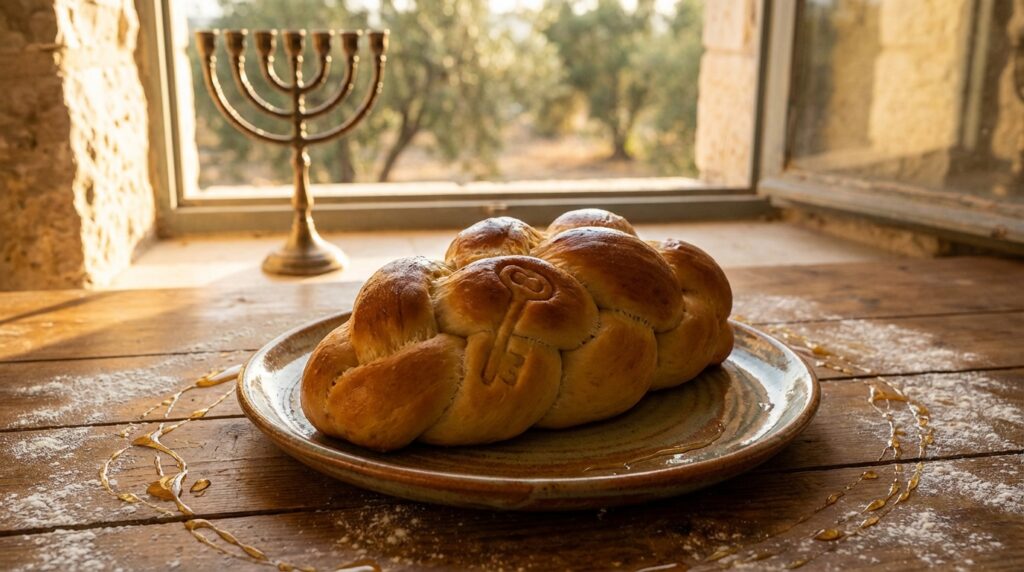
Shlissel Challah is a special bread baked with a key shape.

The tradition of baking Shlissel Challah dates back centuries, with roots in Eastern European Jewish communities. It is a practice filled with symbolism, representing the hope for sustenance and prosperity. The key shape is believed to ‘unlock’ blessings for the home, making it a cherished custom among many families.
This unique tradition is observed on the first Shabbat after Passover, a time when the Jewish community transitions from the holiday’s restrictions to a period of abundance. The challah itself is often enriched with sweet ingredients, symbolizing the sweetness of life and the hope for a prosperous year ahead.
In many households, the preparation of Shlissel Challah is a family affair, with each member participating in the baking process. This communal activity not only strengthens family bonds but also serves as a reminder of the shared heritage and cultural identity that the bread represents.

The key-shaped challah is more than just a culinary delight.

For many, the act of baking Shlissel Challah is a spiritual experience, connecting them to generations past. The aroma of freshly baked bread fills the home, creating an atmosphere of warmth and togetherness. This sensory experience is deeply rooted in the cultural memory, evoking feelings of nostalgia and continuity.
The symbolism of the key is multifaceted. It represents not only the opening of physical sustenance but also the unlocking of spiritual and emotional abundance. This dual significance makes Shlissel Challah a powerful symbol of hope and renewal.
As families gather to enjoy the bread, stories of past generations are often shared, reinforcing the cultural and familial ties that bind them. This storytelling tradition is an integral part of the Shlissel Challah experience, ensuring that the history and meaning of the bread are passed down to future generations.

Shlissel Challah is a cherished tradition in many Jewish homes.

The practice of baking this symbolic bread has been adapted and embraced by various Jewish communities worldwide. Each community adds its unique twist to the recipe, reflecting local customs and tastes while maintaining the core symbolism of the key shape.
In modern times, Shlissel Challah has gained popularity beyond traditional circles, with many people discovering its rich symbolism and delicious taste. This has led to a revival of interest in the tradition, with more families choosing to incorporate it into their Shabbat celebrations.
The resurgence of Shlissel Challah highlights the enduring appeal of cultural traditions that connect people to their roots. It serves as a reminder of the importance of preserving heritage while adapting to contemporary lifestyles.
Related Recipes

FAQ

What is Shlissel Challah?
Shlissel Challah is traditionally baked for the first Shabbat after Passover to symbolize opening the gates of sustenance.
Why is a key shape used in Shlissel Challah?
The key shape is believed to bring blessings and prosperity to the home.
Can I use whole wheat flour for Shlissel Challah?
Yes, you can use whole wheat flour, but it may alter the texture slightly.