Due to the war in Israel, shipments may be delayed. Thank you for standing with Israel.

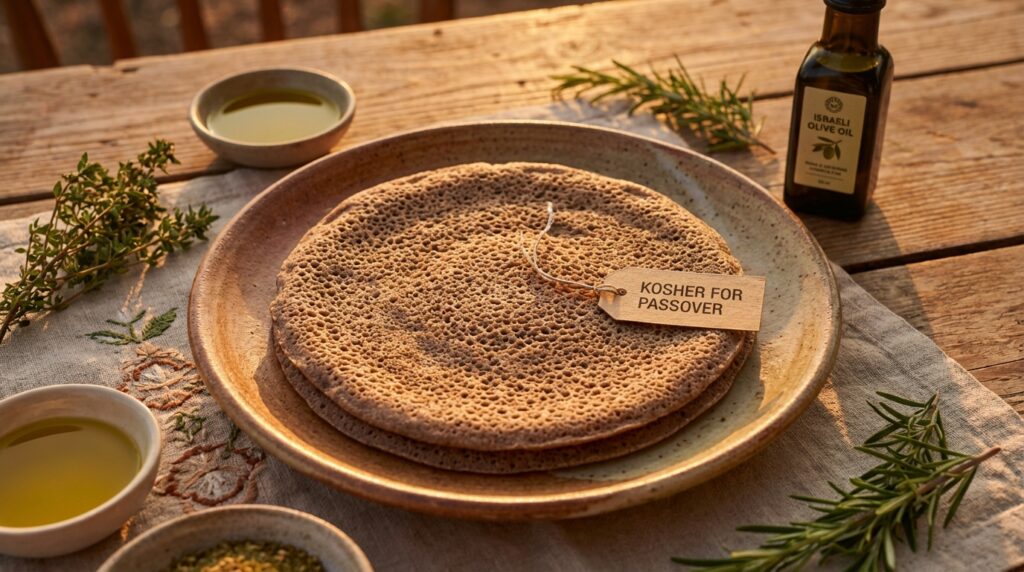
Creating Kosher for Passover Injera

A Special Twist on a Traditional Ethiopian Dish
Discover the art of making injera that fits perfectly into Passover traditions, blending cultural heritage with dietary needs.
Image illustrating:Creating Kosher for Passover Injera
5
David Pliner
Culinary & Israeli Heritage Enthusiast
Explore the unique story and preparation of injera, a traditional dish with a special twist for Passover.

Health Benefits of Teff and Injera

  • Teff is high in protein and essential amino acids.
  • Injera is gluten-free, suitable for various dietary needs.
  • Rich in iron and calcium, supporting bone health.

Ingredients for Kosher Passover Injera

Teff flour
2 cups
Water
3 cups
Salt
1 teaspoon
Oil
For cooking

Chef's Tips for Perfect Passover Injera

To ensure your injera is kosher for Passover, use certified ingredients and dedicated utensils. Experiment with different fermentation times to achieve your desired flavor.

Instructions for Making Injera

  • 1
    1
    Prepare the Batter
    In a large bowl, mix teff flour and water. Stir until smooth. Cover the bowl with a cloth and let it sit at room temperature for 2-3 days to ferment, stirring occasionally.
  • 2
    2
    Check the Fermentation
    After fermentation, the batter should have a slightly sour smell. Stir in salt. If the batter is too thick, add a little more water until it reaches a pancake batter consistency.
  • 3
    3
    Heat the Cooking Surface
    Preheat a non-stick skillet or traditional mitad over medium heat. Lightly grease with oil. Pour a ladle of batter onto the skillet, spreading it evenly.
  • 4
    4
    Cook the Injera
    Cook until bubbles form on the surface and the edges lift easily, about 2-3 minutes. Do not flip. Remove from the skillet and let cool on a clean cloth.
  • 5
    5
    Serve and Enjoy
    Repeat with the remaining batter. Serve injera with your favorite kosher for Passover stews or salads. Enjoy the unique taste and texture of this special bread.

The Journey of Injera

Injera is a staple in Ethiopian cuisine, known for its unique texture.

The origins of injera trace back to ancient Ethiopia, where it has been a dietary staple for centuries. Made primarily from teff flour, it offers a unique, slightly sour taste that complements a variety of dishes. Its spongy texture is perfect for soaking up rich stews and sauces, making it an integral part of Ethiopian meals.
Teff, the primary ingredient in injera, is a tiny grain that packs a nutritional punch. It is high in protein, calcium, and iron, making it an excellent choice for a healthy diet. The cultivation of teff dates back thousands of years, and it remains a vital crop in Ethiopian agriculture today.
Traditionally, injera is made by fermenting the teff flour batter, which gives it its characteristic tangy flavor. This fermentation process is similar to that of sourdough bread, creating a natural leavening that results in the bread’s airy texture. The batter is then cooked on a large, flat griddle called a mitad.

For Passover, injera can be adapted to meet kosher requirements.

To make injera kosher for Passover, careful attention must be paid to the ingredients. Teff flour is naturally gluten-free, which aligns with Passover dietary restrictions. However, it is crucial to ensure that all ingredients, including water and any additional flavorings, are certified kosher for Passover.
The preparation of kosher for Passover injera involves a similar process to traditional injera, but with a focus on maintaining kosher standards. This includes using utensils and cooking surfaces that are kosher for Passover, as well as adhering to any specific community guidelines regarding fermentation and preparation.
Incorporating injera into Passover meals offers a delightful way to explore cultural diversity while adhering to dietary laws. Its unique flavor and texture provide a refreshing alternative to more traditional Passover dishes, allowing families to enjoy a taste of Ethiopian heritage during the holiday.

Injera’s versatility makes it a beloved dish worldwide.

Beyond Passover, injera continues to be a popular choice for those seeking gluten-free options. Its ability to pair with a wide range of flavors makes it a versatile addition to any meal. Whether served with spicy stews or fresh salads, injera’s unique qualities make it a favorite among food enthusiasts.
The global appreciation for injera has led to its inclusion in various culinary traditions. Chefs and home cooks alike experiment with different toppings and fillings, showcasing injera’s adaptability. This cross-cultural exchange enriches the culinary landscape, bringing people together through shared experiences and flavors.
As more people discover the benefits of teff and the deliciousness of injera, its popularity continues to grow. This ancient bread not only connects us to Ethiopian culture but also offers a nutritious and satisfying option for diverse dietary needs.

Related Recipes

FAQ

What is injera?
Injera is a traditional Ethiopian flatbread made from teff flour, water, and sometimes yeast. It is a staple in Ethiopian cuisine.
Is injera gluten-free?
Injera is typically made with teff, which is gluten-free. However, for Passover, ensure all ingredients are kosher for Passover.
Can injera be kosher for Passover?
Yes, injera can be made kosher for Passover by using teff flour and ensuring all ingredients are certified kosher for Passover.
What is teff?
Teff is a small grain native to Ethiopia, known for its high nutritional value and gluten-free properties.
How is injera typically served?
Injera is often served with stews and salads, making it a versatile and delicious part of many meals.