Creating a Traditional Sesame Seed Dish for Passover
7 May 10:34
243
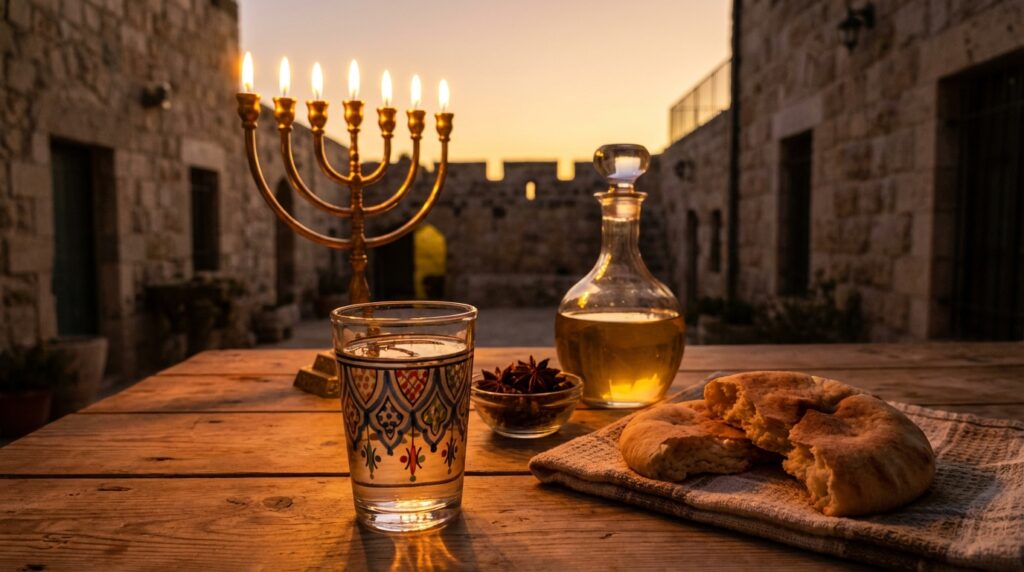

Arak has been cherished for centuries, with its origins tracing back to the Levant region. It is known for its distinct anise flavor, which is achieved through a meticulous distillation process. This spirit is often enjoyed during festive occasions and family gatherings, making it a staple in Israeli culture.
The process of making arak involves distilling fermented grapes or dates, which are then flavored with aniseed. This gives arak its characteristic licorice taste. The tradition of making arak has been passed down through generations, with each family adding its unique touch to the recipe.
In Israel, arak is more than just a drink; it is a symbol of hospitality and celebration. It is often served as an aperitif or mixed with water to create a refreshing beverage. The cloudy appearance of arak when mixed with water is a signature trait, known as the ‘louche’ effect.
The pairing of arak with mezze enhances the dining experience, as the flavors complement each other beautifully. Mezze dishes, such as hummus, olives, and roasted vegetables, are commonly served alongside arak, creating a harmonious balance of tastes.
In recent years, arak has gained popularity beyond the Middle East, with many people discovering its unique flavor profile. Bartenders and mixologists have started incorporating arak into cocktails, introducing it to a wider audience and showcasing its versatility.
Despite its growing popularity, traditional methods of making arak remain highly valued. Many small distilleries in Israel continue to produce arak using age-old techniques, ensuring that the spirit retains its authentic taste and cultural significance.
As arak becomes more widely recognized, it serves as a cultural ambassador, introducing people to the rich traditions of Israeli cuisine. Its unique flavor and historical significance make it a fascinating subject for culinary exploration and appreciation.
The story of arak is one of tradition, community, and celebration. It embodies the spirit of togetherness and the joy of sharing a meal with loved ones. Whether enjoyed in a traditional setting or as part of a modern cocktail, arak continues to captivate and delight those who experience it.
For those interested in making arak at home, understanding its history and cultural roots adds depth to the experience. By crafting this spirit, you become part of a long-standing tradition, connecting with the past while creating something new.