Discovering the Best Bread to Serve with Hummus
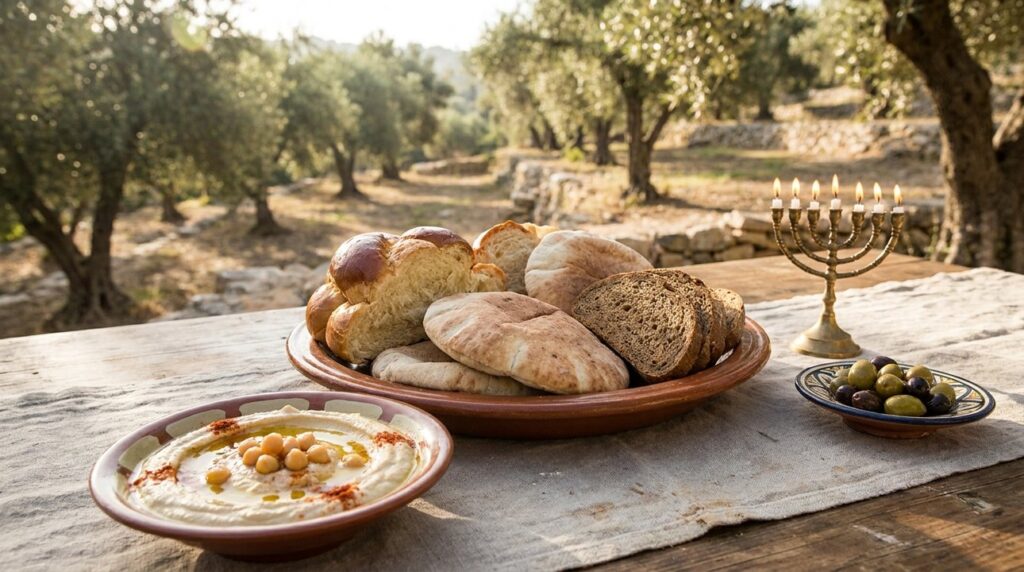

In Israel, the combination of hummus and bread forms a staple of daily life, offering both culinary delight and cultural tradition. Hummus, made from chickpeas, has been a part of the Middle Eastern diet for centuries, with its origins traced back to ancient Egypt.
Many types of bread lend themselves to being delightful carriers for hummus, enhancing its rich, savory flavors. Join us as we explore a variety of breads that are traditionally served alongside hummus, highlighting their unique qualities and cultural significance.
Join us as we explore a variety of breads that are traditionally served alongside hummus, highlighting their unique qualities and cultural significance. From the soft, pillowy pita to the sweet, festive challah, each bread offers a different taste experience.
These breads not only complement the flavors of hummus but also carry stories of trade, migration, and the daily life of people who have cherished them for generations. Each bite is a journey through time, connecting us to the rich culinary heritage of the region.
Israeli Cookbook
Inspired by the Farms of Israel
The Beloved Pita Bread
Pita bread is perhaps the most iconic bread to accompany hummus. Its soft, airy texture and pocket make it perfect for scooping. Though its history spans centuries, pita continues to be a favorite across Middle Eastern cuisine.
According to Britannica, pita’s ancient origins can be traced back to the Near East. The simplicity of pita allows the flavors of the hummus to shine, making it an essential component in traditional hummus dishes.
Pita’s versatility extends beyond mere accompaniment, as it is often stuffed or folded around various fillings, adding to its culinary appeal.
The round shape of pita mirrors the communal aspect of dining, where family and friends gather to share food and stories. This tradition of sharing meals is reflected in the biblical account of King David, who distributed bread to the people of Israel (2 Samuel 6:19).
When freshly baked, the warm, soft texture of pita enhances the creamy smoothness of hummus, creating a delightful contrast. Its enduring popularity speaks to the perfect harmony with hummus, serving as both a vessel and a complement.
Pita’s enduring popularity speaks to its perfect harmony with hummus, serving as both a vessel and a complement. Across the Middle East, pita is a staple that has been enjoyed for generations, often used to scoop up hummus and other dips.
This simple yet versatile bread is a testament to the rich culinary traditions of the region, offering a taste of history with every bite. Its ability to bring people together around a shared meal is a cherished aspect of its cultural significance.

Challah: A Special Occasion Bread
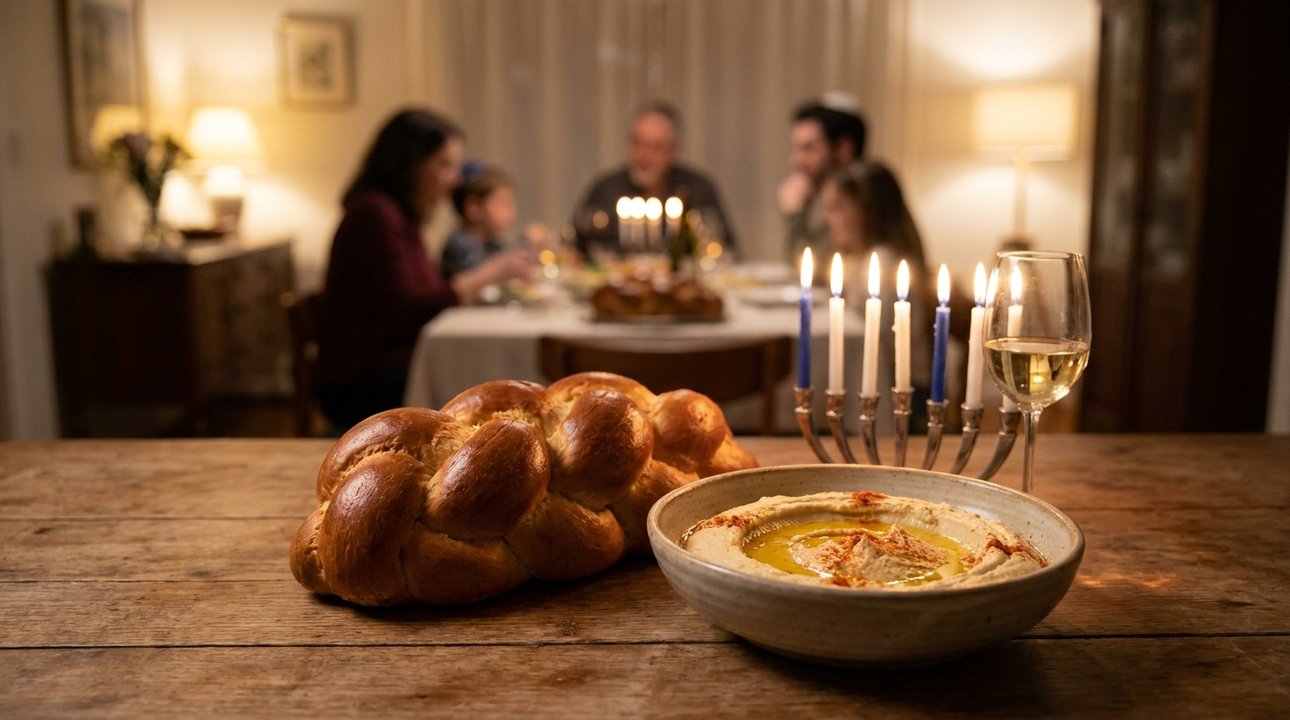
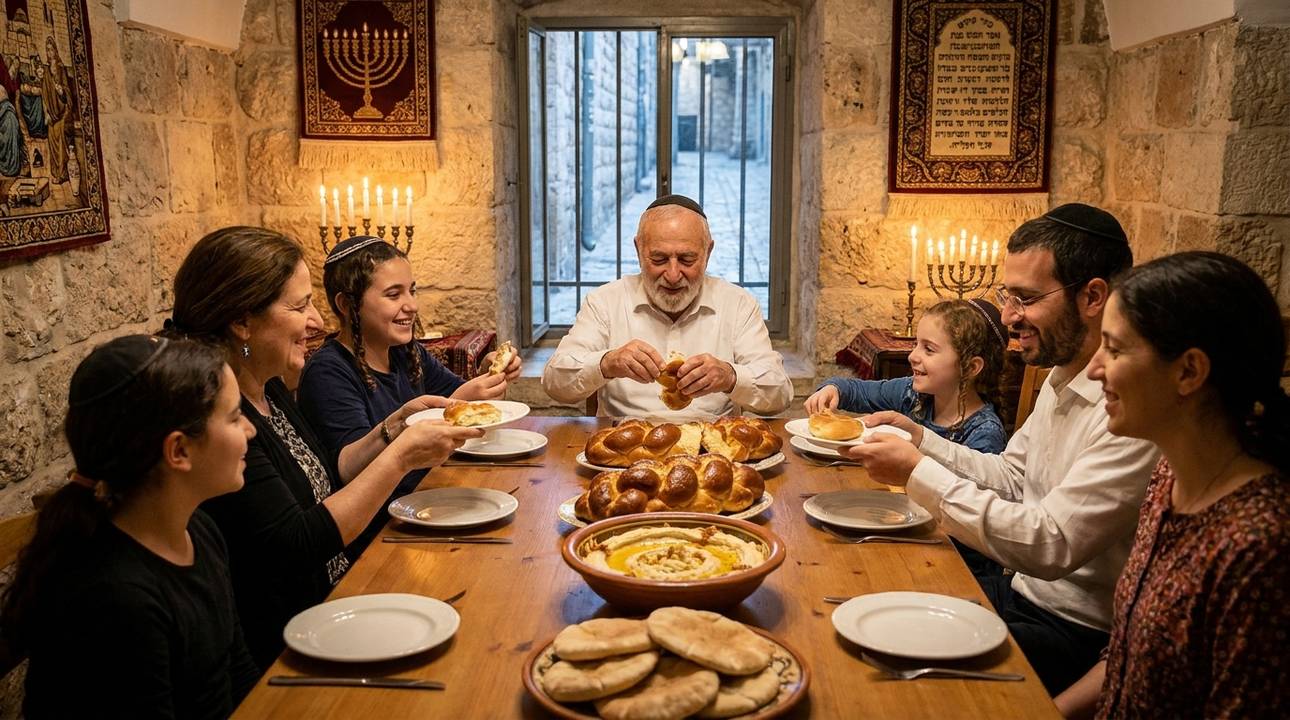
Challah bread, with its rich and slightly sweet flavor, offers a unique pairing for hummus. Traditionally consumed during Jewish Sabbath and holidays. This braided bread’s soft, fluffy texture invites you to savor each bite, providing a delightful contrast to the savory hummus.
As Britannica notes, challah holds deep cultural and religious significance. It’s often part of celebratory meals, enhancing the communal and festive nature of gatherings. The braiding of challah is both a visual delight and a metaphor for unity and togetherness, adding to its cultural richness.
Though less common as an everyday pairing with hummus, challah brings an element of warmth and festivity. Traditionally braided and served on Shabbat, challah is deeply rooted in Jewish culture and history.
Breaking the bread together symbolizes sharing and community, emphasizing the connections formed through food and tradition. The slight sweetness of challah can complement spicier or zestier varieties of hummus, creating a balanced taste experience that is both comforting and celebratory.
Challah’s association with Jewish holidays and special occasions adds a layer of cultural richness to the hummus pairing. In biblical times, bread offerings were a part of many religious rituals, highlighting its importance in spiritual practices (Leviticus 24:5-9).
Today, challah continues to be a symbol of unity and goodwill, making it a meaningful choice for those looking to enhance their hummus experience with a touch of tradition and warmth.
From Laffa to Rye: Diverse Options
Beyond pita and challah, a variety of other breads such as laffa and rye also make excellent companions to hummus. Laffa, a larger and thicker flatbread, is perfect for wrapping around hummus and fillings, offering a robust and satisfying bite.
Rye bread, with its distinctive flavor and denser texture, provides a hearty backdrop to hummus’s creamy texture. These diverse options ensure that there is a perfect bread for every preference, from traditional to adventurous palates.
Each type of bread adds its own character and texture to the hummus experience, expanding the possibilities for enjoying this beloved dish. For instance, the dense texture of rye bread can provide a hearty contrast, while the lightness of a baguette offers a different kind of enjoyment.
Whether toasted or warm, these breads serve as an ideal canvas for creative culinary exploration. The choice of bread can transform a simple serving of hummus into a full, satisfying meal, reminiscent of the shared meals in ancient Israel.
Israeli Cookbook
Inspired by the Farms of Israel
The choice of bread can transform a simple serving of hummus into a full, satisfying meal. In the Bible, bread is often associated with abundance and hospitality, as seen in the story of Abraham offering bread to his guests (Genesis 18:6).
This tradition of using bread to enhance a meal continues today, with hummus serving as a flavorful accompaniment. By experimenting with different breads, we can create new taste experiences that honor this rich culinary heritage.
Bread and Hummus: A Cultural Reflection
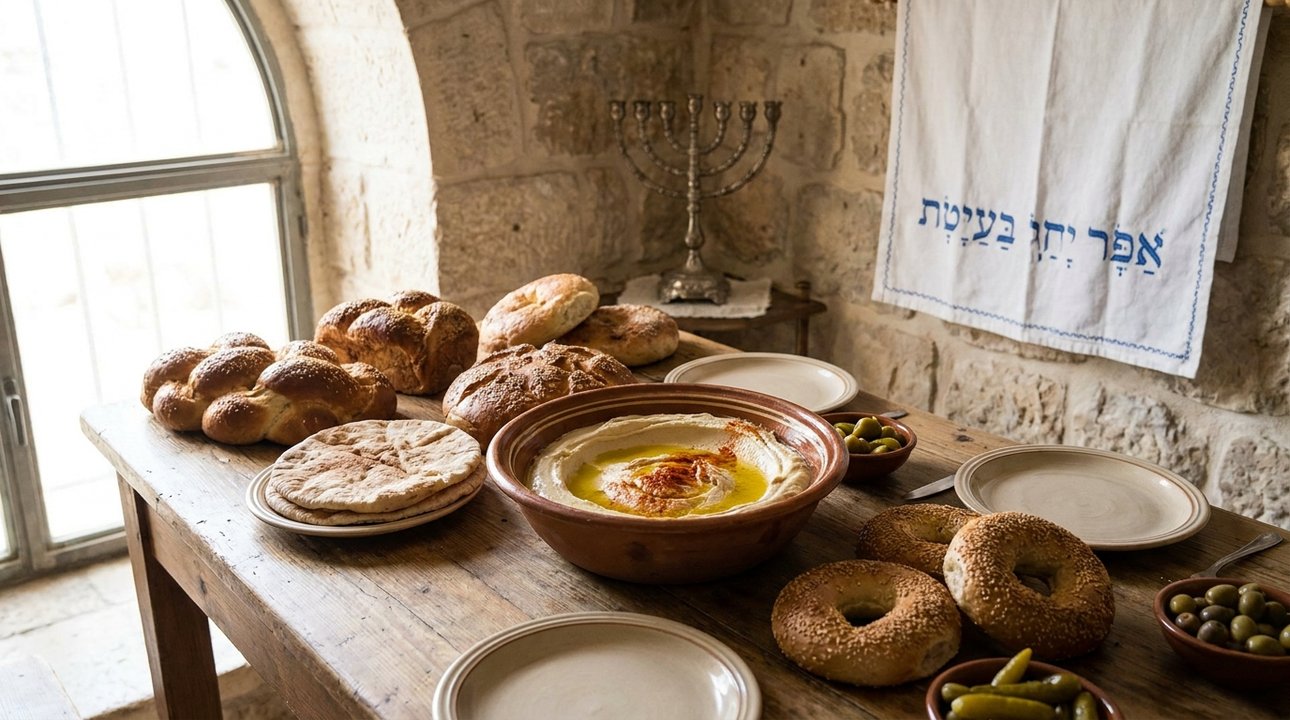
Bread and hummus together reflect not only culinary tradition but also the cultural heritage of a region. These combinations tell stories of trade, migration, and the daily life of people who have cherished them for generations.
As humankind’s most basic sustenance, bread offers a grounding connection to history and place. The Bible often associates bread with hospitality and sharing, such as when Abraham welcomed his guests with bread (Genesis 18:6).
Each bite of bread with hummus offers a taste of tradition and a moment of shared culture. This pairing is a reminder of the importance of community and connection, as seen in the communal meals of ancient Israel.
Today, bread and hummus continue to bring people together, offering a delicious way to celebrate the rich cultural heritage of the Middle East. Through these simple yet meaningful foods, we can connect with the past and create new memories with loved ones.
The importance of bread in Middle Eastern society is evident in both ancient texts and modern practice. The Torah frequently mentions bread as a symbol of life and sustenance, such as in the story of the manna provided to the Israelites (Exodus 16:4).
By understanding these traditions, we deepen our appreciation for the simple pleasure of bread served alongside hummus. As Chabad.org illuminates, bread in Jewish culture symbolizes sustenance, community, and spiritual practice, enhancing our experience with hummus.
As Chabad.org illuminates, bread in Jewish culture symbolizes sustenance, community, and spiritual practice, enhancing our experience with hummus. The act of breaking bread together is a powerful expression of unity and hospitality, a tradition that has been passed down through generations.
In modern times, this tradition continues to thrive, with bread and hummus serving as a delicious reminder of the enduring cultural connections that bind us together.
A Journey Through Flavor and Tradition
Our exploration of bread and hummus is a journey through flavors and traditions that connect us to Israel. The combination of different breads with hummus offers a delightful way to experience cultural heritage.
Each type of bread, from pita to laffa, adds a unique touch that enhances the flavor profile of hummus. Through these textures and tastes, we engage with history, tradition, and the simple pleasures of sharing food.
Choosing the best bread for hummus is an invitation to explore and experience Israeli cuisine. The variety of breads available, from pita to challah, each brings its own unique flavor and texture, enhancing the hummus experience.
As we pair these age-old favorites, we celebrate their place in both history and our contemporary culinary landscape. Bread and hummus have been staples in Middle Eastern diets for centuries, with references found in historical texts like the Babylonian Talmud.
Bread and hummus form a timeless duo that continues to bring people together across generations. This pairing is not just about taste but also about cultural significance, as seen in communal gatherings and celebrations.
In ancient times, bread was a symbol of life and sustenance, as noted in the Torah, where it is mentioned alongside other essential foods (Exodus 29:2). Today, it remains a vital part of meals, especially when paired with hummus, a dish that has roots in the Levant region.
Choosing the Best Bread for Hummus