
Understanding the Role of Cherubs in Biblical Narratives


Cherubs hold a distinctive place in biblical texts, often portrayed as guardians of sacred spaces. They are first mentioned in the Torah, specifically in the book of Genesis, where they guard the entrance to the Garden of Eden after Adam and Eve are expelled (Genesis 3:24). This article delves into their representation and significance in the Bible, uncovering their roles beyond mere symbolism.
In the construction of the Tabernacle, cherubs were also depicted on the Ark of the Covenant, as described in Exodus 25:18-22. They signify protection and a connection to the divine.
Cherubs: The Guardians of the Divine
Cherubs are often depicted as guardians in the Bible, with a notable example in Genesis 3:24. Here, they are positioned at the east of the Garden of Eden to guard the way to the Tree of Life.
This role underscores their function as protectors, maintaining the sanctity and divine nature of the spaces they oversee. Such depictions illustrate their importance in biblical narratives as custodians of sacred areas.
In Genesis, the cherubs are accompanied by a flaming sword, adding to their formidable presence as guardians. This image serves to emphasize their role in preventing access to the Tree of Life, highlighting their protective duties.
Their role as guardians is a recurring theme in biblical texts, symbolizing the protection of divine sanctity and the maintenance of order in sacred spaces.
The Book of Ezekiel provides a vivid description of cherubs, particularly in Ezekiel 10:14, where they are depicted as having four faces: a human, a lion, an ox, and an eagle. This multifaceted imagery symbolizes their diverse roles and abilities, reflecting their complex nature.
These faces represent different aspects of creation; the human face signifies intelligence, the lion represents strength, the ox denotes service, and the eagle symbolizes swiftness. Such symbolism emphasizes their heavenly origins.
Ezekiel’s vision highlights the cherubs’ unique characteristics, underscoring their importance in the celestial hierarchy. Their wings, mentioned in the same chapter, are a testament to their mobility and readiness to serve divine purposes.
This detailed imagery not only illustrates their roles but also serves as a reminder of their significant place in biblical narratives, acting as intermediaries between the divine and the earthly realms.
Symbolism in the Tabernacle and Temple
Cherubs hold a significant place in the construction and symbolism of sacred spaces, particularly in the Tabernacle and the First Temple. In Exodus 25:18-20, cherubs are described as being intricately designed and placed atop the Ark of the Covenant.
They represent the divine presence, serving as a visual connection between heaven and earth. This depiction underscores their role as guardians of sacred spaces, emphasizing their importance in religious practices.
The cherubs atop the Ark were crafted from gold, highlighting their sacred status and the reverence associated with them. Their wings spread over the mercy seat, symbolizing protection and divine oversight.
Such imagery serves as a powerful reminder of the divine connection and the sanctity of the spaces they guard, reinforcing their role as intermediaries between the divine and the human world.
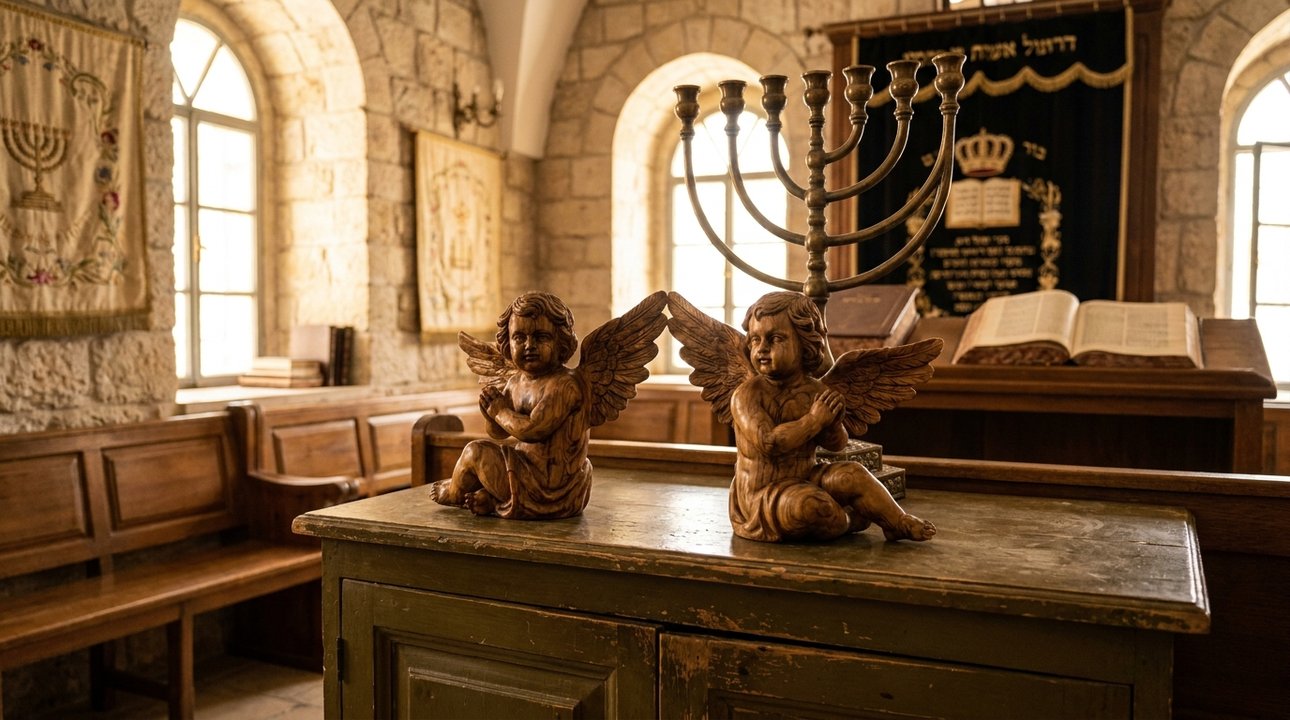
Cherubs have been an integral part of artistic design, often crafted from olive wood and overlaid with gold, standing impressively tall.
Their inclusion in design emphasizes their role as ceremonial guardians, contributing to the atmosphere. They are not merely decorative but serve a profound ceremonial purpose, representing presence.
The cherubs were placed in the inner sanctuary, underscoring their significance. Their wings touched each other and the walls, symbolizing an encompassing presence.
This arrangement highlights their role in conveying atmosphere and their importance in the life of the community, serving as a constant reminder of proximity.
Cherubs in Biblical Visions
In biblical visions, cherubs frequently appear as attendants of the divine throne. Isaiah 37:16 mentions cherubs surrounding the divine presence, representing majesty and sovereign power.
This theme is echoed in the Psalms, where cherubs are depicted as carriers of the divine throne, as seen in Psalm 18:10. These visions convey the cherubs’ proximity to divinity, reinforcing their elevated status.
Cherubs in these visions signify the closeness of the divine to humanity, acting as a bridge between the two worlds. Their role as attendants highlights their importance in maintaining the connection between the divine and the earthly.
Such portrayals serve as a reminder of the divine’s accessibility and the cherubs’ role in facilitating this connection, emphasizing their integral place in biblical narratives.
In Ezekiel’s vision (Ezekiel 1:5-11), cherubs are portrayed with wheels, a symbol of mobility and divine authority. This imagery suggests their ability to move swiftly and execute divine commands without hindrance.
Their dynamic role in visions symbolizes their part in carrying out divine tasks and being an integral part of celestial hierarchy.
The wheels, often described as “a wheel within a wheel,” emphasize the complexity and interconnectedness of their duties, illustrating their essential role in maintaining divine order.
Such portrayals highlight the cherubs’ adaptability and readiness to serve, underscoring their importance in the execution of divine will.

The Multidimensional Role of Cherubs
Beyond guardianship, cherubs convey messages and execute divine will. They embody the attributes of protection, strength, and spiritual connection. In the book of Ezekiel, cherubs are described as having multiple faces and wings, symbolizing their multifaceted nature and ability to fulfill various roles (Ezekiel 10:12-14).
Their roles are multifaceted, reinforcing their importance in heavenly and earthly domains. These attributes highlight their role as intermediaries between the divine and humanity, facilitating communication and guidance.
The wings of cherubs, often emphasized in descriptions, symbolize shelter and divine care. This imagery finds parallels in Psalms, such as Psalm 91:4: ‘He shall cover you with His feathers.’
The wings are not only a symbol of protection but also of divine presence, as seen in the Ark of the Covenant where the wings of the cherubs spread over the mercy seat (Exodus 25:20).
The symbolic use of wings enhances their representation of protection and divine oversight, providing comfort and assurance of divine guardianship.
Such imagery serves as a reminder of the protective nature of the divine, highlighting the cherubs’ role in offering shelter and care to those under their watch.
Cherubs in Later Interpretations
In later interpretations, cherubs are seen as symbolic representations of divine wisdom and message-bearers. Jewish mysticism, particularly the Kabbalah, explores their role in conveying divine secrets and insights.
Their depiction in art and literature across Jewish traditions reflects their enduring spiritual significance. For example, medieval Jewish manuscripts often depict cherubs as part of heavenly visions, illustrating their role in bridging the earthly and the divine.
The depiction of cherubs in these manuscripts highlights their role as intermediaries, facilitating the flow of divine knowledge to humanity. Such portrayals underscore their importance in religious thought and cultural expression.
Their continued presence in various interpretations serves as a testament to their lasting impact on religious understanding, emphasizing their role in the ongoing dialogue between the earthly and the celestial realms.
Rabbis and scholars have expanded on the roles of cherubs to illustrate concepts of knowledge, divine presence, and communication between the divine and humanity. The Talmud, for instance, discusses cherubs in the context of the Holy of Holies, where they symbolize divine communication (Yoma 54a).
These interpretations show their continued influence in shaping religious understanding and cultural expression.
Cherubs serve as a reminder of the divine presence and the ongoing dialogue between the earthly and the celestial realms. Their role in religious texts and interpretations highlights their importance in facilitating communication and understanding.
Such portrayals underscore their lasting impact on religious thought, emphasizing their role in bridging the gap between the divine and humanity.
Understanding Cherubs
