
The Biblical Significance of Mount Tabor
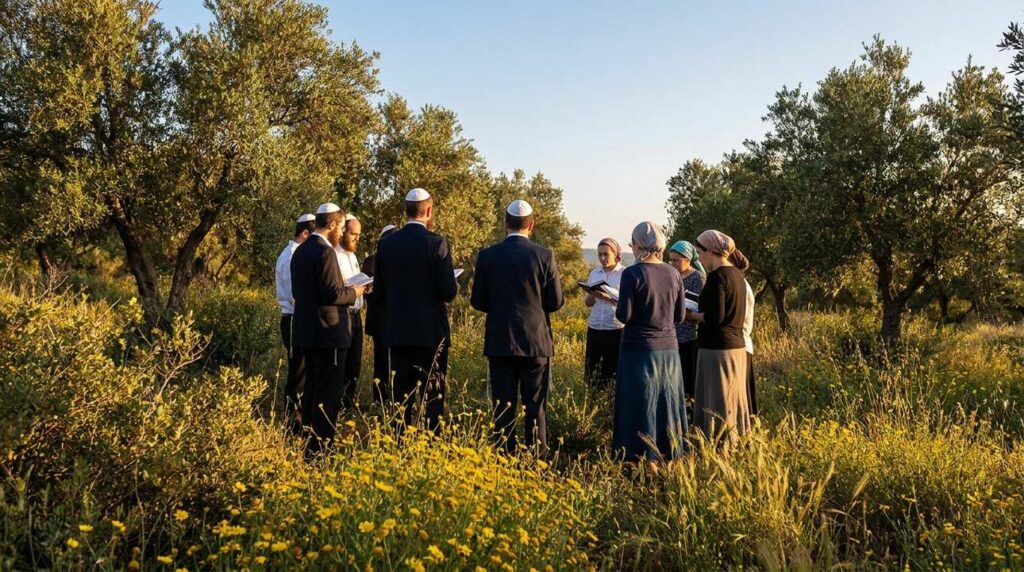

Mount Tabor has long stood as a sentinel within Israel’s Galilee region. Rising dramatically from the surrounding plains, it occupies a special place in biblical history and narrative.
In the Hebrew Bible, this peak is mentioned in several contexts, including the battle led by Deborah and Barak in Judges 4-5.
This article dives into the historical and spiritual layers of Tabor, illuminating its role throughout biblical events and how it came to hold such significance in Jewish heritage. Its unique shape and location have made it a landmark for centuries.
Mount Tabor’s prominence in the Galilee region is not just geographical but also historical. Its mention in Judges 4-5 highlights its role in pivotal biblical events, such as the battle where Deborah and Barak led the Israelites to victory.
This strategic location has made it a focal point for both military and spiritual gatherings. The enduring presence of Tabor in biblical narratives underscores its significance in Jewish heritage.
Its unique dome shape and elevation have made it a recognizable landmark, drawing visitors and pilgrims throughout history.
from the Western Wall to Masada.

Geographical and Historical Overview of Mount Tabor
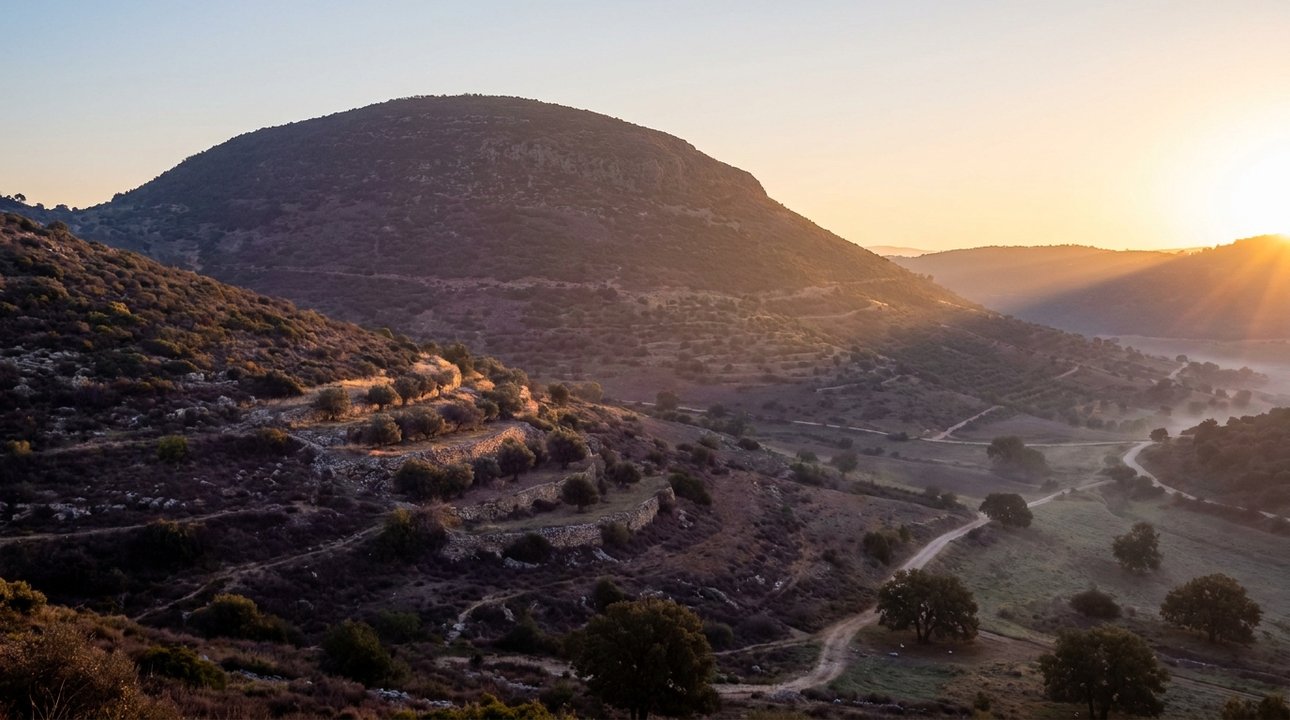
Mount Tabor’s distinctive dome shape sets it apart in the Galilean landscape. Located approximately 17 kilometers west of the Sea of Galilee, Tabor is a solitary peak rising to about 575 meters above sea level.
This elevation provides stunning views of the surrounding region, making it a natural point of interest. Historically, it served as a strategic military site; its elevation provided a vantage point overlooking critical trade and military routes.
This geographical prominence made it a stage for significant biblical events, including the battle led by Deborah and Barak.
The geographical prominence of Mount Tabor has made it a landmark throughout history. Its elevation, rising to about 575 meters, offers panoramic views of the Galilean landscape, making it a natural point of interest.
This strategic position was crucial in history, serving as a military site during significant battles. Tabor’s location near critical trade routes added to its importance, drawing both military and cultural attention.
Its unique shape and elevation continue to captivate visitors today, offering a glimpse into its storied past.
In the Book of Judges, Mount Tabor is renowned as the setting for the battle led by Deborah and Barak. Judges 4:14 describes how Barak descended with his forces after the prophetess Deborah inspired him to battle against the Canaanite army led by Sisera.
Their victory is celebrated as a testament to faith and divine intervention. This story highlights Tabor’s role as a place of divine guidance and military triumph.
The battle is also commemorated in the Song of Deborah, found in Judges 5, which praises the courage and leadership shown during this pivotal event.
Mount Tabor’s strategic importance is underscored in Judges 4:14, where Deborah’s prophetic leadership inspires Barak to lead his forces against Sisera. The elevation provided a tactical advantage, crucial for the Israelites’ victory.
The Song of Deborah in Judges 5 celebrates this triumph, emphasizing the divine intervention believed to have aided their success. This narrative continues to inspire those who visit Tabor, offering lessons in courage and faith. The mountain remains a symbol of resilience and divine guidance.
The battle on Mount Tabor, as recounted in Judges, is a pivotal moment in Israel’s history. Deborah’s leadership and Barak’s courage are celebrated in the Song of Deborah, found in Judges 5, which praises the victory as a divine deliverance.
The strategic location made it an ideal site for such a decisive confrontation. This event continues to inspire those who visit Tabor today. The story of Deborah and Barak serves as a powerful reminder of faith and resilience, drawing visitors to reflect on its enduring message.
Judges 4:14 describes how Deborah encouraged Barak to lead his forces against Sisera’s army on Mount Tabor. This battle is not only a testament to strategic military planning but also to the power of faith and unity.
The elevation provided a tactical advantage, allowing Barak’s forces to descend upon their enemies with confidence. The victory celebrated in Judges 5 highlights the divine intervention believed to have played a role in the outcome.
This story continues to resonate with those who visit, offering lessons in leadership and courage.
Biblical Mentions and Spiritual Significance
Apart from its appearance in Judges, Mount Tabor is cited in 1 Chronicles 6:77 as a Levitical city, designated to the Gershonite Levites. This allocation underscores its lasting presence within the ancient tribal structures of Israel.
The Levites, responsible for religious duties, were integral to maintaining spiritual practices. Tabor functioned not just as a geopolitical landmark, but also a place imbued with spiritual meaning. Throughout history, it has been a site for reflection and worship.
The mountain’s enduring presence in Jewish tradition highlights its multifaceted role.
The spiritual resonance of Tabor continues in later cultural and theological interpretations, where it symbolizes divine guidance and revelation. In the Psalms and Prophets, Tabor serves as a reminder of God’s majesty and presence.
Psalm 89:12 mentions Tabor together with Hermon, celebrating the mountains as witnesses to the praises of God. These references highlight its role as a symbol of divine strength and protection.
Tabor’s presence in these texts underscores its importance in Jewish tradition as a place of spiritual significance.
Mount Tabor’s mention in Psalm 89:12 alongside Hermon emphasizes its role as a witness to divine majesty. This pairing in the Psalms illustrates the mountain’s symbolic significance in Jewish tradition, representing strength and divine presence.
Such references have cemented Tabor’s place in spiritual narratives, serving as a metaphor for divine guidance. The mountain’s enduring presence in these texts continues to inspire those seeking a deeper connection with their faith and heritage.
Mount Tabor’s symbolism in later interpretations reflects its enduring spiritual significance. The mountain is often associated with moments of divine revelation and guidance, serving as a metaphor for spiritual ascent and enlightenment.
In Jewish tradition, Tabor’s presence in the Psalms and Prophets underscores its role as a beacon of faith and hope. This symbolism continues to inspire those who seek a deeper connection with their spiritual heritage.
Tabor’s enduring presence in these texts highlights its importance as a place of reflection and spiritual renewal.
In Jewish tradition, Mount Tabor’s symbolism as a site of divine revelation is profound. It is often viewed as a metaphor for spiritual ascent, inspiring believers to seek enlightenment and connection with their heritage.
The mountain’s presence in Psalms and Prophets reinforces its role as a symbol of hope and faith. This enduring symbolism continues to resonate with those exploring their spiritual roots, offering a place of reflection and renewal.
Tabor stands as a testament to the enduring power of faith and the search for divine guidance.
Cultural Transformations Over Time
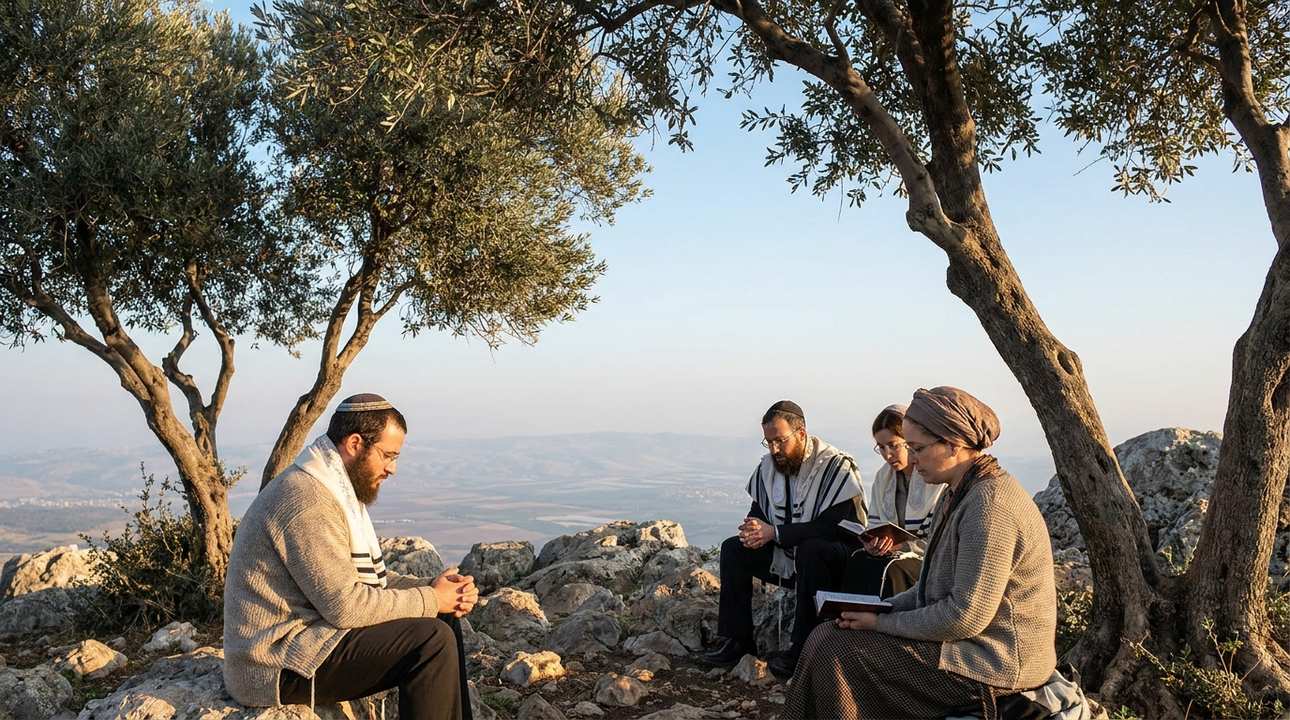
While its biblical role is well-documented, Mount Tabor’s influence extended into post-biblical traditions. It became a focus of pilgrimage and devotion. Over centuries, various religious communities have been drawn to its serene summit, each adding layers to its cultural and historical narrative.
The mountain’s continued significance is reflected in the diverse religious practices observed by those who visit its sacred grounds. These traditions highlight Tabor’s enduring role as a beacon of faith and a place of spiritual reflection.
Mount Tabor’s post-biblical significance is evident in the pilgrimage traditions that developed over the centuries. Pilgrims from different faiths have journeyed to its summit, seeking spiritual renewal and connection.
The mountain’s serene environment offers a space for contemplation, while its historical narratives provide a rich tapestry of cultural heritage. The ongoing religious practices observed at Tabor reflect its role as a spiritual beacon.
Visitors often engage in rituals and prayers, deepening their connection to the mountain’s sacred legacy.
from the Western Wall to Masada.
Mount Tabor’s post-biblical influence is evident in the many traditions that have emerged around it. Pilgrims from different faiths have journeyed to its peak, seeking spiritual renewal and inspiration.
The mountain’s tranquil environment provides a setting for meditation and reflection, attracting those who wish to connect with the divine. As a result, Tabor has become a symbol of spiritual unity and cultural heritage.
Its continued significance is reflected in the diverse religious practices observed by those who visit its sacred grounds, each adding to its rich tapestry of history.
Medieval texts often recount Mount Tabor as a backdrop for holy encounters and visions. This mountain, located in the Lower Galilee region, has been a site of spiritual significance for centuries.
The establishment of Christian monastic communities during the Byzantine period, though outside our focus, also highlights Tabor’s enduring spiritual magnetism. These communities sought solitude and connection with the divine, drawn by the mountain’s serene and contemplative environment.
The biblical account in Judges 4:6-16, where Deborah and Barak rally their forces, adds to Tabor’s spiritual narrative.
The serene environment of Mount Tabor has long attracted those seeking spiritual solace. Its historical significance, like the battle led by Deborah and Barak, provides a context for its spiritual allure.
Pilgrims and monks alike have been drawn to its slopes, finding inspiration in its tranquil setting. The location in the Lower Galilee offers a peaceful retreat, away from the hustle of daily life, making it an ideal place for reflection and spiritual growth.
Its enduring presence in cultural history continues to inspire those who visit.
Mount Tabor’s prominence in medieval spirituality can be traced back to its biblical associations. In the Hebrew Bible, it is mentioned as a place of gathering and revelation, which continued to inspire later generations.
The mountain’s unique shape and elevation made it a natural landmark for pilgrims and seekers of spiritual experiences. Its role in religious narratives provided a foundation for the monastic traditions that flourished in the surrounding areas.
One notable reference is in Judges 4:6, where Deborah calls Barak to lead an army from Tabor, highlighting its strategic and spiritual importance.
Throughout the medieval period, Mount Tabor was a focal point for spiritual seekers. Its biblical connections, such as those found in the Book of Judges, inspired monastic communities to establish themselves nearby.
These communities sought to emulate the spiritual revelations associated with the mountain, creating a legacy of devotion that persisted through the ages. Tabor’s distinct shape made it easily recognizable, serving as a beacon for those on a spiritual journey.
Its enduring presence in religious texts underscores its significance as a site of divine encounter and inspiration.
Mount Tabor Today
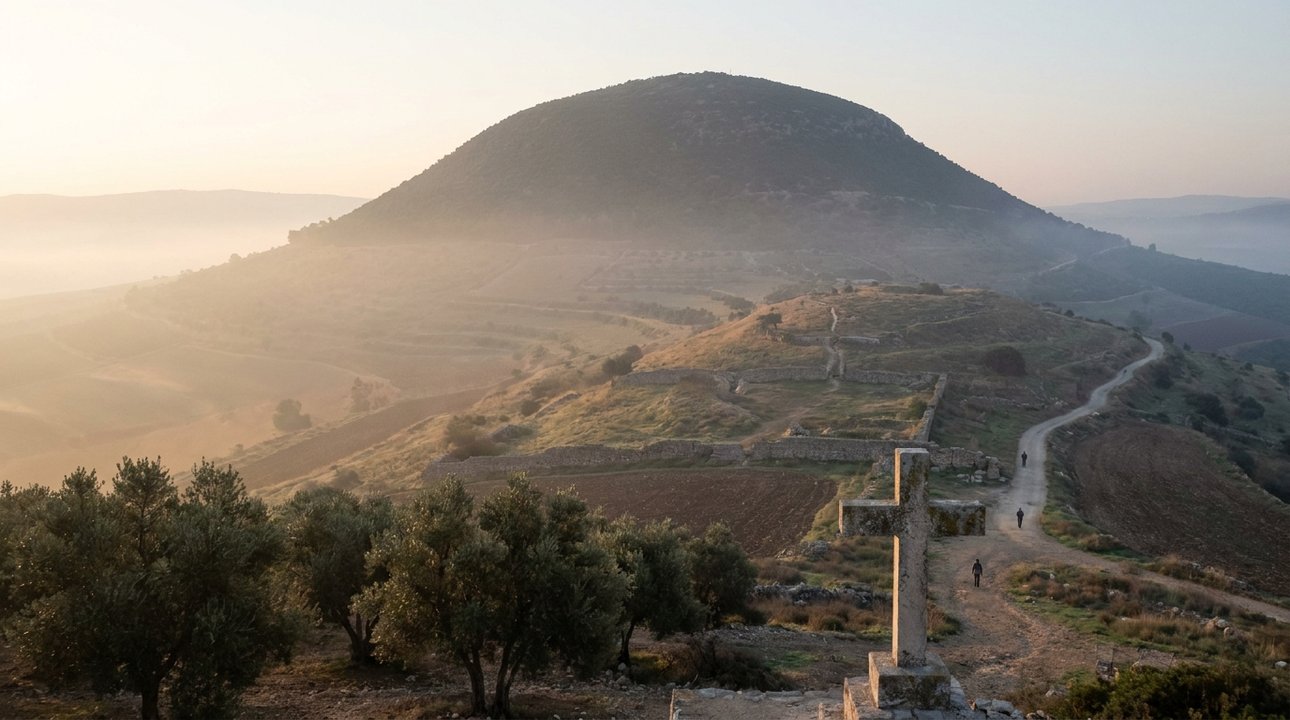
In contemporary times, Mount Tabor remains a significant religious site. Visitors often hike its slopes, reflecting on its storied past and the powerful events that unfolded here. The trails offer a journey through history, allowing visitors to connect with the land and its stories.
It is a symbol of continuity, linking the biblical past with the present and offering a tactile connection for those exploring the history of Israel. The trails provide a physical journey through time, inviting reflection on its enduring legacy and significance.
Hiking Mount Tabor today offers a unique opportunity to walk in the footsteps of biblical figures. The trails wind through landscapes that have witnessed significant historical events, such as the battle led by Deborah and Barak.
As visitors ascend, they are reminded of the mountain’s role in shaping Israel’s history. The panoramic views from the summit provide a moment of reflection, connecting the past with the present.
For many, the journey up Tabor is not just a physical one, but a spiritual exploration of heritage and identity.
Mount Tabor’s significance in contemporary times is evident in the many visitors it attracts. Hikers and pilgrims alike find solace and inspiration in its natural beauty and historical resonance.
The mountain is a popular destination for those seeking spiritual renewal and a deeper connection to their heritage. It serves as a living testament to the enduring connection between the land and its people, offering a space for contemplation and spiritual renewal.
For many, Tabor is a bridge between the ancient and modern worlds, linking past narratives with present experiences.
Today, Mount Tabor continues to draw visitors who seek both adventure and spiritual connection. Its trails offer a journey through history, allowing hikers to experience the land that has been a witness to significant biblical events.
The natural beauty and historical significance provide a space for reflection and renewal. For many, Tabor represents a link between the past and present, offering a tangible connection to their heritage.
The mountain’s enduring presence in Israel’s landscape serves as a reminder of the deep ties between the land and its people.
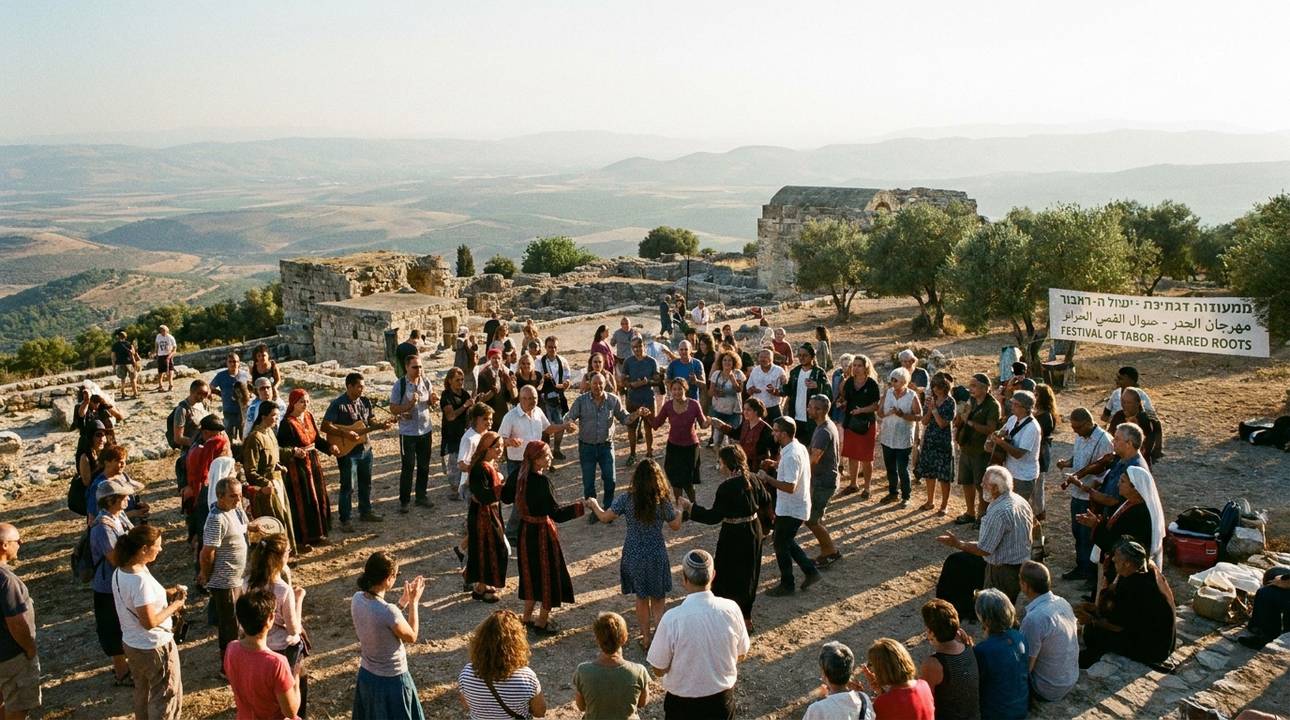
Today, both religious and secular activities coexist on and around Mount Tabor. Annual events and festivals draw diverse crowds, all seeking to experience its beauty and legacy. These gatherings often include cultural celebrations and historical reenactments, bringing the past to life.
For many, Tabor embodies the rich tapestry of Israel’s historical and spiritual landscape. Hiking trails offer visitors a chance to explore the natural beauty while reflecting on its significance in Jewish history and culture.
The trails provide a unique opportunity to connect with the land.
The coexistence of religious and secular activities on Mount Tabor is a testament to its enduring appeal. Cultural festivals often celebrate the mountain’s historical significance, attracting people from various backgrounds.
These events provide opportunities for cultural exchange and community building, reinforcing Tabor’s role as a symbol of unity and shared heritage. Visitors leave with a deeper appreciation for its place in Israel’s story.
The mountain’s significance is highlighted in biblical texts such as Judges 4:6, where it serves as a gathering point for tribes under Deborah’s leadership.
In modern times, festivals on Mount Tabor draw diverse crowds, fostering a sense of community. These gatherings often feature music, dance, and storytelling, celebrating the rich tapestry of cultures that have been part of the mountain’s history.
The panoramic views and serene environment offer a perfect backdrop for these events, allowing participants to reflect on the shared heritage of the region.
Such experiences deepen the connection between visitors and the land, highlighting Tabor as a place of historical and cultural convergence.
Understanding Mount Tabor's Role
