Mitzpe Ramon Area Guide
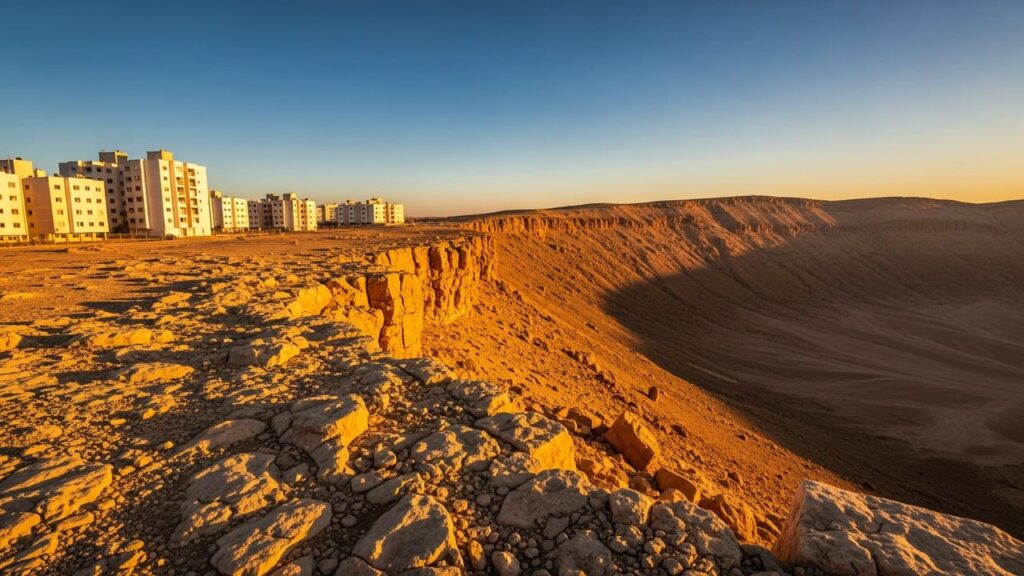

Mitzpe Ramon sits on the northern rim of the Ramon Crater. The town offers desert views and immediate access to protected geological landscapes in Israel. This guide gives practical information about living in the town, from history and transport to schools and daily life.
Mitzpe Ramon at a Glance
City: Mitzpe Ramon • Country: Israel • District: Southern • Population: 5385 • Area: 62.875 km² • Nearest major city: Be’er Sheva (regional hub) • Distance: 85 km • Main transport connection: Road. Highway 40 is the primary link to Be’er Sheva and to Eilat. Intercity buses run to Be’er Sheva and Dimona; rail connections for longer trips are accessed via regional stations. • Known for: Overlooking Makhtesh Ramon (Ramon Crater); stargazing (Wise Observatory); ecotourism, hiking and mountain-biking; nearby Nabatean and Byzantine remains; recent development initiatives including a 2020s ‘space city’ initiative. • Historic origins: The site lies on routes and landscapes used since antiquity. Nearby are Nabatean caravanserai and settlements, Roman and Byzantine remains, and other prehistoric and historic Negev occupation and waystations. The modern town was founded in 1951.
Insider's Guide to Israel
and can't-miss places most tourists never find.

Where Is Mitzpe Ramon?
Mitzpe Ramon is in Israel’s Southern District on the northern rim of Makhtesh Ramon, a large erosion cirque in the Negev desert. The town looks over the geological bowl and the surrounding desert plateaus. Many parts of the community have views across the crater.
Administratively the town is in the Southern District. Road connections reach nearby towns such as Dimona and Arad. Highway 40 is the main road. It runs north toward Be’er Sheva and south toward Eilat.
The nearest larger regional centre is Be’er Sheva, about 85 km to the north by road (approximate). Travel times vary with route and traffic. Bus and road travel make Be’er Sheva the main hub for services and rail connections for many residents.
History of Mitzpe Ramon
The modern town of Mitzpe Ramon was founded in 1951. It grew as a small desert community on the crater rim and later became a base for tourism and scientific facilities.
The area around Makhtesh Ramon has a long human history. Routes and landscapes here were used since antiquity. Archaeological remains include Nabatean caravanserai and settlements, plus Roman and Byzantine sites. Later historical periods associated with the region include Ottoman and British Mandate eras, and the modern State of Israel.
Although the wider landscape has ancient layers of occupation, the settled municipal community called Mitzpe Ramon dates from the mid-20th century.
Mitzpe Ramon Population
As of 2022 the population was 5,385. This makes Mitzpe Ramon a smaller municipal community in the Southern District. The town has a low-density profile across its municipal area of about 62.9 km².
Locals describe a small, close-knit community with more open space than in urban centres. Detailed year-on-year population trends are not included here; publicly available descriptions characterise the town as modest in size with an economy tied to tourism and local services.
What Is It Like to Live in Mitzpe Ramon?
Daily life mixes dramatic desert landscapes with the practicalities of a small town. Residents enjoy open space, privacy and a community-oriented atmosphere.
The pace is generally relaxed. Outdoor activities such as hiking, mountain-biking and stargazing are common. Tourism and visitor services, including hotels and guided outdoor options, are part of the local economy and shape the town around viewpoints and visitor facilities.
Local infrastructure covers essential services: basic healthcare, primary and secondary schools, municipal services and shops. For specialised services and a wider range of retail or cultural offerings people travel to Be’er Sheva or other regional centres. Transport is mainly by road, with intercity buses linking Mitzpe Ramon to Be’er Sheva, Dimona and Eilat. For rail travel residents typically travel by road to a nearby station.
Areas and Neighbourhoods in Mitzpe Ramon
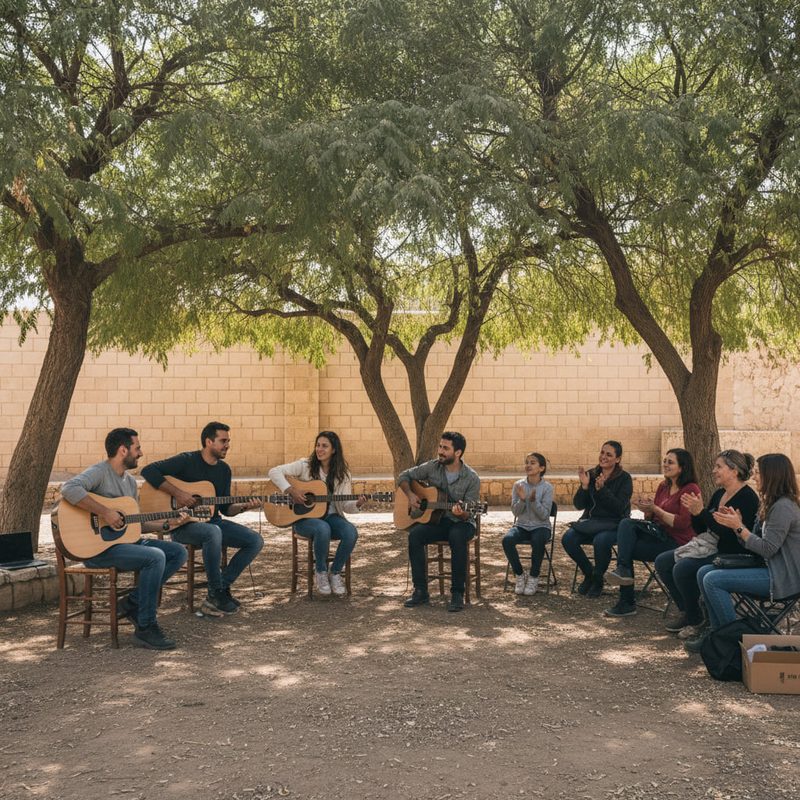
Mitzpe Ramon has a small number of residential areas shaped by the town’s origins, artistic influences and tourism around nature access.
Historic central core (old Mitzpe)
This core sits near the main crater viewpoints and contains the oldest municipal buildings and services.
Housing mixes older single-family homes with modest community facilities. Walking covers many errands inside the core, but cars are common for trips outside town.
People who want quick access to services, visitor facilities and classic crater views often choose the central core.
Ma’of (מעוף)
Ma’of developed as the town expanded and has a quieter, suburban feel compared with the central areas.
Properties are often family homes with small plots. Most households use a car for commuting and errands, though bus links connect the area with the town centre and regional routes.
Families and residents seeking more space while staying near town services find Ma’of attractive.
Artist Quarter / ‘Me’ever’ (artist/hostel area)
This quarter is linked to creative activity, guesthouses and a small hospitality sector for visitors who come for the crater and night-sky observation.
Accommodations include artist studios, guesthouses and small private residences. The area supports walking near local cafés and hostels, but cars are still used for longer trips.
Artists, short-term visitors and people working in hospitality or creative fields often prefer this quarter.
Spice-Routes Quarter (רובע דרכי הבשמים)
Named with reference to historic spice and incense routes, this quarter connects the town to the wider historical landscape and tourism stories.
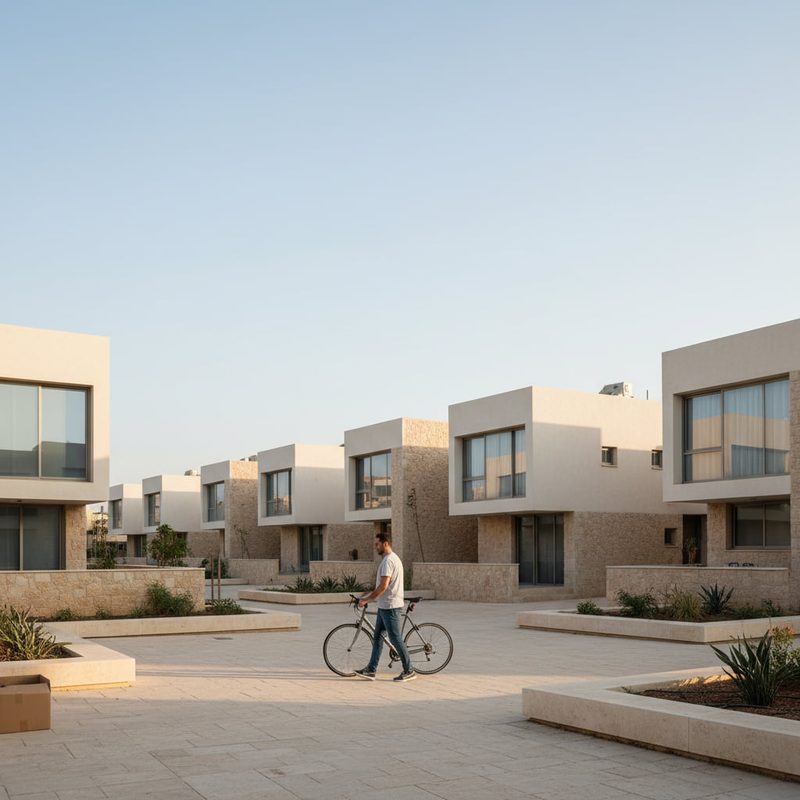
Residential development here complements visitor facilities. Houses and small commercial premises serve both residents and tourists.
Residents and businesses focused on tourism, outdoor guiding and cultural interpretation often locate in this neighbourhood.
Education in Mitzpe Ramon
Education includes local kindergartens, primary schools and a municipal high school that serve the town and nearby communities. Early childhood through secondary education is available within the town.
For higher education residents usually go to Be’er Sheva. Ben-Gurion University and other institutions offer undergraduate and graduate programmes there. Access is commonly by road or bus to Be’er Sheva, which acts as the regional education hub.
Transport and Connectivity
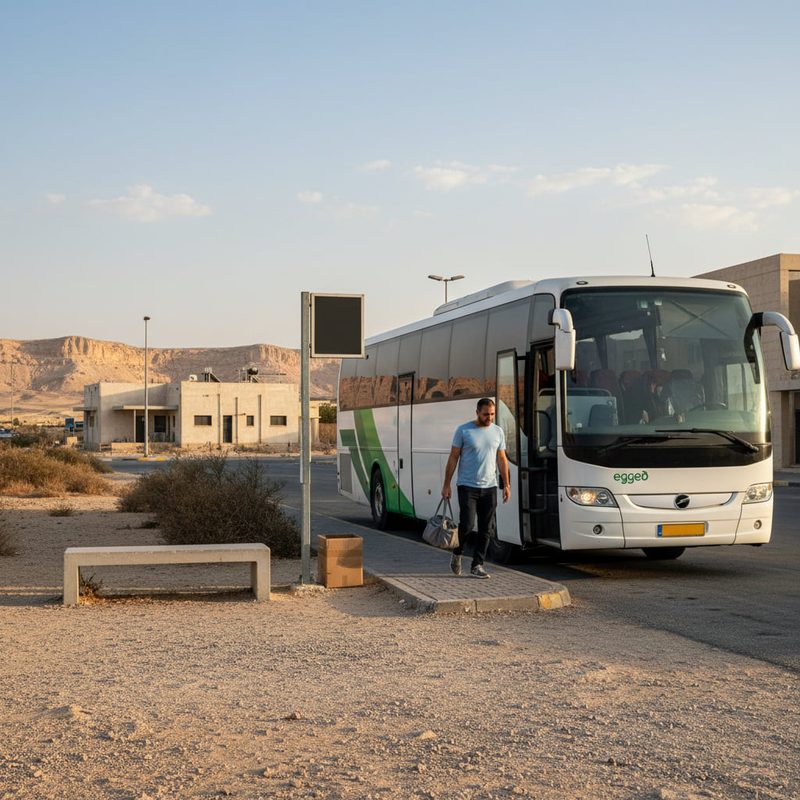
Road travel is the main mode for residents. Highway 40 is the principal road linking Mitzpe Ramon north to Be’er Sheva and south toward Eilat. It handles most long-distance travel and freight movement in the area.
Intercity bus operators such as Metropoline and Egged run services connecting Mitzpe Ramon with Be’er Sheva, Dimona and Eilat. Local and regional bus links serve nearby communities.
There is no passenger railway station in Mitzpe Ramon. The nearest station by road is in Dimona. For more frequent intercity rail services residents travel to Be’er Sheva stations.
Insider's Guide to Israel
and can't-miss places most tourists never find.
Typical long-distance travel times include about 184–195 km by road to Tel Aviv (roughly 2–2.5 hours depending on route and traffic) and around 174 km to Ben-Gurion Airport. Train services from regional stations to Tel Aviv take about 1 hour 35 minutes to 1 hour 45 minutes; reaching those trains requires a road or bus trip first.
Car-free living is limited. Buses provide connections, but the town’s spread and regional service patterns make car ownership the most convenient option for most households.
Nature and Outdoor Spaces
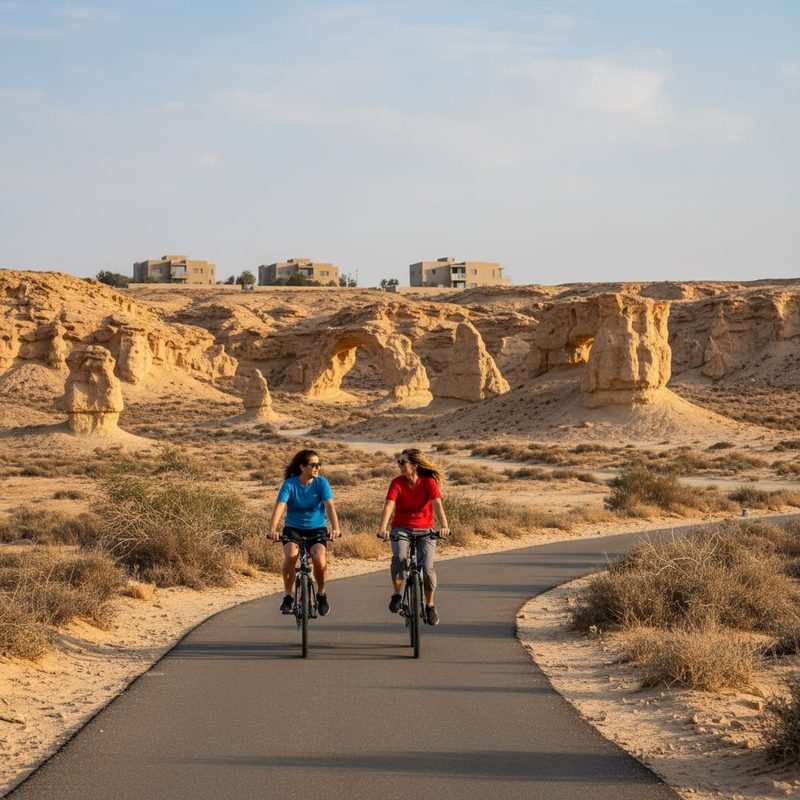
Mitzpe Ramon sits on the northern rim of Makhtesh Ramon, a protected geological reserve and national-park landscape. The crater and its surrounds offer marked trails, viewpoints and chances for hiking, mountain-biking and nature observation.
The desert supports distinctive flora and fauna, including species such as the Nubian ibex. The region is important for ecological study and outdoor recreation. The Wise Observatory, near Mitzpe Ramon and affiliated with Tel Aviv University, makes the area notable for night-sky observation and astronomy.
Protected areas and visitor facilities around the crater encourage low-impact tourism. Residents commonly use the trails and lookouts for everyday recreation.
Amenities and Things to Do in Mitzpe Ramon
Amenities match the town’s size and its role as a gateway to Makhtesh Ramon. Local attractions include the Makhtesh Ramon Visitor Center, the Wise Observatory, the Beresheet Hotel, Ilan Ramon exhibits, and small wildlife attractions such as Chai Ramon and a local alpaca farm.
The town has a modest cluster of cafés, restaurants and shops for both residents and visitors. Healthcare and essential services are available locally; broader medical and specialised services are accessed in Be’er Sheva.
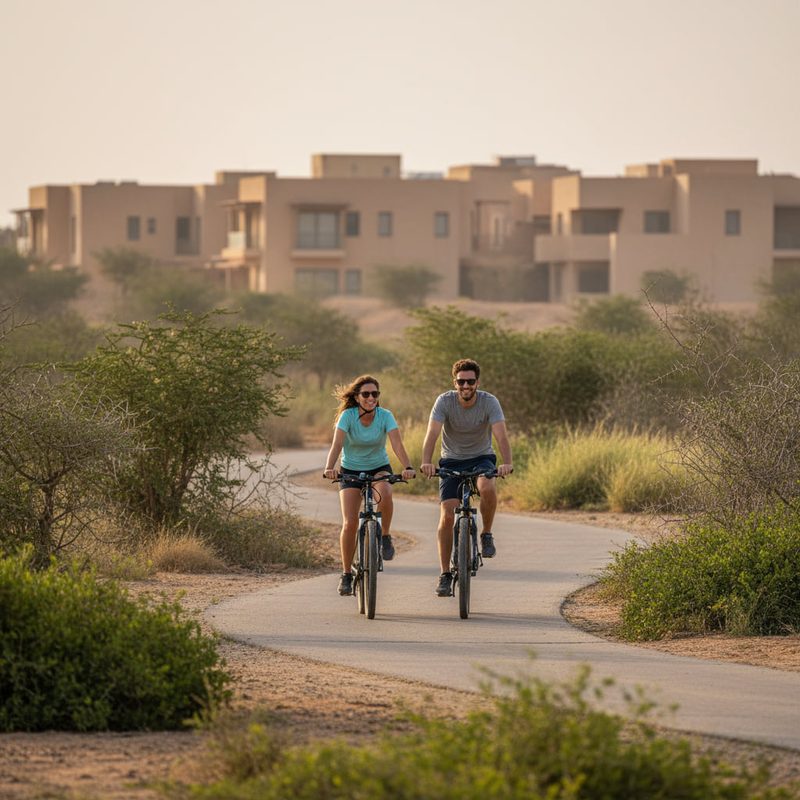
Outdoor and adventure options—guided hikes, mountain-bike routes and stargazing—are core draws for visitors and residents. Cultural life is shaped by tourism and local artistic activity, especially in the Artist Quarter where guesthouses, studios and small events are common.
Cities and Towns Near Mitzpe Ramon
Several regional centres and smaller towns lie within driving distance and serve as places for shopping, services and transport connections.
Nearest notable places include Be’er Sheva (about 85 km, travel time roughly 63 minutes), Dimona (around 70 km, roughly 58 minutes), Arad (about 108 km, approximately 88 minutes) and Eilat (roughly 150 km, travel time around 98 minutes). These towns provide broader services, rail connections, higher education and specialised healthcare not always available in Mitzpe Ramon.
Nearby cities and towns: Be’er Sheva — 85 km, approx. 63 min; Eilat — 150 km, approx. 98 min; Dimona — 70 km, approx. 58 min; Arad — 108 km, approx. 88 min.
Advantages of Living in Mitzpe Ramon
Proximity to nature and outdoor recreation: Immediate access to Makhtesh Ramon and marked trails supports daily outdoor activity and a lifestyle focused on hiking, biking and wildlife watching.
Clear skies and astronomy: The Wise Observatory and low light pollution make the area good for stargazing and amateur astronomy.
Space and privacy: Low-density housing and open desert landscapes offer more space per household than many urban centres. This appeals to people seeking a quieter life.
Close ties to a regional hub: Be’er Sheva is the practical centre for higher education, rail connections and specialised services, reachable by road and bus.
Tourism and small-business potential: Local attractions and visitor facilities create opportunities in hospitality, guiding and nature-based enterprises.
Things to Consider Before Moving to Mitzpe Ramon
Limited local amenities: Essential services exist, but a wider range of retail, cultural and specialised medical services usually requires travel to Be’er Sheva or other regional centres.
Transport dependence on the car: Public transport exists, but the town’s spread and regional service patterns mean that car ownership is practical for most households.
Smaller property market and inventory: The local real estate market can have fewer listings and lower transaction volumes than larger towns or cities.
Seasonal tourism and visitor traffic: Tourism brings economic benefits but can also cause seasonal fluctuations in activity around key attractions and hospitality venues.
Who Is Mitzpe Ramon Best For?
Families
Families who value space, outdoor living and a community atmosphere will find Mitzpe Ramon suitable. Local schools and family services cover day-to-day needs, while Be’er Sheva provides wider amenities.
Commuters
Commuters face longer journeys to major employment centres. Regular bus links and Highway 40 make travel possible, but daily commuting to larger cities tends to be time-consuming.
Students
Students usually live here only if they study in Be’er Sheva and accept the road or bus trip. Higher-education institutions are concentrated in Be’er Sheva rather than in town.
Retirees
Retirees who want quiet living, nature access and a small-community feel may like Mitzpe Ramon, provided they are comfortable travelling for regional medical and specialised services.
