
Modi’in-Maccabim-Re’ut Area Guide
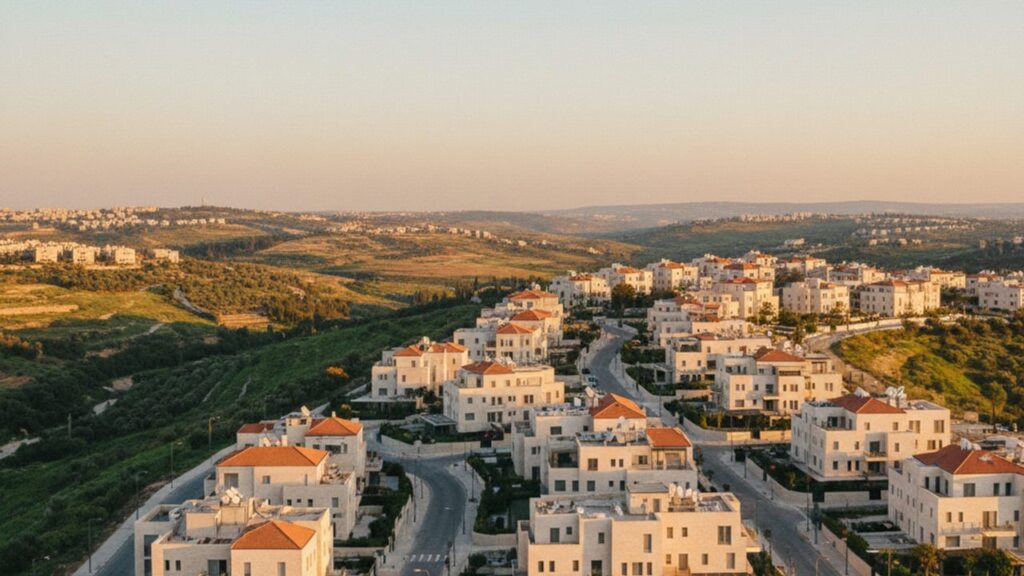

Modi’in-Maccabim-Re’ut is a planned suburban city in central Israel that grew from several late‑20th century communities into a single municipality. The city combines modern neighbourhood planning, significant green space and proximity to major transport links, making it a regional hub for residents.
Modi’in-Maccabim-Re’ut at a Glance
City: Modi’in-Maccabim-Re’ut • Country: Israel • District: Central District • Population: 100052 • Area: 50.176 km² • Nearest major city: Jerusalem • Distance: 30 • Main transport connection: Highway 431 / Road 443 and Israel Railways via Modi’in Central station • Known for: Planned modern city near the Hasmonean (Maccabees) heritage site; high quality of life, large green/linear parks, and a strong municipal education system • Historic origins: The modern city lies near the sites of ancient Modi’in, associated with the Hasmonean family and revolt. Archaeological remains in the municipal area include Hellenistic/Hasmonean layers, Roman‑period finds (including material linked to the Great Revolt and Bar Kokhba period), and other strata at sites such as Horbat Tittora and Umm el‑Umdan.
Insider's Guide to Israel
and can't-miss places most tourists never find.
Where Is Modi’in-Maccabim-Re’ut?
Modi’in-Maccabim-Re’ut sits in the Central District roughly halfway between Tel Aviv and Jerusalem, with Jerusalem approximately 30 kilometres to the east and Tel Aviv about 35 kilometres to the northwest by road. The city’s location places it on the rolling hills that transition from coastal plain toward the Judean lowlands.
The municipal area is bordered by a mix of smaller towns and regional centres; nearby urban points include Lod, Rosh HaAyin and other Central District communities. Road links and a nearby rail connection give the city practical regional access for commuting and services.
Geographically, the urban footprint is set among planned green corridors and open parkland that were incorporated into the city’s development, creating a suburban pattern of residential neighbourhoods, schools and public amenities spread across the municipal area.
History of Modi’in-Maccabim-Re’ut
The area around modern Modi’in contains a long sequence of archaeological layers spanning prehistoric and classical periods. Identified periods in the municipal area include Chalcolithic, Iron Age (First Temple period), Hellenistic/Hasmonean, Roman (with evidence from the Great Revolt and Bar Kokhba period), Byzantine, Early Muslim, Crusader, Mamluk, Ottoman and the British Mandate eras.
Ancient Modi’in is historically associated with the Hasmonean (Maccabean) family and the Maccabean revolt; archaeological sites such as Umm el‑Umdan and Horbat Tittora preserve material evidence from Hellenistic/Hasmonean and Roman periods within the municipal boundaries.
The modern municipal story is much more recent. Small communities in the area were established in the late 20th century: Maccabim in 1985 and Re’ut in 1987. The modern city of Modi’in had its cornerstone laid in 1993 as a planned urban centre, and separate localities were administratively merged into the single municipality of Modi’in‑Maccabim‑Re’ut in 2003. The contemporary city is therefore a late‑20th and early‑21st century development built beside and above ancient sites.
Modi’in-Maccabim-Re’ut Population
As of 2024 the municipal population is recorded at 100,052. That total reflects the consolidated city formed from the growth and administrative merger of formerly separate communities.
Population growth is tied to the area’s development since the 1980s and 1990s, when new neighbourhoods and municipal infrastructure were added to accommodate families and commuters. Compared with larger Central District cities, Modi’in‑Maccabim‑Re’ut is a medium‑sized municipality that functions as a regional hub for its surrounding towns.
What Is It Like to Live in Modi’in-Maccabim-Re’ut?
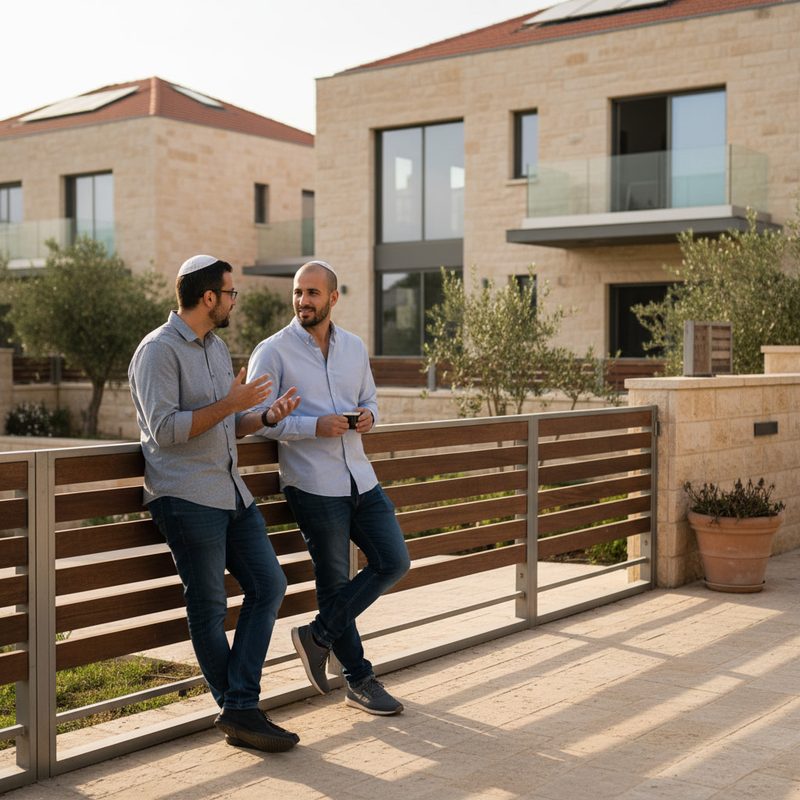
Daily life in Modi’in‑Maccabim‑Re’ut is shaped by suburban planning: residential neighbourhoods, schools and parks are interwoven with local shopping and municipal services. The city emphasizes family‑oriented facilities and municipal investment in education.
The pace tends to be calmer than dense metropolitan centres, with a focus on community amenities, outdoor space and quieter streets. At the same time, transport connections—road links and a nearby railway—make regional commuting practical for people working in larger employment centres.
Infrastructure and services include local shopping and healthcare provision, intercity and local buses, and a central railway station that connects the city to Tel Aviv and Ben Gurion Airport. Municipal planning has retained substantial open space and linear parks, which influence residents’ daily access to nature and recreation.
Overall, the city suits households looking for suburban living with convenient links to regional jobs and services, particularly families and commuters who value schooling and green space alongside transport connections.
Areas and Neighbourhoods in Modi’in-Maccabim-Re’ut
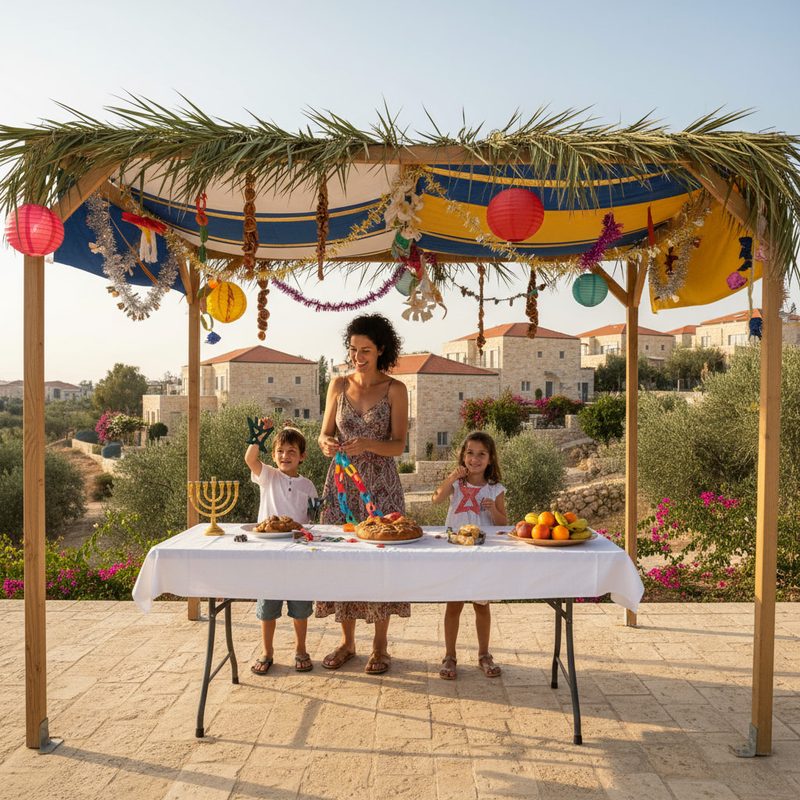
Modi’in‑Maccabim‑Re’ut comprises a mix of planned residential neighbourhoods developed as part of the late 20th and early 21st century expansion. Each neighbourhood reflects the city’s emphasis on green space and family accommodation.
HaShvatim (Shvatim)
HaShvatim is one of the neighbourhoods listed within the municipality; like other districts it forms part of the city’s planned residential pattern. The area is characterized by family housing and access to local schools and parks.
Housing here typically includes low‑ to medium‑density residences with municipal green corridors nearby. Road links connect residents to the city centre and to the main highways for regional travel.
HaShvatim suits families and those seeking quieter residential streets with straightforward access to municipal amenities.
Moriah (Buchman)
Moriah, identified with the alternate name Buchman, is one of the named neighbourhoods contributing to Modi’in’s patchwork of residential areas. The neighbourhood follows the city’s planning approach that balances built areas with open and parkland.
Residents can expect typical suburban housing formats and proximity to local services and schools, with road connections into central Modi’in and onward links to Highway 431 and Road 443.
This neighbourhood is suitable for families and long‑term residents who prioritize community facilities and green space.
HaPrachim (Miromi)
HaPrachim (also referenced as Miromi) forms part of the city’s residential fabric and benefits from the same municipal emphasis on parks and schools. The character is residential and family‑focused.
Transport connections to the city core and to main roads enable commuting by car; local bus services also link neighbourhoods to the train station and surrounding towns.
HaPrachim is well suited to households seeking suburban living with nearby recreational space.
HaNechalim (Safdie)
HaNechalim (Safdie) is listed among the city’s neighbourhoods and follows the municipal planning model: primarily residential with nearby green areas and pedestrian routes.
Housing types are consistent with low‑ to medium‑density suburban development. Local schools and community services are within easy reach, connected by local roads and bus routes.
This neighbourhood typically appeals to families and residents wanting a quieter residential environment.
Masuah (Givat C)
Masuah (sometimes referenced as Givat C) is another residential area within the municipality that contributes to the city’s mix of neighbourhoods. The area balances housing with public open space.
Residents use local roads to reach the city centre and the main transport arteries. The mix of housing and public amenities makes it suitable for mid‑term and long‑term residents.
Masuah is a practical choice for buyers looking for a residential setting with municipal services close by.
HaKramim (Tsipor)
HaKramim (Tsipor) is part of the city’s planned neighbourhood network, offering family‑oriented residential streets and access to nearby parks.
Transport and road connections are consistent with other Modi’in areas, enabling straightforward travel within the municipality and to neighbouring towns.
The neighbourhood is appropriate for households that want suburban living and reasonable access to schools and local services.
Avnei Chen (Kaizer)
Avnei Chen (Kaizer) is one of the neighbourhoods noted in municipal lists. Like other districts, it combines residential development with allocated green spaces and municipal facilities.
Local transport links and proximity to central Modi’in amenities make it convenient for daily life and schooling.
Avnei Chen typically attracts families and residents seeking stable neighbourhoods with municipal services close at hand.
HaNevi’im (Shimshoni)
HaNevi’im (Shimshoni) is listed among the residential neighbourhoods and follows the city’s suburban layout: housing interspersed with parks and schools.
Residents are connected to the wider city and regional network via local roads and bus services to the train station.
This area suits those prioritizing family facilities and access to municipal green areas.
HaMeginim (Shimshoni)
HaMeginim (Shimshoni) is another named neighbourhood within Modi’in’s planned urban fabric, featuring residential streets and local amenities.
Transport and access are similar to other parts of the city, with local bus links and good road access to the city’s main arteries.
Insider's Guide to Israel
and can't-miss places most tourists never find.
Families and longer‑term residents typically find this neighbourhood aligns with a quieter suburban lifestyle.
Maccabim-Re’ut
Maccabim‑Re’ut refers to the older communities that were incorporated into the current municipality. This area reflects the transition from distinct localities into a unified city following the administrative merger in 2003.
Housing formats may include older development alongside newer construction; the area retains direct road links to the rest of Modi’in and to regional highways.
Maccabim‑Re’ut is appropriate for residents who value a mix of established neighbourhood character and access to contemporary municipal services.
Education in Modi’in-Maccabim-Re’ut
The municipality operates an extensive public education system with multiple primary and secondary schools. Municipal investment in education programs is notable and is a central feature of local policy.
National statistics have rated the city at a relatively high socio‑economic level (CBS level 8 out of 10), which is reflected in municipal funding priorities and school resources. Families moving to the area typically consider the local school network a key asset.
For higher education, residents rely on nearby universities and colleges located in larger regional centres; students commonly commute to institutions in Tel Aviv, Jerusalem or other Central District cities.
Transport and Connectivity
Modi’in‑Maccabim‑Re’ut is connected to the national road network by Highway 431 and Road 443, which provide the main road routes toward Tel Aviv and Jerusalem. Road distance to Tel Aviv is approximately 35 kilometres and to Jerusalem approximately 30 kilometres.
The city is served by Modi’in Central railway station, which also receives services at Paatei Modi’in. Israel Railways provides direct intercity services to Tel Aviv with routes that pass via Ben Gurion Airport, simplifying airport access by public transport.
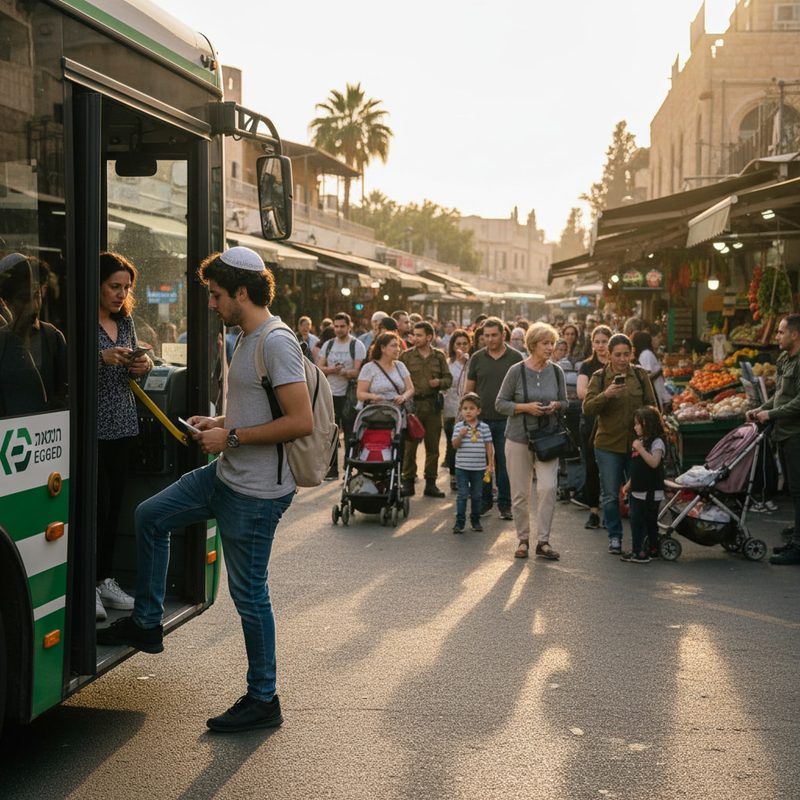
Intercity and local bus services operate to and from the city, with the major operator being Kavim. Bus services connect neighbourhoods to the train station and to surrounding towns, supporting commuter movements and regional travel.
Ben Gurion Airport lies roughly 10 kilometres from the city, making air travel accessible by road or by train connections that serve the airport.
Living entirely car‑free in Modi’in is possible for some residents who rely on the rail and bus links for commuting, but many households use private cars for convenience and local errands given the suburban layout and dispersed amenities.
Nature and Outdoor Spaces
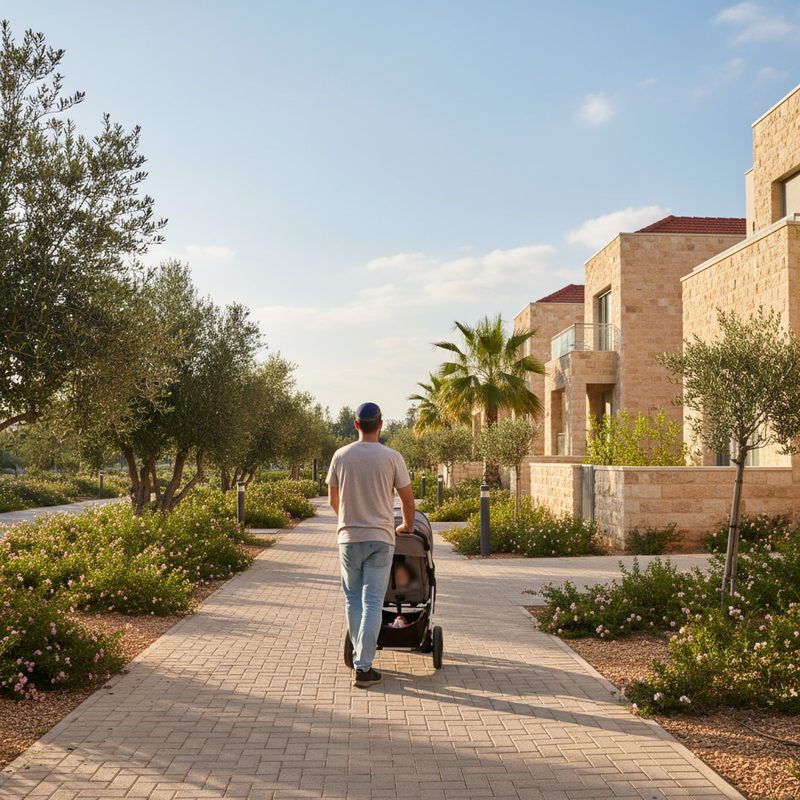
Municipal planning preserved substantial open and parkland as the city was developed. Official notes indicate that roughly half the municipal area has been allocated to green space, producing large planned parks and linear green corridors throughout the urban area.
These green areas create opportunities for walking, family recreation and local outdoor activities without needing to leave the city. The surrounding hills also provide landscape variety compared with coastal plain areas.
Nearby archaeological parks and preserved sites add layered outdoor destinations where history and nature meet, allowing residents to combine heritage visits with outdoor time.
Amenities and Things to Do in Modi’in-Maccabim-Re’ut
Modi’in offers a range of everyday amenities: local shopping, restaurants and municipal services support daily life. Healthcare facilities are available within the city to serve routine and urgent needs.
Cultural and historical attractions include the Modi’in Museum (Museum of the Hasmonean Heritage) and archaeological sites such as Umm el‑Umdan and Horbat Tittora, which are focal points for the city’s historical identity.
Recreational amenities include sports facilities, parks and linear greenways that are used for walking, running and family leisure. The Modi’in Central railway station is both a transport hub and a practical waypoint for trips to Tel Aviv, Ben Gurion Airport and other destinations.
For wider shopping, entertainment and specialized services residents may travel to larger nearby cities, but the municipal core provides most daily needs and a community‑oriented mix of businesses.

Cities and Towns Near Modi’in-Maccabim-Re’ut
Several Central District cities and regional centres sit within easy driving distance of Modi’in‑Maccabim‑Re’ut, offering additional employment, education and service options.
Notable nearby places include Tel Aviv (about 35 km), Jerusalem (about 30 km), Ben Gurion Airport (about 10 km), Rosh HaAyin (about 21.4 km) and Lod (about 16 km). These nearby centres complement the municipal services and expand options for work, study and leisure.
Nearby cities and towns: Tel Aviv — 35 km; Jerusalem — 30 km; Ben Gurion Airport (Lod) — 10 km; Rosh HaAyin — 21.4 km; Lod — 16 km.
Advantages of Living in Modi’in-Maccabim-Re’ut
Strong municipal education focus: The city maintains multiple primary and secondary schools and shows significant municipal investment in education programs, supported by a relatively high socio‑economic rating.
Suburban green planning: A large share of the municipal area is set aside for parks and linear green space, giving residents frequent access to outdoor recreation within the city.
Good regional transport links: Direct rail services to Tel Aviv (via Ben Gurion Airport) and road connections via Highway 431 and Road 443 make commuting feasible and simplify travel to major centres.
Family‑oriented environment: Planned neighbourhoods, local amenities and municipal services are geared toward families and longer‑term residents, creating a stable community feel.
Things to Consider Before Moving to Modi’in-Maccabim-Re’ut
Entertainment and specialised services: While daily shopping and healthcare are available locally, some residents find that certain entertainment options and specialized services require travel to larger nearby cities.
Commute times: Although the city has direct rail and road links, commuting to Tel Aviv or Jerusalem still involves a travel time that may be significant for daily commuters depending on traffic and service schedules.
Housing mix and availability: The city includes a range of housing types developed over recent decades; prospective buyers and renters should consider supply and timing when planning a move.
Who Is Modi’in-Maccabim-Re’ut Best For?
Families
The city is well suited to families who value strong local schooling, parks and a quieter suburban environment with community services close at hand.
Commuters
Commuters benefit from the rail connection to Tel Aviv (and the airport) and good road links that make regional travel feasible for daily work.
Young Professionals
Young professionals who need a balance of affordable suburban living and reliable transport to employment centres can find Modi’in a practical base, especially with rail access to larger cities.
Retirees
Retirees seeking a calm residential setting with access to parks, local services and healthcare will find the city’s green spaces and community infrastructure appealing.
