
Exploring the Symbolism of the Fig Tree in Biblical Texts
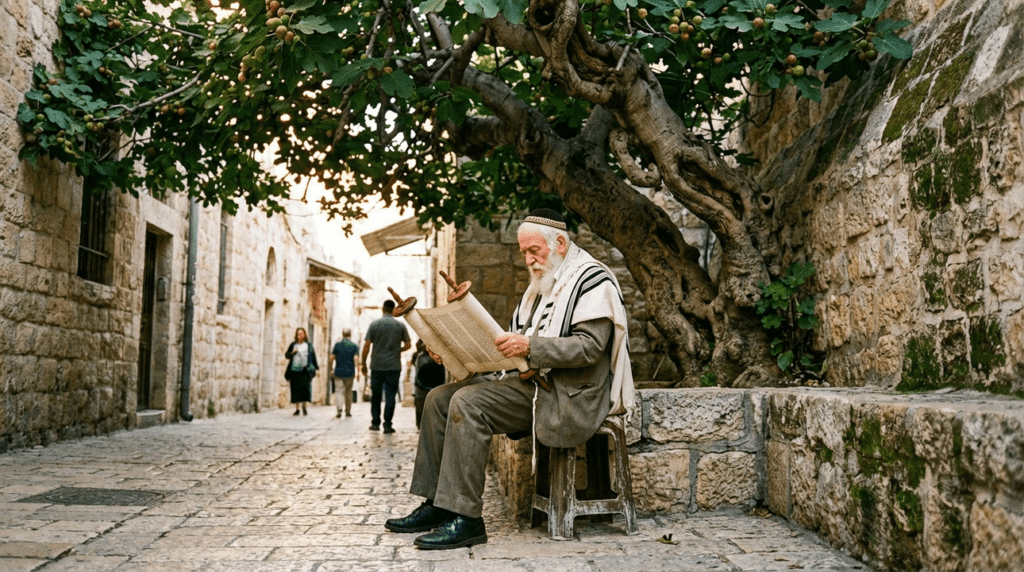

For example, in 1 Kings 4:25, during King Solomon’s reign, the people of Judah and Israel lived in safety, each man under his vine and fig tree, illustrating a time of peace and security. The fig tree symbolizes prosperity and peace, representing sustenance and spiritual lessons.
The fig tree symbolizes prosperity and peace, illustrating divine favor in biblical narratives.
from the Western Wall to Masada.

The Fig Tree in Biblical Times
Deuteronomy 8:8 lists figs among the Seven Species, marking their significance in the land. The fig tree is a symbol of wealth and stability, valued for its fruit and medicinal properties.
The fig tree’s historical role in Israel as a symbol of wealth and stability is underscored by its inclusion in the Seven Species. Deuteronomy 8:8 highlights its agricultural importance, marking it as a staple in the diet of ancient Israelites.
The fig tree’s historical role as a symbol of wealth and stability is emphasized by its inclusion in the Seven Species, highlighting its agricultural significance.
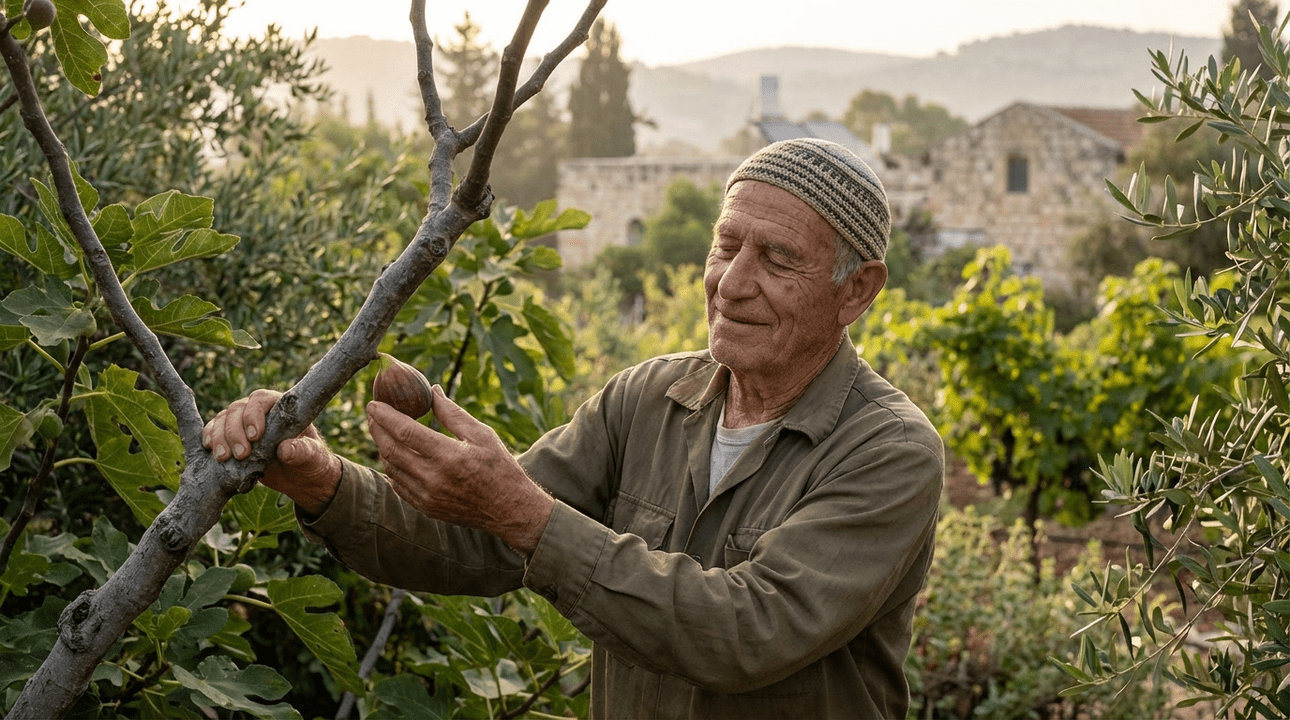
Fig Trees in Prophetic Imagery
In prophetic texts, fig trees often symbolize peace and security. Micah 4:4 speaks of people sitting under their fig trees without fear, representing a vision of future harmony.
This imagery is echoed in Zechariah 3:10, where the fig tree signifies a time when neighbors will invite each other to share in peace and prosperity. This image conveys safety and abundance, marking the fig tree as a sign of divine blessing and prosperity.
This imagery conveys a vision of harmony and prosperity shared among neighbors, a time when peace reigns. The fig tree in prophetic texts represents a future of peace, where harmony and prosperity are shared among neighbors.
The Fig Tree in Parables
Fig trees also appear in Hebrew parables, teaching lessons about faith and readiness. In the Book of Judges, Jotham’s parable of the trees mentions the fig, highlighting its importance in biblical narratives.
In Judges 9:8-15, Jotham uses the fig tree to illustrate the choice of leadership, where the trees seek a king. The fig tree’s refusal to rule emphasizes humility and contentment with its role. These stories enable deeper exploration of moral and theological themes through familiar natural symbols.
The fig tree in Jotham’s parable teaches about leadership, using natural imagery to convey humility and contentment.

Rabbinic Meditations on Fig Trees
In Berakhot 40a, figs are associated with study and learning, as they ripen slowly, symbolizing the gradual acquisition of knowledge. Figs in Rabbinic literature symbolize spiritual growth, linked to study and meditation.
In Rabbinic literature, figs symbolize the slow, rewarding journey of learning. The Talmud, in Berakhot 40a, likens the ripening of figs to the gradual acquisition of wisdom, encouraging deeper Torah study and personal growth.
This metaphor highlights the importance of patience and diligence in spiritual pursuits. Figs in Rabbinic literature encourage a slow, rewarding journey of learning, promoting deeper Torah study and personal growth.
from the Western Wall to Masada.
The Fig Tree and Jewish Tradition
Ecclesiastes 3:1 says there’s a time for every purpose under heaven, linking the cycles of figs with life’s rhythms. The fig tree symbolizes life, fertility, and creation, paralleling human life stages with renewal and continuity.
The fig tree is deeply rooted in Jewish tradition as a symbol of life’s cycles and abundance. It reflects themes of fertility and creation, often mentioned alongside the vine, another symbol of prosperity.
In Genesis 3:7, the fig tree is first referenced when Adam and Eve use its leaves to cover themselves, symbolizing a new beginning. The fig tree embodies the cycles of life, representing fertility and creation in Jewish tradition.
Cultural Significance of Figs
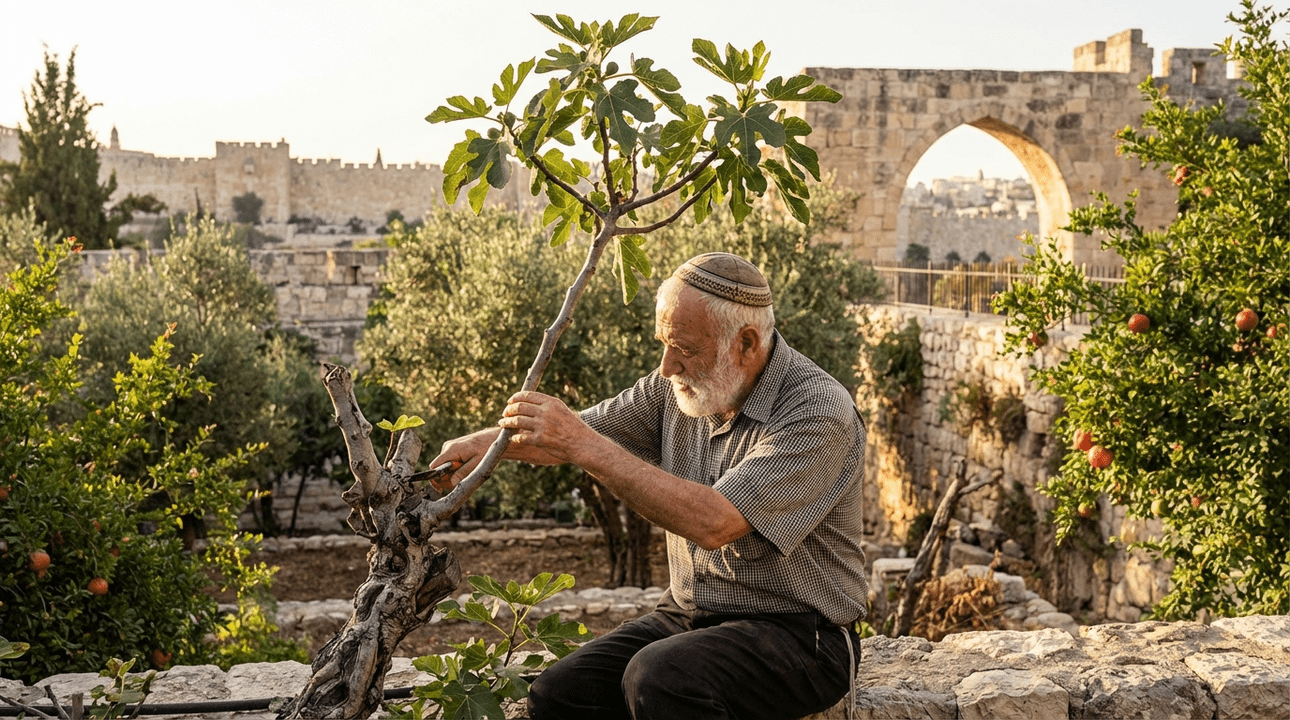
Figs are culturally and nutritionally important, part of the agricultural legacy in Israel and the Mediterranean.
Seen in works from ancient mosaics to modern paintings, figs symbolize continuity and cultural identity. They represent both a nutritional staple and a cultural symbol, deeply rooted in Israel’s heritage and artistic expression.
Figs are a nutritional staple and cultural symbol, deeply rooted in Israel’s heritage and artistic expression.
Fig Trees in Modern Reflections
This is particularly celebrated during Tu B’Shevat, the New Year for Trees, where figs highlight ecological and spiritual renewal. Figs symbolize renewal and hope, celebrated during Tu B’Shevat, emphasizing the connection between nature and spirituality.
This celebration encourages reflection on personal growth and the ongoing renewal of the spirit. During Tu B’Shevat, figs symbolize renewal and are celebrated as a time for ecological and spiritual reflection, emphasizing the connection between nature and spirituality.
Figs in modern Jewish thought symbolize renewal, celebrated during Tu B’Shevat as a time for ecological and spiritual reflection.

Conclusion: Figs as Timeless Symbols
Figs remain a vivid symbol in Jewish mysticism, embodying abundance, peace, and spiritual growth. Through biblical stories and rabbinic wisdom, the fig tree represents a timeless connection to the land and life’s cycles.
In Kabbalistic teachings, the fig tree is often seen as a metaphor for the sefirot, or divine attributes, reflecting the interconnectedness of creation. It invites reflection on growth, sustenance, and the journey of faith and community, offering a path to deeper spiritual understanding.
Understanding Biblical Fig Trees
