
Lev Haolam logo – Israel gift box company
Join now
Lev Haolam
  • Home
  • To The Top
  • Who We Are?
  • How It Work
  • Membership
  • Our Boxes
  • Testimonials
  • FAQ
  • Blog
    • Articles
    • Recipes
    • Gift Boxes
  • Career
Log In
Join now
Log In
Join now
  1. Home
  2. Blog
  3. Jewish Mysticism and Symbolism

Discover the Depths of Jewish Mysticism and Symbolism

Delve into the fascinating realm of Jewish Mysticism and Symbolism, where ancient traditions meet profound cultural insights. This category explores the mystical aspects of Judaism, offering a window into the spiritual and symbolic practices that have shaped Jewish life for centuries. From the mystical teachings of the Kabbalah to the symbolic meanings behind Jewish rituals, uncover the layers of meaning that continue to inspire and connect communities worldwide.
Ancient Jewish symbols and mystical texts
Symbols of heritage in everyday home settings

Sacred Symbols in Everyday Life: How Heritage Finds a Place in Our Homes

The Language of Symbols Sacred symbols say more than we can fit in a paragraph. They carry stories across generations, and every home translates them a little differently. Three appear again and again in Jewish life and Israeli craft: the pomegranate, the Tree of Life, and Hebrew letters themselves. Each symbol holds a universe – historical echoes, spiritual teachings, and everyday wisdom for how to live. The Pomegranate: Abundance You Can Hold The pomegranate appears in Scripture and traditional art as an emblem of fullness and blessing. It’s been said – poetically, not mathematically – that a pomegranate holds 613...
Show more
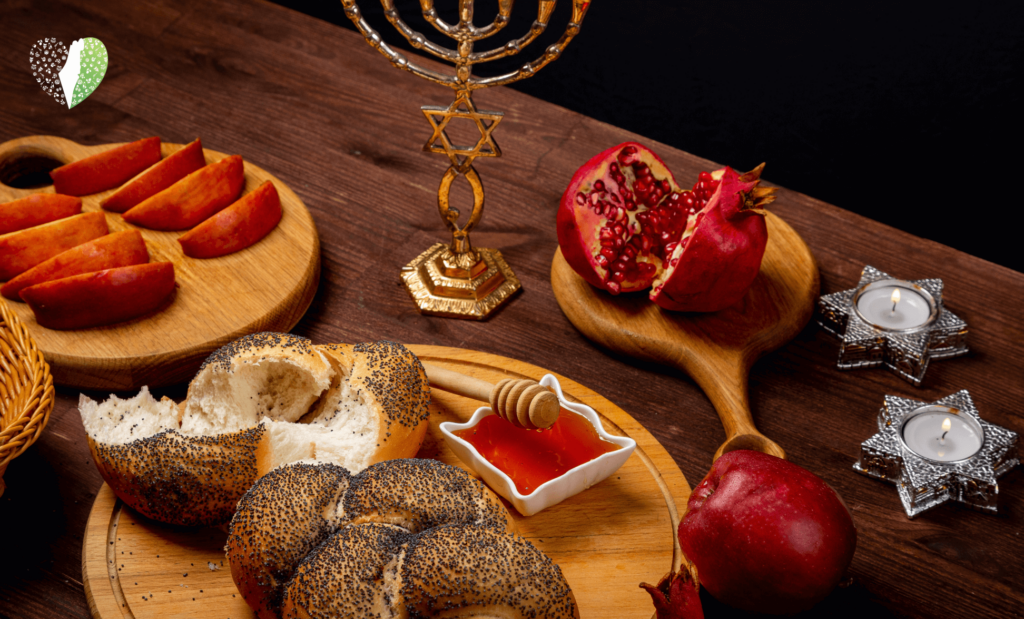
Pomegranate split open revealing seeds

The Pomegranate Secret: Ancient Symbol, New Year Hope

Tradition at the Table As Rosh Hashanah approaches, Jewish homes across Israel and the world fill with the scents and sights of holiday traditions: apples dipped in honey, round challah loaves, and pomegranates shining like jewels at the center of the table. When families gather, the ritual begins. Parents slice open the fruit and pass its seeds to their children with the blessing: Every seed becomes a prayer for good deeds and abundance in the year ahead. The act is simple, yet profound – linking grandparents to grandchildren, faith to tradition, the past to the future. 👉 Tip: If you’ve...
Show more
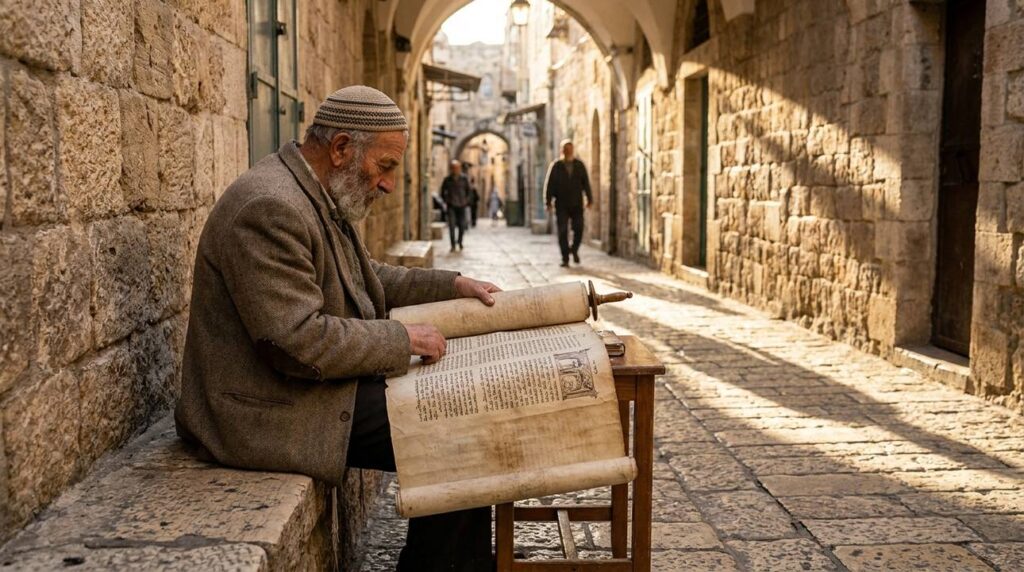
Elderly Jewish man studies ancient Hebrew scroll in Jerusalem alley.

Understanding Ezekiel’s Vision: The Wheel Within a Wheel

Ezekiel’s account is rich with imagery, including the four living creatures and the intricate wheels, each element contributing to the overall message of divine presence and order. By examining these symbols, readers can gain insight into the ways in which the divine interacts with the world and influences human affairs. This exploration invites a deeper engagement with the text and its enduring relevance in spiritual discourse. Ezekiel’s Vision: The Biblical Account In the passage from Ezekiel 1:4-28, the prophet describes a scene where he sees a ‘wheel within a wheel’. This section stands out due to its vivid and detailed...
Show more
Elderly rabbi studying ancient texts in a dim, traditional study room.

Unraveling the Mystical Meaning of Ezekiel

Who Was Ezekiel in the Bible? Ezekiel was a Hebrew prophet during the Babylonian exile of the 6th century BCE. His role was pivotal in communicating divine messages to the Jewish people during a time of turmoil. Ezekiel’s prophetic career began around 593 BCE, and he was among those exiled to Babylon after the siege of Jerusalem. His messages often focused on hope and restoration. His profound visions are unique among the prophets, combining vivid imagery with spiritual teachings. Ezekiel sought to convey the power and presence of the Divine, even in exile. Ezekiel’s messages were delivered during a period...
Show more
Men in traditional Jewish attire discussing beside a menorah in a synagogue.

Exploring the Symbolism of Wheels in the Bible

Ezekiel’s Vision of Wheels The Book of Ezekiel describes a remarkable vision where the prophet sees a chariot with wheels within wheels, accompanied by heavenly creatures (Ezekiel 1:15-21). The dazzling complexity of these wheels allows them to move in coordination with the entities. This vision intrigues for its grandeur and rich symbolic content. Ezekiel’s depiction has been foundational for later mystical traditions, offering insights into divine presence and cosmic order, influencing works like the Zohar and Sefer Yetzirah. Ezekiel’s vision, with its vivid imagery and detailed descriptions, has captivated the imagination of scholars and mystics alike. The presence of the...
Show more
Elderly Jewish man tends vineyard with ancient texts on wooden table.

Discovering the Symbolism of Vines in Jewish Mysticism

Vines in Biblical Texts In ancient Israel, vines were more than just agricultural plants. They symbolized prosperity and divine favor. The Bible mentions vineyards numerous times, highlighting their essential role in society. For instance, Isaiah 5:1-7 uses the vineyard as a metaphor for the nation of Israel itself, illustrating care and growth. These texts show how vines are synonymous with fertility and divine provision, reflecting the intimate relationship between the people and their land, a theme echoed in many biblical narratives. The Book of Numbers (13:23) describes scouts bringing back a cluster of grapes, symbolizing the abundance awaiting the Israelites...
Show more
Elderly Jewish man reads Torah in a stone synagogue room.

Exploring the Mystical Symbolism of Eagles in the Bible

Eagles are mentioned in Isaiah 40:31, where those who hope in the divine will “renew their strength; they will soar on wings like eagles.” This verse highlights renewal and strength, offering comfort and encouragement to believers. These biblical references underscore the eagle’s significance as a symbol of divine intervention and support, emphasizing the enduring bond between the Jewish people and their spiritual journey. This imagery invites individuals to embrace renewal and strength in their faith. The eagle in the Bible serves as a reminder of the divine support available to those who remain faithful. This symbolism encourages individuals to seek...
Show more
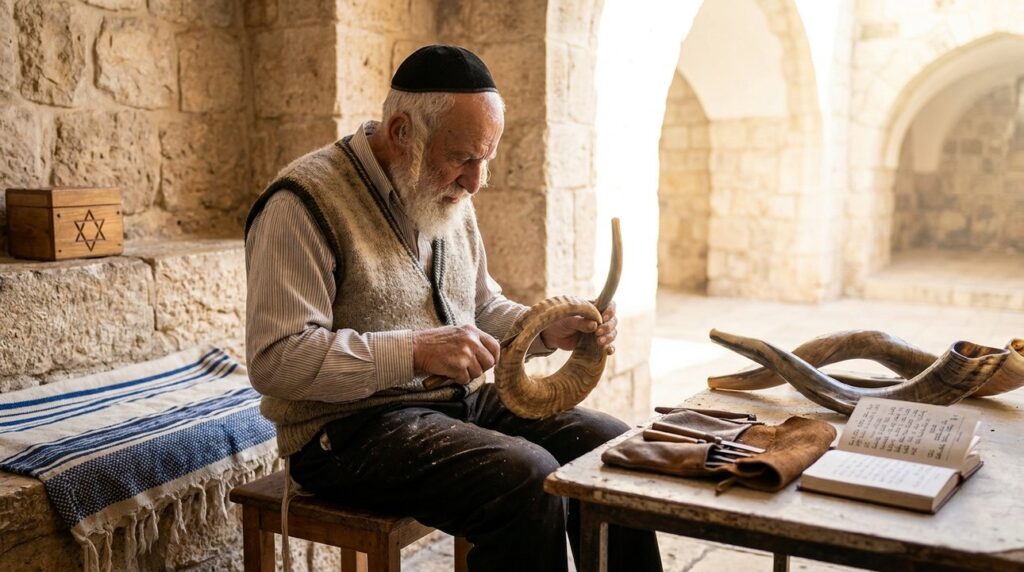
Elderly Jewish man in kippah crafting shofar in Jerusalem's old city.

Exploring Ram Horn Symbolism in Biblical Context

Understanding Ram Symbolism in Biblical Texts Ram horns frequently appear in the Torah, symbolizing strength and leadership. A notable instance is the binding of Isaac, where a ram serves as a substitutionary sacrifice. In Genesis 22:13, Abraham discovers a ram caught by its horns, marking a pivotal moment of divine provision and intervention. This event is commemorated in Jewish tradition during Rosh Hashanah, where the shofar is sounded to remind the faithful of Abraham’s faith and the ram’s role in the story. The ram’s appearance in the story of Abraham and Isaac is not just a tale of sacrifice but...
Show more
Elderly Jewish man in traditional attire reading ancient texts at a table.

Exploring the Symbolism of Babylon in Jewish Mysticism

Babylon in Jewish Thought Babylon, known for its grandeur, was more than just a city in historical terms; it became an emblem in Jewish culture. The Babylonian Exile, a pivotal event in Jewish history, marked a period where the Jewish people were removed from their homeland. This exile introduced new cultural and theological challenges, shaping its place in Jewish symbolism. As described in the Bible (2 Kings 25), the capture of Jerusalem and the subsequent exile were moments of profound change and reflection. Thus, Babylon became synonymous with displacement but also resilience, as it prompted the Jewish community to maintain...
Show more
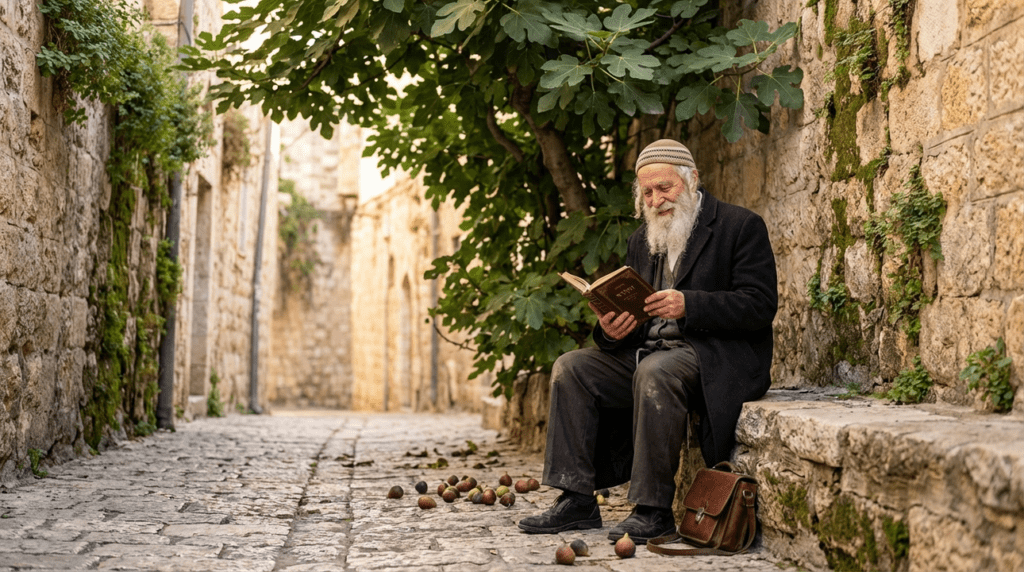
Elderly Jewish man in kippah studying text under fig tree.

Unveiling the Symbolism of Figs in Jewish Mysticism

Figs in the Hebrew Bible Figs rank among the earliest cultivated fruits, appearing in numerous biblical passages. Genesis 3:7 describes Adam and Eve sewing fig leaves together, symbolizing awareness and the beginning of human self-consciousness. The fig leaf represents the first step towards knowledge and moral understanding. Figs also appear in prophetic visions, symbolizing peace and prosperity in each person resting under their vine and fig tree (Micah 4:4). This imagery conveys security and divine blessing, making figs a potent symbol in Jewish thought. Beyond their role in Genesis, figs are mentioned in other biblical contexts, such as in Jeremiah...
Show more
Elderly man in traditional Jewish attire pruning an olive tree.

Understanding the Symbolism of the Olive Branch in the Bible

The symbolism of the olive branch extends beyond peace, encompassing themes of reconciliation and unity. In Jewish mysticism, it is seen as a symbol of divine protection, offering a sense of security and comfort. This multifaceted symbol encourages us to reflect on the importance of peace in our lives and communities. By understanding its historical and spiritual significance, we can appreciate its role in fostering harmony and connection among people. The First Appearance of the Olive Branch in Scripture The olive branch first appears in the story of Noah. In Genesis 8:11, a dove brings back an olive leaf to...
Show more
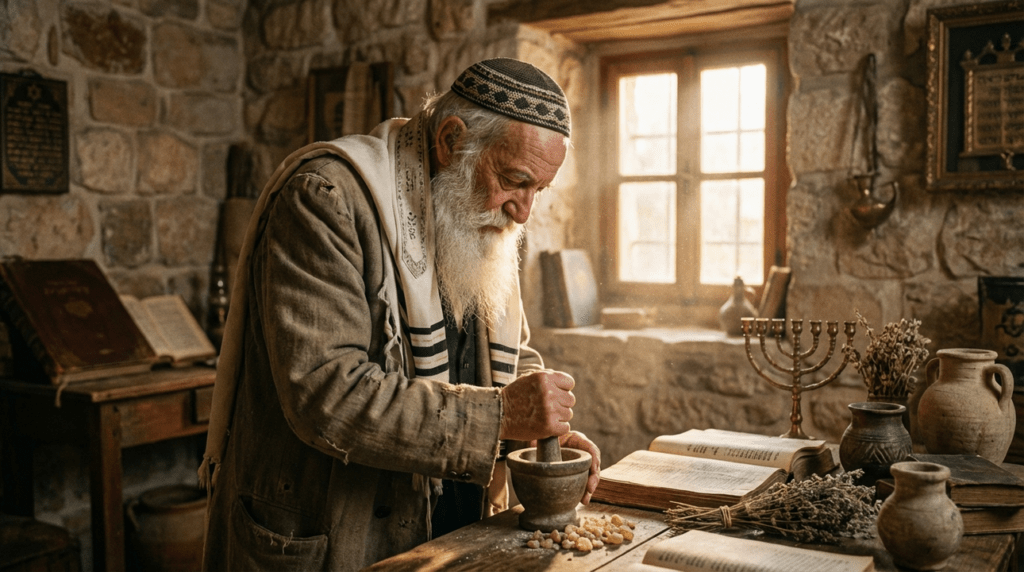
Elderly Jewish man prepares frankincense in traditional attire in Jerusalem.

Unveiling the Symbolism of Frankincense in Jewish Rituals

The significance of frankincense in Jewish mysticism is further illustrated by its mention in the Talmud, where it is associated with divine service and spiritual elevation. This connection underscores its role in fostering a deeper understanding of spiritual truths. By examining its historical and mystical applications, we gain insight into how frankincense has shaped religious practices and beliefs over the centuries. Its enduring presence in these traditions highlights its importance as a symbol of devotion and spiritual enlightenment. Through this exploration, we aim to connect you with the deep cultural and spiritual heritage that surrounds this aromatic resin. Frankincense’s role...
Show more
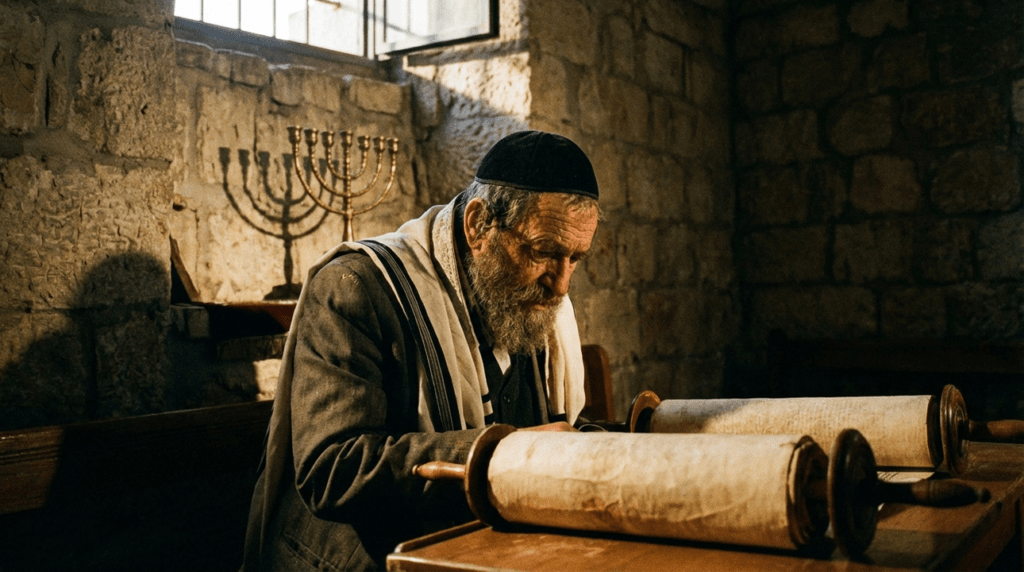
Elderly Jewish man reads Torah in a historic Jerusalem synagogue.

Unveiling the Mystical Wheels of Ezekiel

The enigmatic vision of the ‘wheel within a wheel’ from the Book of Ezekiel (KJV) has fascinated scholars and mystics alike. Found in Ezekiel 1:16, this imagery is part of Jewish mystical traditions, often linked to the themes of divine movement and spiritual revelation. Ezekiel, a prophet during the Babylonian exile in the 6th century BCE, described this vision while by the River Chebar. His descriptions are vivid, mentioning creatures and wheels full of eyes, symbolizing awareness and divine presence. In this article, we dive into this symbolic vision, exploring its meaning and significance. The vision’s complexity invites interpretations that...
Show more
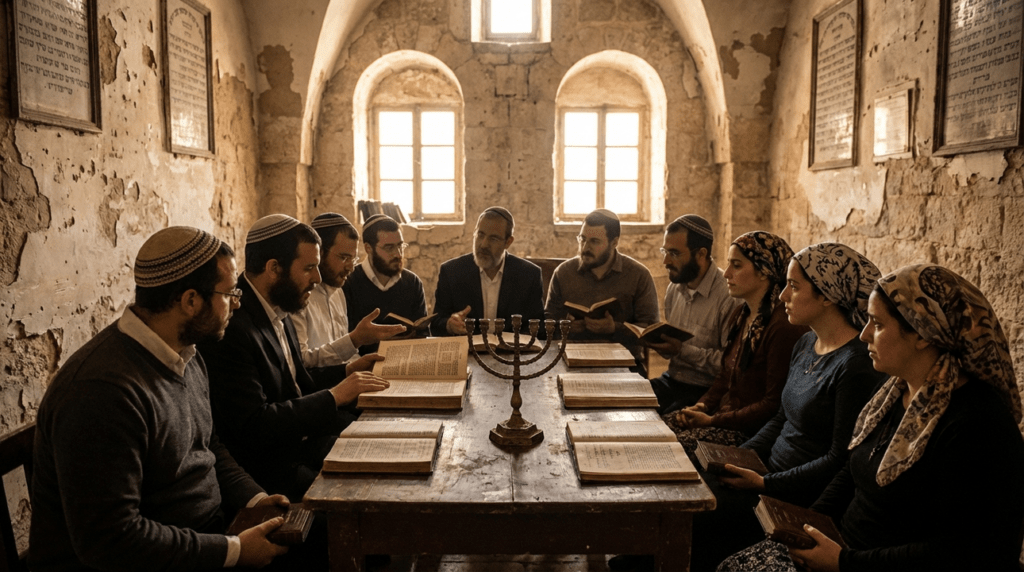
Group studying Exodus in ancient Jerusalem synagogue with menorah visible.

Unveiling the Mysteries of the Ten Plagues in Exodus

The Ten Plagues: An Overview In the biblical book of Exodus, ten plagues were sent upon Egypt as a divine demonstration of power. From the waters turning to blood to the death of the firstborn, these plagues aimed to compel Pharaoh to release the Israelites from slavery. This sequence is not merely an ancient tale; within each plague lies symbolism that resonates deeply in Jewish mysticism. The number ten itself is significant, reflecting completion and totality in biblical contexts. The first plague, turning the Nile to blood, struck at the lifeline of Egyptian civilization. This event is detailed in Exodus...
Show more
Elderly Jewish man reading the Bible in an olive grove.

Exploring Animal and Gold Symbolism in the Bible

Animal Symbolism in Biblical Texts Animals hold profound symbolic meanings throughout the Bible. They often appear as metaphors and convey unique lessons. For instance, the lion symbolizes strength and royalty, often associated with the tribe of Judah in Genesis 49:9. This imagery is echoed in the story of David, who is described as a lion-like warrior. Similarly, the dove reflects peace and the Holy Spirit, first appearing in Genesis 8:8-12. Each animal’s representation adds a layer of depth to the biblical stories, clarifying their spiritual relevance. The serpent, in contrast, symbolizes temptation and danger, as seen in Genesis 3. The...
Show more
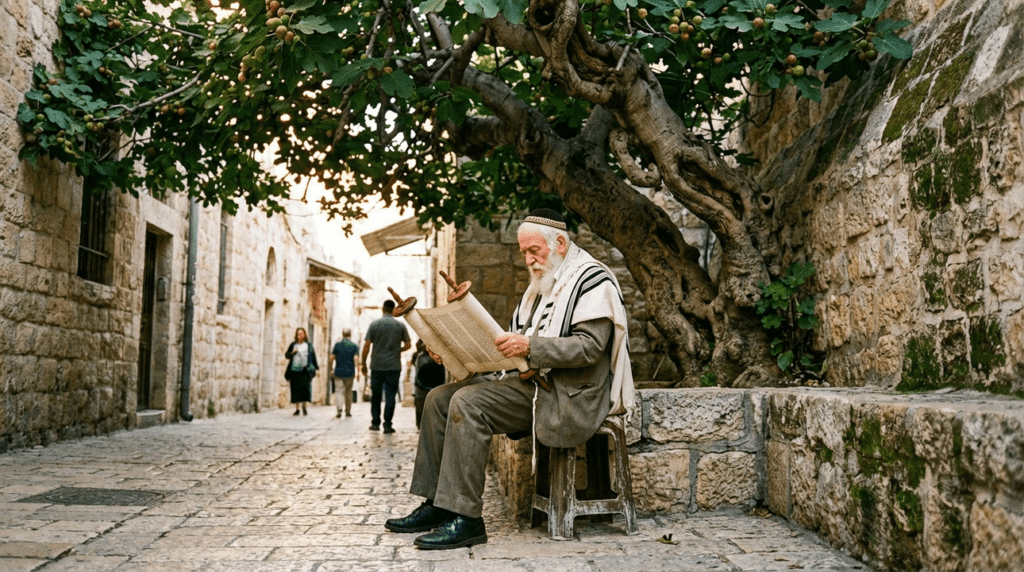
Elderly Jewish man reads Torah under fig tree in Jerusalem alley.

Exploring the Symbolism of the Fig Tree in Biblical Texts

In biblical symbolism, the fig tree stands out as a profound symbol of prosperity and peace. Throughout the Bible, it appears in various narratives, representing both physical sustenance and spiritual lessons. For example, in 1 Kings 4:25, during King Solomon’s reign, the people of Judah and Israel lived in safety, each man under his vine and fig tree, illustrating a time of peace and security. The fig tree symbolizes prosperity and peace, representing sustenance and spiritual lessons. The fig tree’s presence in biblical stories underscores its importance in conveying divine favor and abundance. In 1 Kings 4:25, during Solomon’s reign,...
Show more
Elderly Jewish man reading Torah under olive tree at sunset.

Unveiling Cherub Symbolism and Its Spiritual Significance

The cherub, a divine being mentioned throughout the Bible, imbues rich symbolic meaning. From their presence in the Garden of Eden to their central role in the Ark of the Covenant, cherubs echo through the scriptures and Jewish mystical writings. This article delves into the symbolism of cherubs, exploring their significance as guardians, messengers, and spiritual connectors between realms. Through biblical and kabbalistic perspectives, discover how cherubs continue to fascinate and inspire. Cherubs in the Garden of Eden Cherubs first appear in the Bible in the Book of Genesis, guarding the entrance to the Garden of Eden with a flaming...
Show more
Elderly Jewish scholar reading ancient texts in a book-lined study.

The Symbolic Meaning of the Wheel in Jewish Mysticism

In Jewish mysticism, wheels play a profound role, symbolizing complex spiritual concepts. These wheels appear prominently in the vision of Ezekiel, as described in Ezekiel 1:15-21, inspiring awe and mystery. The imagery of wheels within wheels conjures thoughts of divine mechanics and the perpetual motion of the spiritual universe. Ezekiel’s vision, set during the Babylonian exile, reflects the yearning for divine presence and guidance. It serves as a powerful symbol of hope and spiritual connection. The wheels are seen as representations of the divine order and the movement of spiritual energy. This imagery invites individuals to explore their own spiritual...
Show more

See other categories

Stunning landscapes and vibrant culture of Israel
All About Israel
Ancient Places
Ancient scrolls and artifacts related to Biblical Studies
Biblical Studies
Hands holding a heart symbolizing support and community
Charity and Social Responsibility
Cities
Assorted Israeli dishes and beverages
Food and Beverages from Israel
Scenic view of Israeli landscape with traditional elements
General
Scenic view of Israel's diverse landscapes
Geography & Travelling of Israel
Open Hebrew book with traditional script
Hebrew Language and Literature
We use cookies to provide the best site experience
Lev Haolam logo
Lev Haolam Facebook page Lev Haolam YouTube Follow Lev Haolam on Twitter Instagram Lev Haolam Lev Haolam Pinterest
© 2015 – 2026 Lev Haolam
Become a member Update my details
Contact Us
+972 23721384 +1 (531) 208 1263
Customer Support: 24/6 · Sun–Fri (till 4pm)

Closed on Shabbat hours & Israeli public holidays
support@levhaolam.com
Lev Haolam copyright
Lev Haolam World Ltd.
Luleem Business Center, Kfar
Etzion 9091200, Israel
Israeli Company Number: 515056927
Become a member Update my details
Privacy Policy Terms & Conditions AI Information About Lev Haolam
Mastercard payment for Israel gifts Visa card Maestro card American Express payment option PayPal – pay for your Israel box Secure payment for Israel boxes
© 2015 – 2026 Lev Haolam