
Traditional Israeli Shabbat Delight
13 May 10:25
256
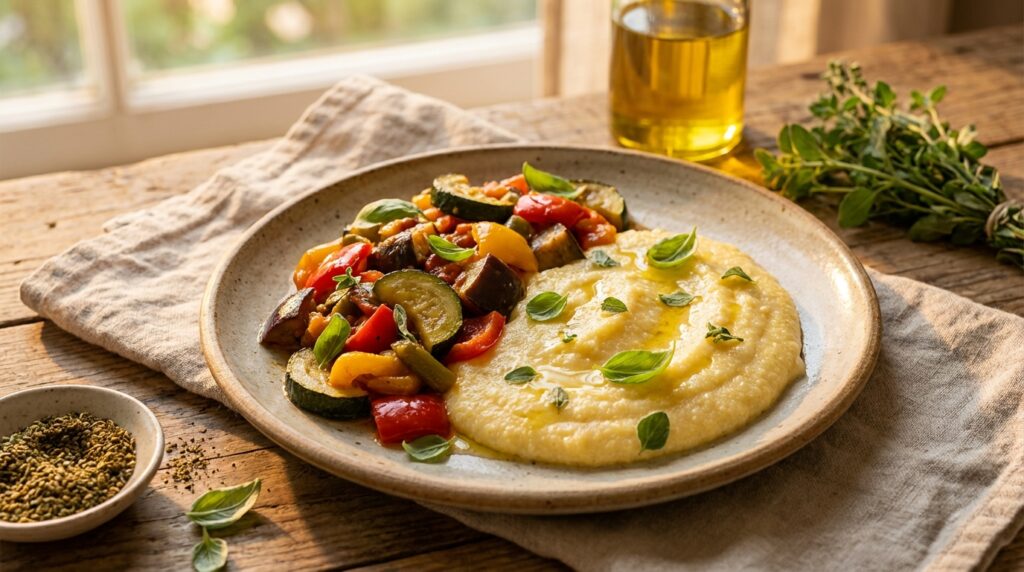

The origins of ratatouille trace back to the sunny region of Provence, France. This dish was traditionally made by farmers using fresh vegetables from their gardens. Over time, it has become a symbol of rustic and wholesome cooking, celebrated for its simplicity and rich flavors.
In Israel, ratatouille has found a special place in the hearts of many. The abundance of fresh produce in the region makes it a natural fit for Israeli cuisine. The dish is often prepared with local vegetables, adding a unique twist to the traditional recipe.
Polenta, on the other hand, hails from Italy and is made from ground cornmeal. It has been a staple in Italian kitchens for centuries, known for its versatility and comforting texture. In Israel, polenta is often enriched with local flavors, creating a delightful accompaniment to various dishes.
The fusion of ratatouille and polenta brings together the best of both worlds. The vibrant, tangy flavors of the ratatouille complement the creamy, smooth texture of the polenta. This combination not only satisfies the palate but also tells a story of cultural exchange and culinary creativity.
In Israeli homes, this dish is often shared during family gatherings and festive occasions. It embodies the spirit of togetherness and the joy of sharing a meal with loved ones. The colorful presentation and rich taste make it a favorite among both young and old.
As you savor each bite, you are reminded of the rich agricultural heritage of Israel. The fresh ingredients and traditional cooking methods reflect a deep connection to the land and its bounty. This dish is more than just food; it’s a celebration of life and community.
Whether enjoyed on a warm summer evening or a cozy winter night, ratatouille and polenta offer comfort and satisfaction. The dish adapts well to seasonal variations, allowing you to use the freshest ingredients available. It’s a versatile recipe that invites creativity and personal touches.
The preparation of this dish is a labor of love. Each step, from chopping the vegetables to stirring the polenta, requires care and attention. The process itself is a meditative experience, connecting you to the simple pleasures of cooking.
In the end, the reward is a meal that nourishes both body and soul. The flavors linger on the palate, leaving a lasting impression of warmth and contentment. It’s a dish that invites you to slow down, savor each moment, and appreciate the beauty of culinary tradition.