Due to the war in Israel, shipments may be delayed. Thank you for standing with Israel.

Discovering the Unique Flavors of Israeli and Moroccan Couscous

A Journey Through Two Couscous Traditions
Dive into the world of couscous with this recipe that highlights the unique textures and flavors of Israeli and Moroccan varieties.
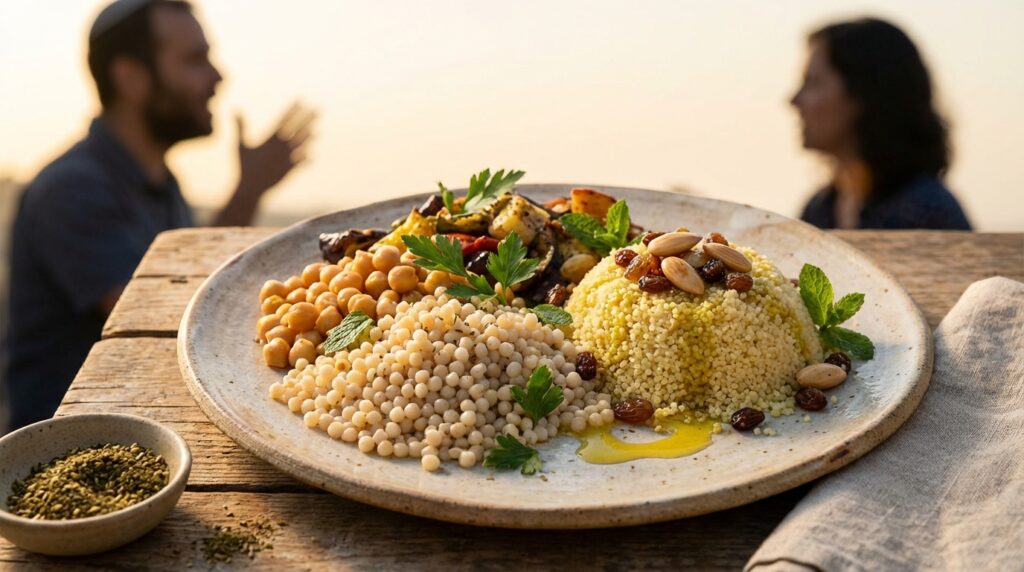
Image illustrating:Discovering the Unique Flavors of Israeli and Moroccan Couscous
11
David Pliner
Culinary & Israeli Heritage Enthusiast
Explore the delightful differences between Israeli and Moroccan couscous in this flavorful recipe.

Health Benefits

  • Couscous is a good source of selenium, promoting heart health.
  • Rich in fiber, couscous aids in digestion and weight management.
  • Contains plant-based protein, supporting muscle growth.

Ingredients

Israeli couscous
1 cup
Moroccan couscous
1 cup
Olive oil
2 tablespoons
Onion, chopped
1 medium
Garlic, minced
2 cloves
Vegetable broth
2 cups
Carrot, diced
1 medium
Zucchini, diced
1 medium
Cumin
1 teaspoon
Coriander
1 teaspoon
Salt
to taste
Pepper
to taste
Fresh parsley, chopped
1/4 cup

Chef's Tips

For a richer flavor, toast Israeli couscous in olive oil before cooking. Add a pinch of saffron to Moroccan couscous for an authentic touch. Experiment with different vegetables and spices to create your own unique dish.

Instructions

  • 1
    1
    Prepare the Israeli Couscous
    In a medium saucepan, heat 1 tablespoon of olive oil over medium heat. Add the Israeli couscous and toast until golden brown. Add 1 cup of vegetable broth and bring to a boil. Reduce heat, cover, and simmer for 10 minutes until the liquid is absorbed.
  • 2
    2
    Cook the Moroccan Couscous
    In a separate pot, bring 1 cup of vegetable broth to a boil. Stir in the Moroccan couscous, cover, and remove from heat. Let it sit for 5 minutes, then fluff with a fork.
  • 3
    3
    Sauté the Vegetables
    In a large skillet, heat the remaining olive oil over medium heat. Add the chopped onion and garlic, sautéing until fragrant. Stir in the diced carrot and zucchini, cooking until tender.
  • 4
    4
    Combine and Season
    Mix the cooked Israeli and Moroccan couscous into the skillet with the vegetables. Add cumin, coriander, salt, and pepper. Stir well to combine all ingredients.
  • 5
    5
    Serve and Garnish
    Transfer the couscous mixture to a serving dish. Garnish with fresh parsley and serve warm. Enjoy the delightful blend of textures and flavors.

The Rich History of Couscous

Couscous has been a staple in North African cuisine for centuries.

Originating from the Berber people, couscous is a versatile dish that has been adapted by various cultures across the Mediterranean. Its simplicity and ability to absorb flavors make it a favorite in many households.
Israeli couscous, also known as ptitim, was developed in the 1950s as a rice substitute. Its larger pearls and chewy texture offer a unique twist on traditional couscous, making it a popular choice in Israeli cuisine.
Moroccan couscous, on the other hand, is much finer and often steamed to create a light, fluffy texture. It is typically served with rich stews and aromatic spices, reflecting the vibrant culinary traditions of Morocco.

Both types of couscous offer distinct culinary experiences.

The introduction of couscous to Israel brought about a fusion of flavors, blending Middle Eastern spices with traditional North African methods. This culinary exchange has enriched the Israeli food scene, offering a diverse range of couscous dishes.
In Morocco, couscous is often prepared for special occasions and family gatherings, symbolizing hospitality and community. The dish is usually served in a large communal bowl, encouraging sharing and togetherness.
The adaptability of couscous has allowed it to become a global favorite, with each culture adding its own unique touch. Whether enjoyed as a side dish or a main course, couscous continues to be a beloved staple around the world.

Couscous is celebrated in various festivals and cultural events.

In Israel, couscous is often paired with fresh vegetables and herbs, creating a refreshing and nutritious meal. The use of local ingredients highlights the connection between the land and its people, emphasizing sustainability and tradition.
Moroccan couscous is typically flavored with saffron, cinnamon, and dried fruits, creating a sweet and savory profile that delights the senses. This combination of flavors is a testament to the rich culinary heritage of Morocco.
Both Israeli and Moroccan couscous have transcended their origins, becoming a beloved dish in kitchens worldwide. Their versatility and ability to complement a wide range of flavors make them a staple in many culinary traditions.


Related Recipes

FAQ

What is the difference between Israeli and Moroccan couscous?
Israeli couscous is larger and chewier, while Moroccan couscous is finer and fluffier.
Can I substitute Israeli couscous for Moroccan couscous?
Yes, you can substitute one for the other, but the texture will differ.
How should I store leftover couscous?
Store cooked couscous in an airtight container in the fridge for up to 5 days.