Baking Shlissel Challah for Prosperity

A Symbolic Bread with Deep Roots in Tradition
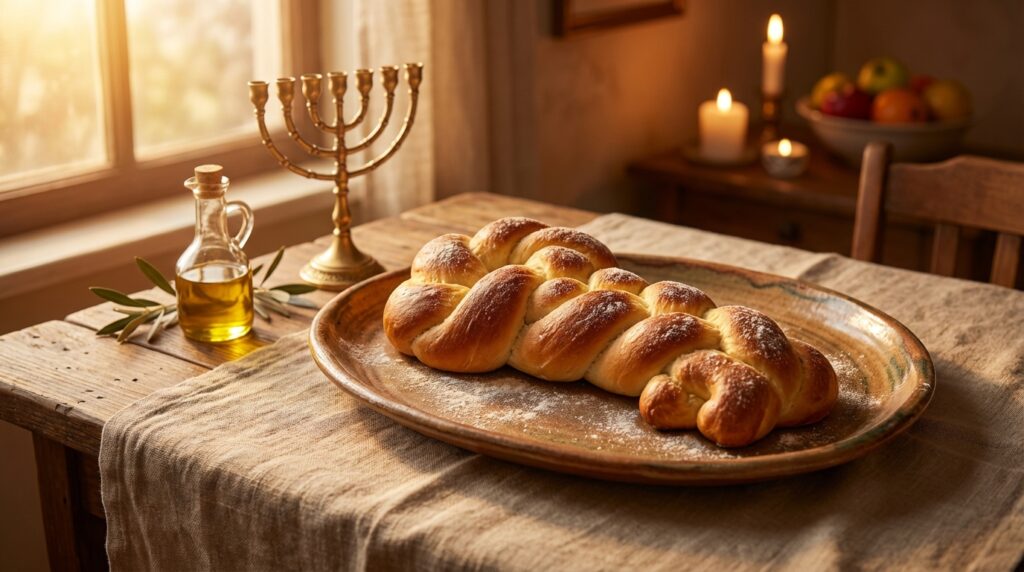
Learn to bake Shlissel Challah, a traditional bread symbolizing prosperity and blessings, with this detailed recipe and its rich cultural history.
Image illustrating:Baking Shlissel Challah for Prosperity
3
David Pliner
Culinary & Israeli Heritage Enthusiast
Discover the tradition of Shlissel Challah, a symbolic bread baked after Passover, believed to bring blessings and prosperity. Learn how to make this special bread.

Health Benefits of Shlissel Challah

  • Rich in carbohydrates for energy.
  • Contains protein from eggs for muscle repair.
  • Honey adds natural sweetness and antioxidants.

Ingredients for Shlissel Challah

All-purpose flour
4 cups
Warm water
1 cup
Active dry yeast
2 1/4 teaspoons
Sugar
1/4 cup
Salt
1 teaspoon
Eggs
2 large
Vegetable oil
1/4 cup
Honey
2 tablespoons
Poppy seeds
for sprinkling

Chef's Tips for Perfect Shlissel Challah

For a perfect Shlissel Challah, ensure your dough is well-kneaded and rises in a warm place. Adding a touch of honey can enhance the flavor and symbolize a sweet year ahead.

Instructions for Baking Shlissel Challah

  • 1
    1
    Prepare the Yeast
    In a small bowl, combine warm water, sugar, and yeast. Stir gently and let it sit for about 5-10 minutes until it becomes frothy. This indicates that the yeast is active and ready to use.
  • 2
    2
    Mix the Dough
    In a large mixing bowl, combine the flour and salt. Make a well in the center and add the eggs, oil, honey, and the yeast mixture. Mix until a dough begins to form.
  • 3
    3
    Knead the Dough
    Transfer the dough to a floured surface and knead for about 10 minutes until it becomes smooth and elastic. This process is crucial for developing the gluten, which gives the bread its structure.
  • 4
    4
    First Rise
    Place the kneaded dough in a greased bowl, cover it with a damp cloth, and let it rise in a warm place for about 1-2 hours or until it has doubled in size. This rise allows the yeast to work its magic, creating a light and airy texture.
  • 5
    5
    Shape the Challah
    Punch down the risen dough to release excess air. Divide it into three equal parts and roll each into a long strand. Braid the strands together, tucking the ends underneath to create a neat finish. Optionally, shape it like a key for the traditional Shlissel Challah.
  • 6
    6
    Second Rise
    Place the braided challah on a baking sheet lined with parchment paper. Cover it again with a damp cloth and let it rise for another 30-45 minutes. This second rise ensures the bread is light and fluffy.
  • 7
    7
    Bake the Challah
    Preheat your oven to 350°F (175°C). Brush the risen challah with a beaten egg and sprinkle with poppy seeds. Bake for 25-30 minutes or until golden brown and hollow-sounding when tapped on the bottom.
  • 8
    8
    Cool and Serve
    Allow the challah to cool on a wire rack before slicing. Enjoy it fresh with butter or honey, savoring the symbolic flavors and the joy of a tradition that connects generations.

The Rich History of Shlissel Challah

Shlissel Challah is baked after Passover as a symbol of prosperity.

The tradition of baking Shlissel Challah dates back centuries, with roots in Eastern European Jewish communities. The word ‘shlissel’ means ‘key’ in Yiddish, and the bread is often shaped like a key or has a key baked into it. This practice is believed to open the gates of sustenance and blessing for the coming year.
In many households, the baking of Shlissel Challah is a cherished family ritual. Mothers and grandmothers pass down their recipes and techniques, ensuring that each generation continues the tradition. The aroma of fresh challah fills the home, creating a sense of warmth and connection to the past.
The symbolism of the key in Shlissel Challah is deeply rooted in Jewish mysticism. It is thought to unlock divine blessings and abundance. This belief is reflected in the care and intention with which the bread is prepared, often accompanied by prayers and blessings for prosperity.

The key-shaped challah is a visual reminder of hope and renewal.

While the tradition is ancient, each family may have its unique twist on the recipe. Some add sweet ingredients like raisins or honey to symbolize a sweet year ahead. Others might incorporate seeds or spices, each with its own symbolic meaning, enriching the bread’s flavor and significance.
Shlissel Challah is not just about the bread itself but the communal experience it fosters. Families gather to knead, braid, and bake together, sharing stories and laughter. This communal aspect strengthens bonds and reinforces cultural identity, making the tradition as much about people as it is about bread.
The act of baking Shlissel Challah is a moment of reflection and gratitude. It allows individuals to pause and appreciate the blessings they have while looking forward to the future with hope. This mindfulness is a key component of the tradition, adding depth to the simple act of baking bread.

Shlissel Challah brings families together in a meaningful way.

The tradition has spread beyond its Eastern European origins, embraced by Jewish communities worldwide. Each community adds its own cultural nuances, creating a rich tapestry of interpretations. This global embrace highlights the universal themes of hope, prosperity, and connection that Shlissel Challah represents.
In Israel, Shlissel Challah is often made with local ingredients, adding a unique flavor profile that reflects the land’s bounty. The use of olive oil, local honey, and regional spices infuses the bread with a distinct taste, connecting it to the land and its people.
The tradition of Shlissel Challah continues to evolve, with modern bakers experimenting with new shapes and flavors. Despite these innovations, the core symbolism remains unchanged, preserving the essence of this cherished ritual. The adaptability of the tradition ensures its relevance for future generations.
Related Recipes

FAQ

What is Shlissel Challah?
Shlissel Challah is traditionally baked after Passover as a symbol of prosperity and blessings.
Why is Shlissel Challah shaped like a key?
The key-shaped design is believed to open the gates of sustenance and abundance.
Can I use whole wheat flour for Shlissel Challah?
Yes, you can use whole wheat flour, but it may alter the texture slightly.