Due to the war in Israel, shipments may be delayed. Thank you for standing with Israel.

Exploring Jewish Mushroom Barley Soup: A Kosher Tradition

25
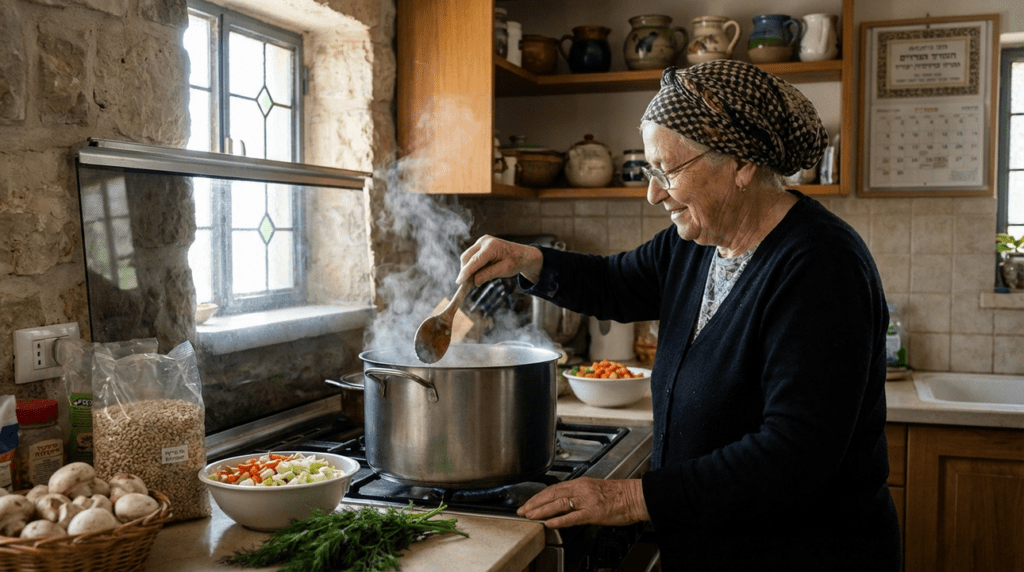
Elderly Jewish woman stirring soup in a sunny, rustic kitchen.
David Pliner
Culinary & Israeli Heritage Enthusiast

The simple, hearty joy of mushroom barley soup has been a comforting presence in Jewish households for generations. This dish, a staple in kosher cooking, combines earthy mushrooms and wholesome barley to create a fulfilling meal that warms both body and soul.

Its roots are deeply embedded in Jewish tradition, offering not only nourishment but a comforting taste of home and heritage.

Mushroom barley soup’s history is rich, with its origins tracing back to Eastern European Jewish communities, where it was a practical and nourishing meal during harsh winters.

In this article, we explore the cultural significance of this classic soup, highlighting its place in the world of kosher cuisine. In short, mushroom barley soup is more than food; it’s a connection to our past and a symbol of Jewish resilience.

The soup’s role in Jewish culture is akin to the manna that sustained the Israelites in the desert (Exodus 16:31), providing sustenance and a sense of divine provision.

In short, enjoying this soup is a way to honor the resilience and resourcefulness that have characterized Jewish life throughout history.

The Basics of Kosher Cooking

To fully grasp the significance of mushroom barley soup in kosher tradition, one must understand the dietary laws known as kashrut. These laws are derived from the Torah, with detailed instructions found in Leviticus 11 and Deuteronomy 14.

Kashrut dictates which foods are permissible and how they should be prepared, ensuring adherence to religious principles. Key kosher rules include the separation of meat and dairy, based on Exodus 23:19, and specific methods for slaughtering animals, known as shechita.

These guidelines transform every meal into a practice of faith and tradition, reinforcing cultural identity and spiritual observance. In short, kashrut is not just about food; it’s about living a life aligned with Jewish values.
The practice of kashrut is a daily reminder of the Jewish people’s covenant with their faith, much like the story of Abraham, who was called to live a life of faith and obedience (Genesis 17:1-2).

In short, understanding kashrut enriches the experience of enjoying traditional dishes like mushroom barley soup, connecting individuals to a rich heritage.

Mushrooms: A Versatile Ingredient in Kosher Cuisine

Mushrooms hold a unique place in kosher cooking due to their versatile nature. Classified as pareve, they can be paired with both meat and dairy, a flexibility that echoes the adaptability seen in the Jewish diaspora.

This flexibility makes mushrooms ideal for various recipes, including the beloved mushroom barley soup. According to Jewish dietary laws, mushrooms’ pareve status is derived from their non-animal origin, allowing creative culinary freedom.

This aligns with the Jewish principle of kashrut, which governs dietary practices. In short, mushrooms are a culinary chameleon, offering endless possibilities while adhering to kosher guidelines.

The ability to use mushrooms in diverse dishes reflects the Jewish experience of adapting to various cultures and environments throughout history, much like the story of Joseph, who rose to prominence in Egypt (Genesis 41:41-43).

In short, mushrooms in kosher cooking symbolize the blend of tradition and innovation, allowing Jewish families to enjoy a wide range of flavors while staying true to their dietary laws.

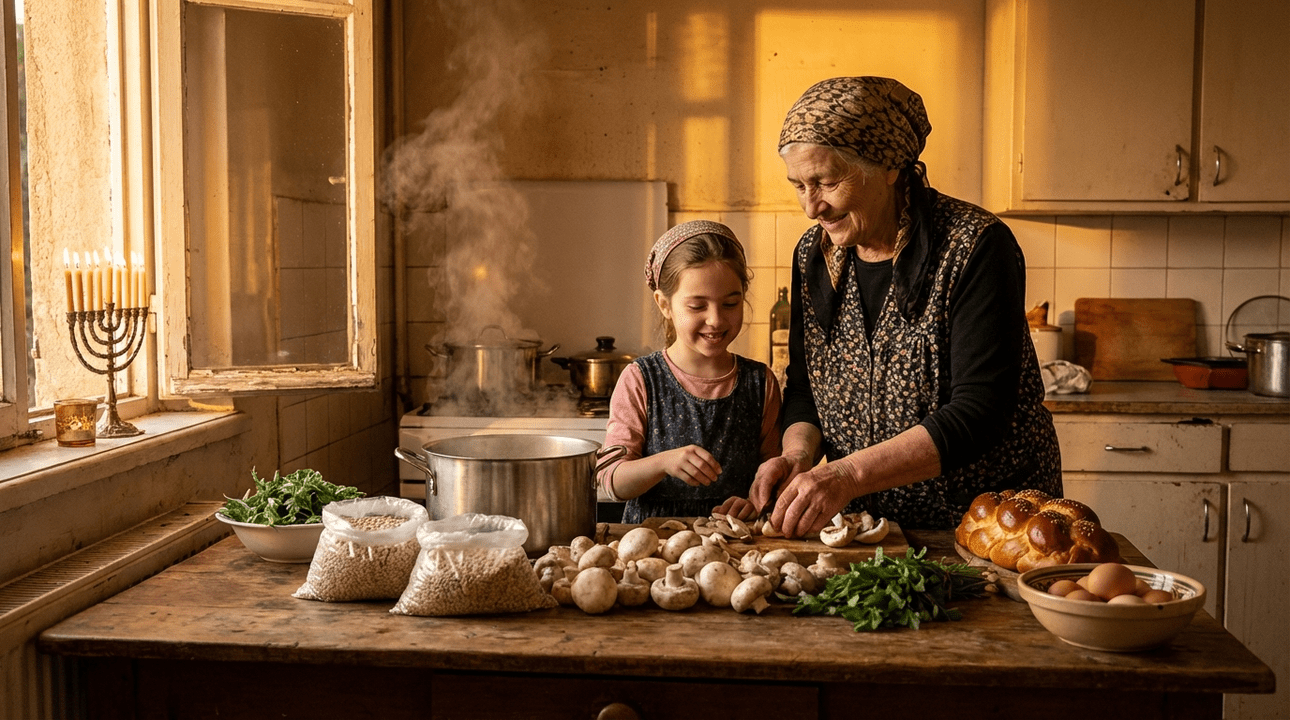
Elderly woman and girl prepare mushroom barley soup in kitchen.

Barley: An Ancient Grain with Rich Traditions

Barley is one of the seven species mentioned in the Bible, specifically in Deuteronomy 8:8, highlighting its importance in ancient Israelite agriculture. Its role extends beyond mere sustenance; it symbolizes resilience and the ability to thrive in diverse environments.

Barley has been a staple in Jewish cuisine for centuries, known for its hearty texture and nutritional benefits, including high fiber content and essential vitamins. In mushroom barley soup, barley adds a rich texture and depth, linking us to ancient culinary traditions.

This connection to historical cooking methods is a testament to the enduring nature of Jewish culinary practices, which have been preserved and cherished over generations. In short, barley is not just a grain but a bridge to our past, embodying sustainability and simplicity.
The Art of Cooking Mushroom Barley Soup

Crafting the perfect mushroom barley soup involves a careful balance of textures and flavors. Begin by softening onions and garlic, creating a fragrant base reminiscent of the aromatic offerings in the Temple, as described in Exodus 30:34-35.

Adding mushrooms and barley, simmer the mixture until the ingredients meld into a delightful blend. Season with herbs for added aroma. Thyme and parsley are popular choices, each bringing its unique touch to the dish.

This method ensures each component harmonizes, creating a dish that is both heartwarming and satisfying. In short, the art of making mushroom barley soup lies in the harmony of its ingredients, each playing a vital role in the final symphony of flavors.

The use of herbs like thyme and parsley not only enhances flavor but also connects to the biblical tradition of using natural ingredients for both culinary and medicinal purposes, as seen in the story of King Solomon’s wisdom in botany (1 Kings 4:33).

In short, crafting this soup is a culinary journey that honors the rich history of Jewish cooking.

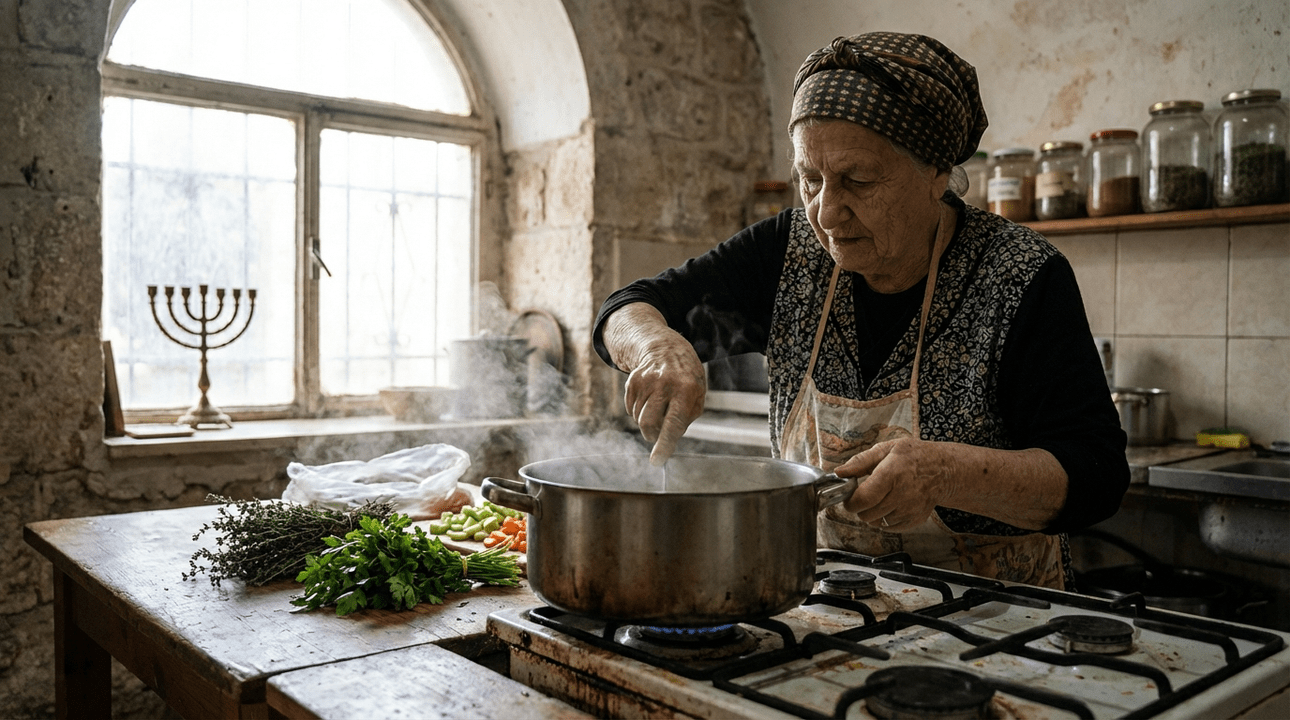
Elderly Jewish woman making soup in a rustic Jerusalem kitchen.

Nutritional Benefits of this Hearty Dish

Mushroom barley soup is more than just comfort food; it’s a nutritional powerhouse. Barley offers fiber and essential vitamins, aiding digestion and overall health, as noted in ancient texts like the Talmud.

Mushrooms contribute antioxidants and minerals, strengthening the immune system, much like the biblical story of Daniel (Daniel 1:12-15), who thrived on a simple diet.

Together, these ingredients create a wholesome meal that nourishes both body and soul, embodying the Jewish commitment to healthfulness and tradition. In short, mushroom barley soup is a perfect blend of taste and nutrition, reflecting Jewish values of wellness and mindful eating.

The Talmud, a central text of Rabbinic Judaism, often emphasizes the importance of health and well-being, encouraging a diet that supports both physical and spiritual health.

In short, by enjoying mushroom barley soup, one partakes in a tradition that values nourishment and balance, echoing the wisdom of Jewish teachings on health.

A Dish That Brings People Together

Mushroom barley soup often graces the table during family gatherings and Jewish holidays, such as Passover or Sukkot.

Its presence provides a sense of togetherness, with its warmth drawing people closer, reminiscent of the communal meals described in the Torah, such as the Passover Seder in Exodus 12. The ritual of sharing this dish connects generations, preserving cherished memories while creating new ones.

It’s a testament to the enduring spirit of Jewish culinary traditions, where food serves as a bridge between past and present. In short, mushroom barley soup is more than a meal; it’s a symbol of unity and continuity within the Jewish community.

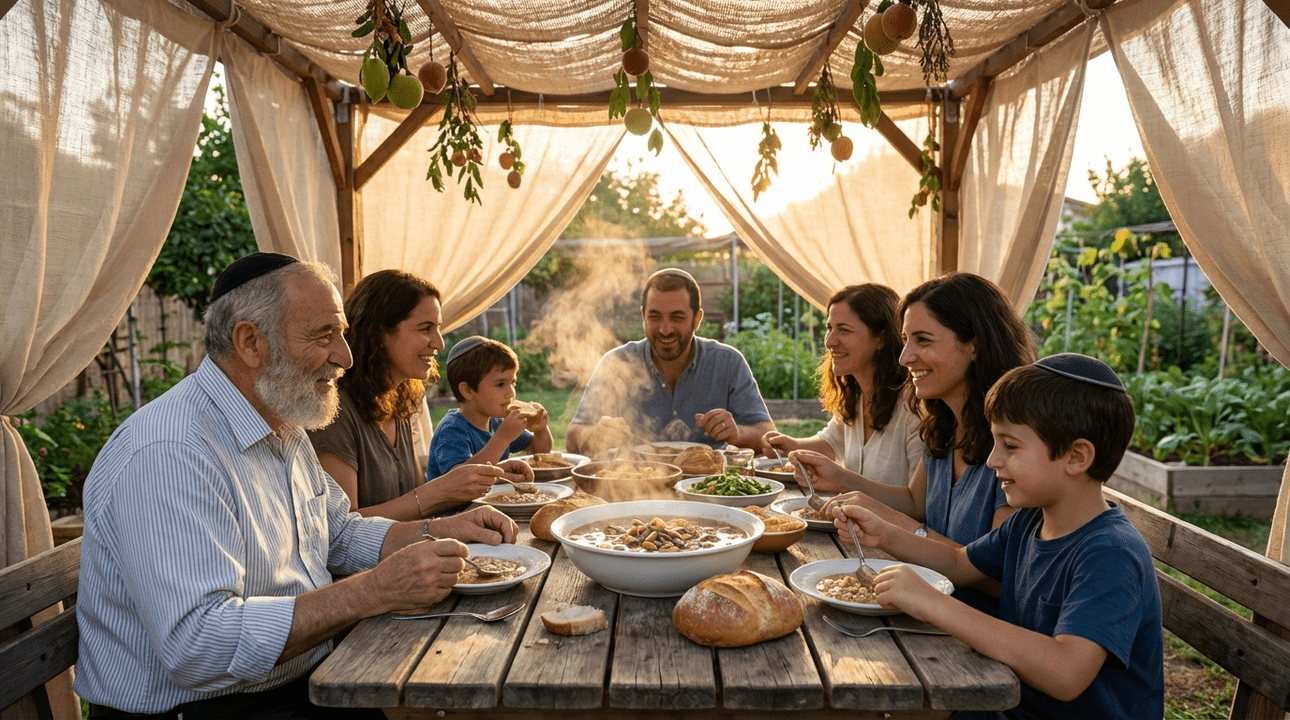
During Sukkot, a festival celebrating the harvest, families gather to enjoy meals under the sukkah, a temporary hut, symbolizing the Israelites’ journey in the desert (Leviticus 23:42-43).

In short, by sharing mushroom barley soup, families continue the tradition of celebrating togetherness and gratitude, a cornerstone of Jewish life.

Jewish family enjoying Sukkot meal under sukkah with garden background.

Variations and Personal Touches

The beauty of mushroom barley soup lies in its adaptability. While the classic recipe remains beloved, cooks often add their personal touches—perhaps more vegetables like carrots and celery, specific spices such as cumin or paprika, or a different cooking method like slow simmering.

Each variation tells a unique story of personal taste and creativity while still adhering to kosher guidelines. This flexibility ensures that the soup evolves with each generation, maintaining its relevance and charm.

Just as the Jewish people have adapted through time, this dish reflects resilience and innovation. In short, mushroom barley soup is a culinary canvas, allowing each cook to express their individuality while honoring tradition.

The adaptability of this soup mirrors the Jewish diaspora’s ability to incorporate local ingredients and flavors while maintaining a connection to their roots, much like the story of Esther, who used her position to save her people (Esther 4:14).

In short, this dish is a testament to the enduring spirit of innovation and cultural preservation in Jewish cuisine.
In short, Jewish mushroom barley soup is not merely a dish; it’s a celebration of tradition, family, and adaptability. This soup has roots that stretch back through centuries of Jewish history, often served during Shabbat and holidays as a comforting staple.

Its flavors and textures tell a story rich in history and culture. The barley, a grain mentioned in the Bible (Ruth 2:23), symbolizes sustenance and resilience, while the mushrooms add earthiness and depth.

Embracing this soup not only nourishes the body but helps sustain a kosher tradition that continues to inspire and delight.

Barley, known as one of the seven species of the land of Israel (Deuteronomy 8:8), has been a staple in Jewish diets since ancient times, representing abundance and God’s provision.

Mushrooms, though not specifically mentioned in the Bible, have become a beloved ingredient in Jewish cooking due to their versatility and rich flavor.

In short, this soup is a testament to the enduring spirit of Jewish culinary traditions, where each ingredient tells a story of survival and cultural heritage.

Sources:: Mushroom and Barley Soup - Soup - Kosher Recipe, Beef and Mushroom Barley Soup - Soup - Kosher Recipe, Are Mushrooms Kosher? - Chabad.org, Overview of Jewish Dietary Laws & Regulations | Jewish Virtual Library, Kashruth | Kosher Food, Dietary Laws & Dietary Restrictions | Britannica, Pareve | Kosher, Dietary Laws, Food | Britannica, Hordeum spontaneum | plant | Britannica
Frequently Asked Questions about Mushroom Barley Soup
Last update: 11 September 2025 14:00
Soup Ingredients and Preparation