
Akko Area Guide
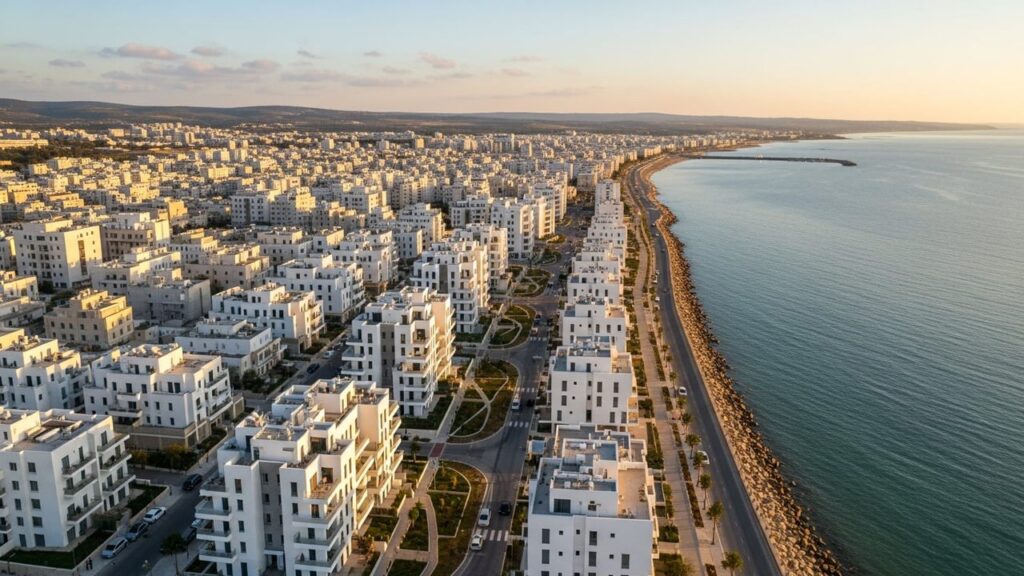

Akko is a coastal city with a compact historic core and lively modern neighbourhoods along the Mediterranean. This guide explains what living in Akko is like, covering history, population, schools, transport and everyday amenities in Israel.
Akko at a Glance
City: Akko • Country: Israel • District: Northern District • Population: 52885 • Area: 18.1 km² • Nearest major city: Haifa • Distance: Approximately 14.3 km • Main transport connection: Coastal Highway (Route 4) and the Israel Railways Coastal line (Acre Railway Station). • Known for: Historic Old City (UNESCO World Heritage Site), Crusader and Ottoman fortifications, port and old bazaars, Baháʼí related sites, and a mixed multi-religious urban character. • Historic origins: Evidence of settlement from the Early Bronze Age (c.3000 BC), with later Phoenician and Persian use of the port. The site is known as Ptolemais in the Hellenistic period and later became a Roman colony. Significant Crusader, Mamluk and Ottoman phases precede the modern town.
Insider's Guide to Israel
and can't-miss places most tourists never find.

Where Is Akko?
Akko sits on the Mediterranean coast at the head of Haifa Bay in northern Israel. It occupies the coastal plain where the sea meets the western Galilee.
Administratively it belongs to the Northern District. The city is set between coastal areas and nearby lowlands, with a river estuary close by that shapes local open spaces.
Haifa is the nearest major city, about 14.3 km to the south. Other towns lie along the coast and into the Galilee to the east and north.
History of Akko
Archaeological evidence shows occupation at the site from the Early Bronze Age, around 3000 BC. Early settlements do not imply an uninterrupted, continuous town across all periods.
The site is attested in Late Bronze Age Egyptian sources and the Amarna letters. In later periods it served as an important port under Phoenician and Persian influence.
In the Hellenistic era the town was known as Ptolemais and later became a Roman colony. The city also saw activity in the Byzantine and early Islamic periods.
During the medieval centuries Akko grew as a Crusader stronghold and later was shaped by Mamluk and Ottoman rule, which left much of the visible fortifications and urban fabric. The modern municipal town sits above and beside this complex archaeological and historical record.
Akko Population
Akko had a population of 52,885 in 2024 according to municipal data. This covers residents in the Old City and the surrounding modern neighbourhoods.
As a coastal municipality in the Northern District, Akko is a mid-sized city: larger than many nearby towns but smaller than Haifa.
Population figures reflect the city’s role as a local centre for services and as a place with varied residential areas. For detailed trends consult municipal planning sources.
What Is It Like to Live in Akko?
Daily life mixes a compact historic centre with quieter residential districts. The Old City attracts visitors and has a strong heritage character; the newer parts house most everyday services and family homes.
The pace of life is generally slower than in larger regional hubs. Many people enjoy a sense of community and easier access to outdoor space.
Public services cover essentials. For specialised healthcare or tertiary education residents commonly travel to Haifa.
Transport options include intercity and local buses, a coastal rail link at Acre Railway Station, and road connections along the coastal corridor. A private car is useful for convenience, though parts of the city are walkable.
Areas and Neighbourhoods in Akko
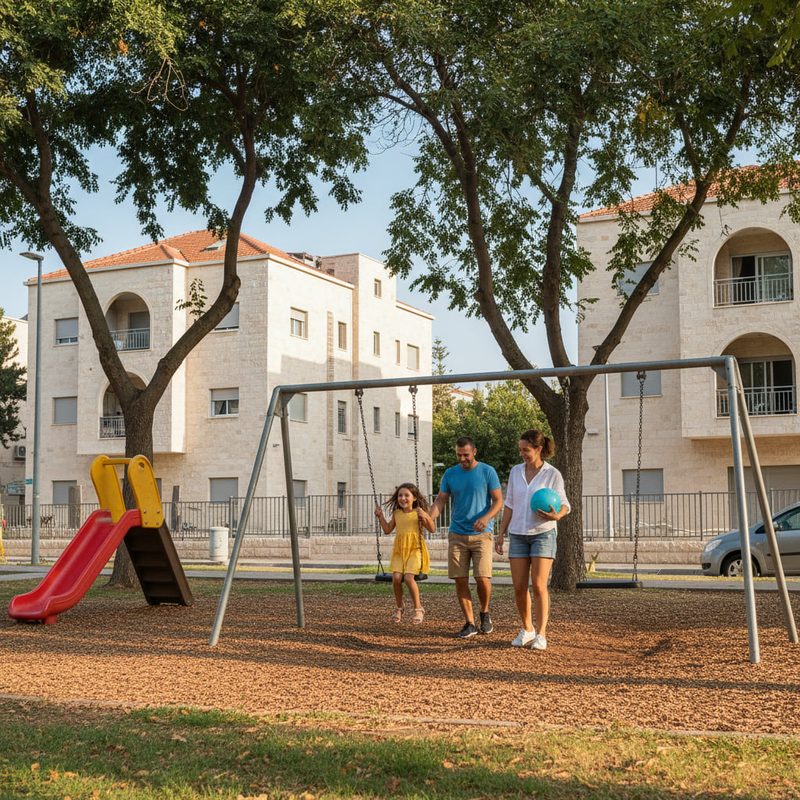
Akko’s urban area includes a well-known Old City and a range of modern residential neighbourhoods. Each has its own feel and housing mix.
Old City (Ha-Ikka / עכו העתיקה)
Overview: The Old City is the historic heart around the port, sea wall and fortifications. Stone buildings and narrow streets give it a compact, historic feel.
Homes: Housing mainly consists of older buildings and units fitted into historic structures. Living here often means close contact with heritage and visitors.
Getting around: The Old City is best explored on foot. Vehicle access and parking are limited by the medieval street pattern.
Good for: People who value history and cultural life and who are comfortable living where tourism and conservation shape daily life.
Akko New City (עכו החדשה)
Overview: The New City spreads beyond the Old City and contains most municipal services, shops and family neighbourhoods.
Homes: A mix of apartment blocks and family houses provides the main residential stock.
Getting about: Well served by local roads and public transport that link to the railway and intercity buses.
Ideal for: Families and residents who need regular access to schools, shops and municipal services while staying close to the historic centre.
Kiryat Wolffson (קריית וולפסון)
About the area: Kiryat Wolffson is one of the city’s named neighbourhoods and is part of Akko’s residential fabric.
Housing: Mostly residential, with housing typical of urban neighbourhoods in the city.
Access: Connected to the city’s road and bus network for commuting and daily travel.
Who it fits: People seeking a straightforward residential area with reasonable access to schools and shops.
Shikun Amidar (שיכון עמידר)
About the area: A planned residential quarter within Akko, integrated into the broader urban community.
Housing: Characterised by family-oriented housing and accommodation for local residents.
Connections: Served by local bus routes and road links to the rest of the city.
Who it suits: Those looking for practical, community-focused neighbourhoods.
Neve Sapir (נווה ספיר)
About the area: Neve Sapir is a residential neighbourhood beyond the historic core.
Housing options: Typical urban mix with an emphasis on family accommodation.
Access: Reachable by the city’s internal road network and public transport.
Who might like it: Families and people wanting neighbourhood living close to the city centre.
Givat Motta Gur (גן מוטה גור)
Overview: A local residential quarter forming part of Akko’s suburban spread.
Housing: Residential in character, offering housing choices common across the city.
Connections: Linked to the wider city by roads and public transport routes.
Insider's Guide to Israel
and can't-miss places most tourists never find.
Who it’s suited to: Residents seeking a quieter setting within easy reach of municipal amenities.
Education in Akko
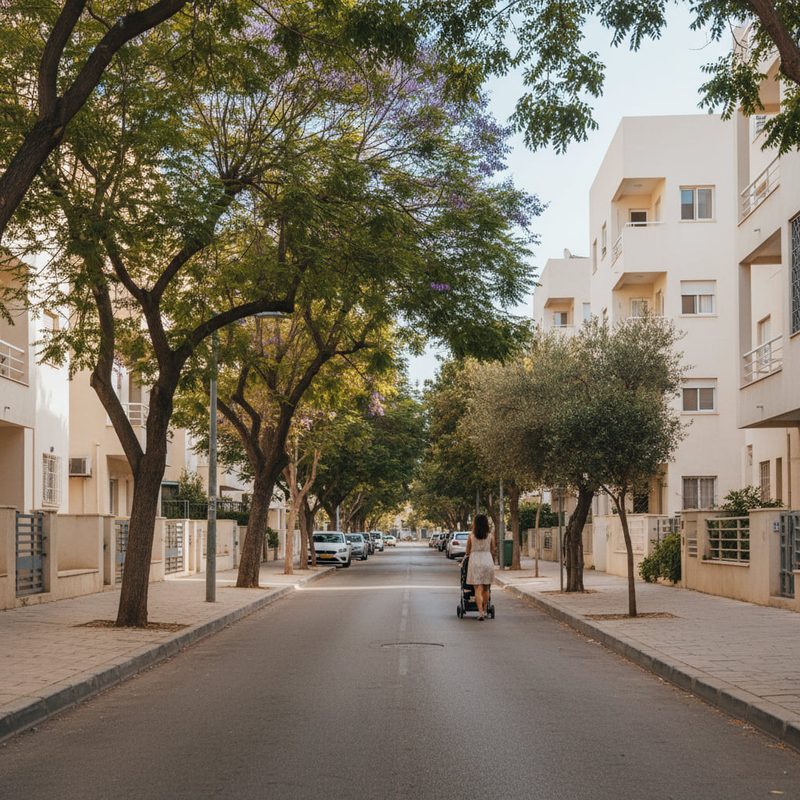
Akko provides municipal education across primary and secondary levels. Municipal data for 2021/22 records about 27 schools, roughly 417 classes and around 9,128 students combined.
Local schooling follows the standard Israeli system and is run by municipal and national bodies. Families generally use neighbourhood schools and municipal educational services.
For higher education and specialised study residents commonly travel to Haifa and other regional centres where universities and colleges are located.
Transport and Connectivity
Akko is served by the Israel Railways Coastal line at Acre (Akko) Railway Station, with regular southbound trains to Tel Aviv and beyond. Typical train journeys to Tel Aviv take about 1-1.5 hours depending on the service.
Road access uses the Coastal Highway (Route 4) and coastal corridors toward central Israel. Driving to Tel Aviv typically takes roughly 1.5-2 hours depending on traffic.
Intercity and local bus services operate through Akko, with operators such as Egged and Nateev Express running routes. Ben Gurion Airport is around 100 km away by road, depending on route and traffic.
Haifa is about 14.3 km to the south and reachable by road or train in under an hour depending on mode and traffic. While public transport connects Akko regionally, many residents find private transport convenient for local mobility.
Nature and Outdoor Spaces
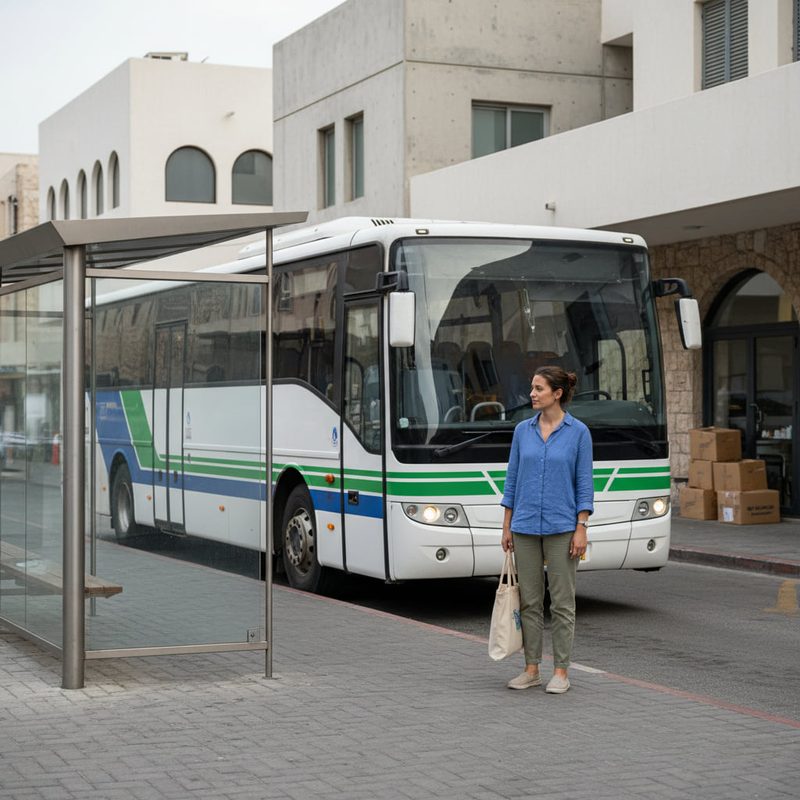
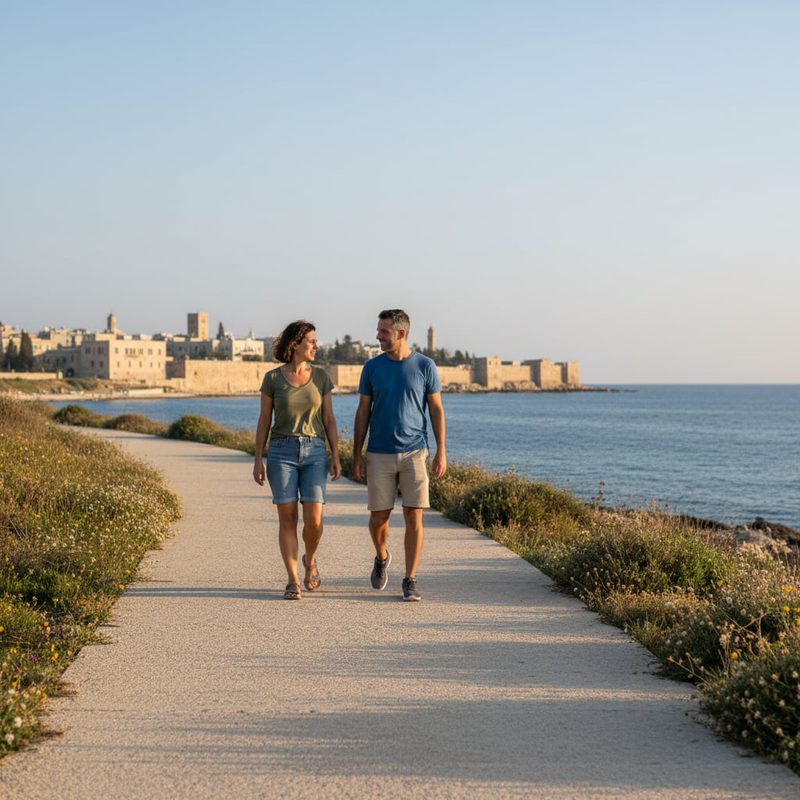
Akko sits on the Mediterranean coast at the head of Haifa Bay. The shoreline gives coastal promenades, sea views and access to beaches and the harbour.
The nearby coastal plain and western Galilee landscapes provide places for walking, cycling and weekend outings. The Na’aman river estuary is a local natural feature that supports wetland habitats.
Residents benefit from proximity to open spaces while remaining close to town amenities and the historic shoreline.
Amenities and Things to Do in Akko
The Old City and port are cultural and social focal points. Key places include the Old City of Acre (a UNESCO World Heritage Site), the Hospitaller Fortress (Acre Citadel), Al-Jazzar Mosque, the historic Turkish hammam (Hamam al-Basha) and the sea wall and harbour.
Local life includes markets, shops and cafes that serve residents and visitors. The municipal area provides essential healthcare services; more specialised care is typically accessed in Haifa.
Dining and small retail clusters are concentrated around the New City and the port precinct. Sport and recreation are supported by local facilities and the coast; larger venues can be reached in Haifa.
Cultural life reflects the city’s layered history and mixed community character, with markets and regular local events centred on the Old City and waterfront.
Cities and Towns Near Akko
Akko sits within a network of coastal and Galilean towns that are reach-able within short driving times, making day trips straightforward.
Nearby cities include Nahariya (about 8.8 km), Haifa (about 14.3 km), Karmiel (about 20.1 km), Nazareth (about 32.3 km) and Safed/Tzfat (about 38.9 km). Travel times vary with route and traffic, but many are within an hour by road in normal conditions.
Nearby cities and towns: Nahariya — 8.8 km, approx. 12 min; Haifa — 14.3 km, approx. 25 min; Karmiel — 20.1 km, approx. 25 min; Nazareth — 32.3 km, approx. 35 min; Safed (Tzfat) — 38.9 km, approx. 50 min.
Advantages of Living in Akko
Historic setting: You live close to a well-preserved historic area and its monuments.
Coastal location and nature: The Mediterranean shoreline, Haifa Bay and nearby Galilean landscapes give easy access to outdoor activities.
Community and space: The city offers a closer-knit feel and lower density than larger metros, appealing to families and those seeking quieter residential life.
Regional links: Rail and road connections to Haifa and intercity buses make commuting and regional travel feasible.
Housing variety: The municipality includes a range of property types from older structures near the Old City to more modern residential areas.
Things to Consider Before Moving to Akko
Limited specialised services locally: Essential healthcare and schooling are available, but residents often travel to Haifa for specialised medical care and higher education.
Seasonal visitor levels: The Old City attracts tourists, which can make streets busier in peak seasons.
Property considerations: Inventory can be limited at times. Buyers should consider property condition and layout carefully.
Practical travel needs: Public transport exists, but many households find a private vehicle useful for regional trips and convenience.
Who Is Akko Best For?
Families
Akko suits families who value space, community life and local schooling. Neighbourhoods cater to family needs and Haifa is close for extra services.
Commuters
Commuters working in Haifa or along the coastal corridor benefit from the train station and road links. Journey times to regional centres are practical for regular travel.
Remote Workers / Long-term Buyers
People working remotely or planning to settle long-term appreciate the quieter pace, varied property options and proximity to Haifa when in-person services are needed.
Nature Enthusiasts
Those who enjoy coastal landscapes and outdoor activities will find easy access to seaside walks, estuary areas and the western Galilee countryside.
Retirees
Retirees seeking a relaxed coastal setting with local services and the option to access specialised healthcare and cultural amenities in Haifa may find Akko appealing.
