
Nahariya Area Guide
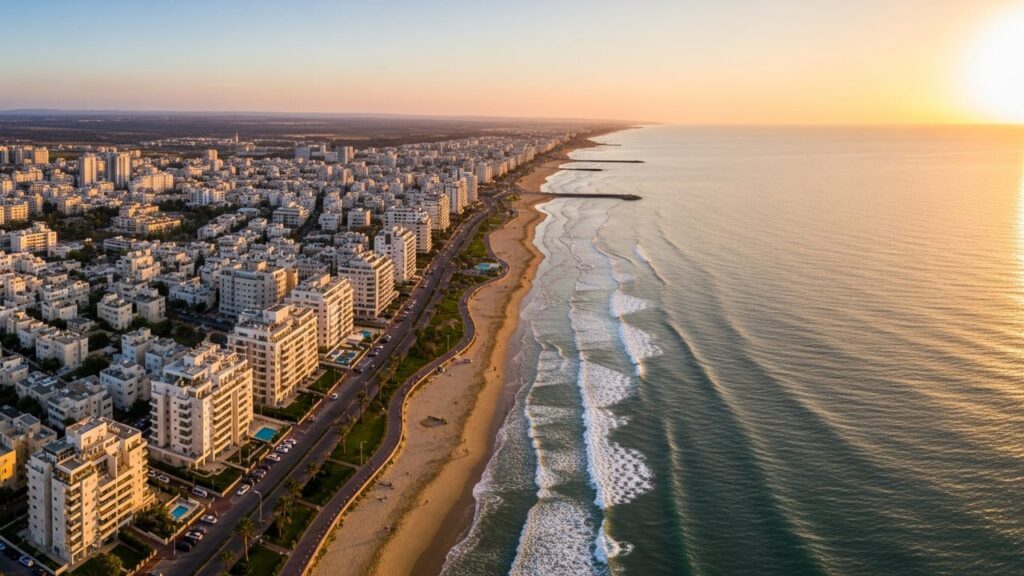

Nahariya is a coastal city on Israel’s northern Mediterranean shore that combines seaside amenities with suburban living. This guide outlines the city’s character, history, transport links, services and who might find Nahariya a good place to live.
Nahariya at a Glance
City: Nahariya • Country: Israel • District: Northern District • Population: about 64,000 (see Israel Central Bureau of Statistics) • Area: 13.8 km² • Nearest major city: Haifa • Distance: 34 km • Main transport connection: Israel Railways coastal line (Nahariya station, northern terminus) together with the coastal Highway 4 (and Highway 89 linking inland to the Upper Galilee). • Known for: Mediterranean beaches and promenade, Sderot Ga’aton boulevard, the Ga’aton River, historical food-industry firms founded in the city, and serving as the northern coastal terminus of Israel’s rail network. • Historic origins: Evidence of very early human activity (Lower Paleolithic/Acheulean) at Evron Quarry; Bronze Age remains and Byzantine-period finds have been recorded nearby; the modern town was founded on 10 February 1935.
Insider's Guide to Israel
and can't-miss places most tourists never find.

Where Is Nahariya?
Nahariya sits on Israel’s north Mediterranean coast in the Northern District. The city occupies a coastal strip with the Ga’aton River running through it. It faces the Mediterranean to the west, while the Western Galilee hills lie inland to the east.
Neighbouring communities include the historic port city of Acre (Akko) to the south and a mix of smaller towns and rural areas in the Western Galilee region to the north and east. Nahariya is roughly 34 kilometres north of Haifa by road and rail, making Haifa the nearest major urban centre and service hub. The seaside setting places Nahariya close to coastal nature areas such as the Akhziv reserve, and road connections link the city to inland Upper Galilee routes.
History of Nahariya
The area around modern Nahariya has long archaeological depth. Evidence from the Evron Quarry indicates Lower Paleolithic (Acheulean) activity roughly 0.8–1.0 million years ago. Later prehistoric and historic periods are also represented by Bronze Age remains and Byzantine finds, including a church with mosaic floors recorded in the vicinity.
The modern town of Nahariya was founded during the British Mandate on 10 February 1935. Its development continued through the Mandate period and into the establishment of the State of Israel, after which Nahariya grew as a coastal urban centre. Over time the locality moved through Ottoman and Mandate administrations into its contemporary municipal form.
Nahariya Population
According to the Israel Central Bureau of Statistics, Nahariya’s population was about 64,000 in 2022. This places the city among medium-sized coastal municipalities in the Northern District.
Population levels change with housing availability, services and regional employment patterns. For the most current figures consult municipal publications or the Israel Central Bureau of Statistics.
What Is It Like to Live in Nahariya?
Life in Nahariya is relaxed and seaside with suburban features. Residents can expect beaches, a promenade and the central Sderot Ga’aton boulevard, along with quieter residential streets. The city has a local community feel, with everyday services clustered near the centre.
Infrastructure and services cover essentials. Local shops, cafes and municipal services are concentrated around the central boulevard and the Ga’aton River corridor. Healthcare services include Nahariya Hospital. Transport combines the northern terminus of the Israel Railways coastal line with a central bus station handling local and regional routes. For some specialised services and wider cultural or employment choices, residents often look to Haifa and other regional centres. Overall, Nahariya suits people who prioritise coastal access, outdoor activities and a calmer municipal environment.

Areas and Neighbourhoods in Nahariya
Nahariya’s urban footprint is compact. The city’s principal neighbourhoods include Sderot Ga’aton, Neve Yitzhak Rabin (also referred to as Nahariya HaYarok), Akhziv–Boymel and Shikun Mamlachti (including Givat Sherut / Givat Kalfon). Each area contributes to the mix of central, residential and coastal looks.
Sderot Ga’aton (central boulevard / city center)
Sderot Ga’aton is the city’s central boulevard running alongside the Ga’aton River and acting as Nahariya’s civic spine. It hosts shops, cafes and public spaces that form the daily heart of the city and links to the promenade and beaches. This area suits people who want central access to services and the social life concentrated along the river and main street.
Neve Yitzhak Rabin (Nahariya HaYarok)
Neve Yitzhak Rabin, sometimes called Nahariya HaYarok, is identified locally as a greener residential part of the city. The neighbourhood has parks and more open space relative to the city centre. It appeals to residents seeking quieter streets near municipal services and schools.
Akhziv–Boymel (newer northern coastal neighbourhood)
Akhziv–Boymel sits toward the northern coastal edge of Nahariya and is a newer neighbourhood. Its coastal proximity gives easy access to beaches and coastal nature areas, making it attractive to residents who prioritise outdoor recreation and seaside living.
Shikun Mamlachti (including Givat Sherut / Givat Kalfon)
Shikun Mamlachti and the associated sectors such as Givat Sherut / Givat Kalfon are established residential areas. These localities host the kinds of homes and municipal services found across the city and suit households seeking a stable neighbourhood with access to the central boulevard and local schools. Public transport and road links connect these areas to central Nahariya and regional routes.

Education in Nahariya
Municipal and Central Bureau of Statistics sources indicate around 20–22 schools in the city. Student enrolment numbers vary from year to year, so consult local municipality or CBS figures for the most recent totals.
For higher education, the nearest major university institutions are in Haifa and the broader Haifa metropolitan area. Residents who pursue tertiary studies commonly commute to those campuses. Local programmes and vocational training options are typically accessed within the Northern District and through regional providers as needed.
Transport and Connectivity
Nahariya is the northern terminus of Israel Railways’ coastal line, with Nahariya railway station providing direct rail services south through Haifa and on to Tel Aviv and Ben-Gurion Airport connections. The typical rail journey to Tel Aviv on the coastal line is approximately 1 hour 39 minutes.
Road access follows the coastal Highway 4, which connects to Highway 2 toward the Tel Aviv region and to Highway 89 inland toward the Upper Galilee. Driving to Tel Aviv is about 122 kilometres and generally takes around 1 hour 30 minutes under normal conditions. The nearest major airport by distance is Ben Gurion Airport, roughly 130 kilometres away. Local and regional bus services operate from Nahariya Central Bus Station adjacent to the railway station, with operators including Nativ Express and Egged. While central areas around the promenade and Ga’aton corridor are walkable for everyday errands, a car can be useful for routine regional travel and for accessing some services outside the city.

Nature and Outdoor Spaces
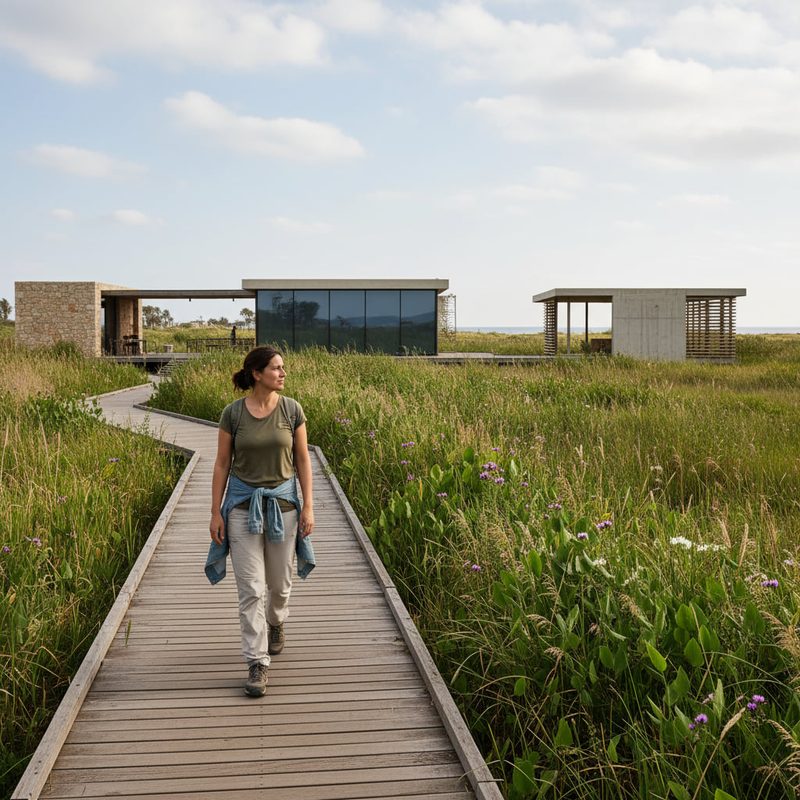
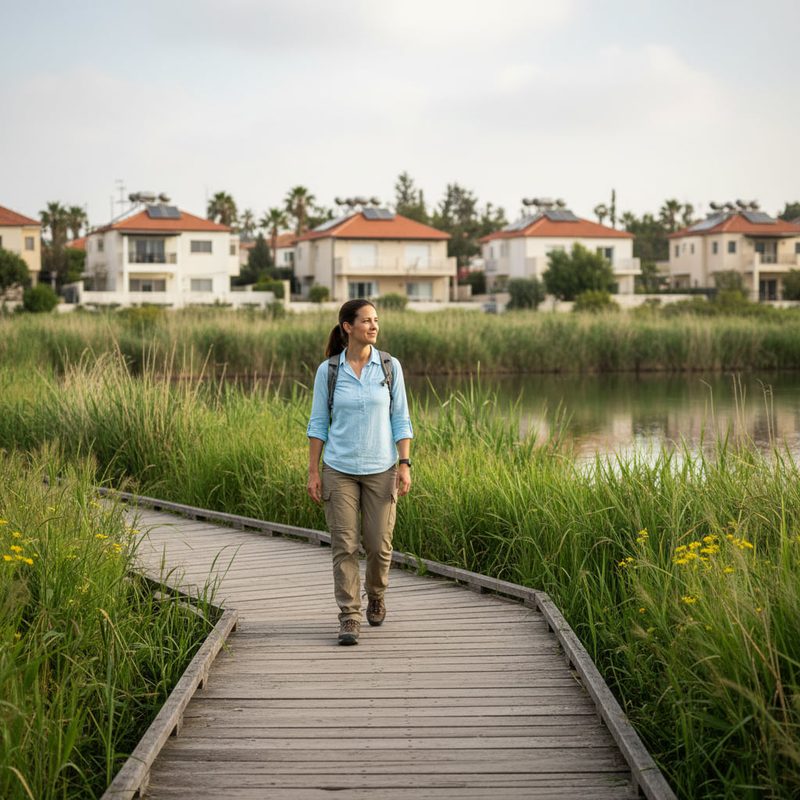
Nahariya’s coastal position gives it sandy public beaches and a seafront promenade that are central to outdoor life. The Ga’aton River runs through the city and the riverside boulevard provides green public space for recreation and cafes. Nearby coastal nature areas such as the Akhziv reserve offer seaside habitats and trails.
Beyond the coast, the Western Galilee landscapes are a short drive away, giving residents access to upland trails, viewpoints and additional natural reserves. Common local activities include beachgoing, riverside walks and excursions into nearby reserves and hill country.
Insider's Guide to Israel
and can't-miss places most tourists never find.
Amenities and Things to Do in Nahariya
Nahariya concentrates key services and leisure options around Sderot Ga’aton and the promenade. The central boulevard hosts shops, cafes and restaurants, and the city has shopping facilities such as the Arena Mall in the Ga’aton area. Healthcare is anchored by Nahariya Hospital, a major local medical facility serving the city and surrounding areas. Cultural life includes sites such as Beit Lieberman, the municipal museum, while local events and community activities use public spaces along the river and seafront.
For everyday needs people use the central shopping streets, small local businesses and the markets and services close to the station and main boulevard. Sport and recreation are supported by public promenades, local sports facilities and easy access to coastal and regional outdoor areas for hiking and cycling. The city’s mix of seaside dining and riverside cafes provides seasonal options for eating and socialising without requiring travel to larger urban centres for basic leisure.
Cities and Towns Near Nahariya
Nahariya sits within a cluster of coastal and Galilean towns that are readily reachable for work, shopping or leisure. Nearby cities include Acre (Akko) to the south and Haifa to the south-southwest. Inland to the east and northeast are regional centres such as Karmiel, Safed (Tzfat) and other Galilean towns and villages. These nearby centres extend the range of services, employment and education options available to residents of Nahariya.
Nearby cities and towns: Acre (Akko) — 8.7 km, approx. 15 min; Haifa — 34 km, approx. 35 min; Karmiel — 31.3 km, approx. 25 min; Safed (Tzfat) — 52.5 km, approx. 50 min; Tiberias — 47 km, approx. 60 min.
Advantages of Living in Nahariya
Coastal access: public beaches, a promenade and riverside spaces give residents everyday contact with the sea and opportunities for outdoor recreation.
Lower-density living and space: the city is generally quieter and less dense than major urban centres, offering more privacy and room in many residential areas.
Good rail connection: being the northern terminus of the coastal rail line gives Nahariya direct rail access to Haifa and Tel Aviv.
Local services and healthcare: the presence of Nahariya Hospital and a concentration of shops and municipal services around Sderot Ga’aton cover essential daily needs locally.
Proximity to nature: close access to coastal reserves and the Western Galilee makes weekend outdoor activities straightforward.
Things to Consider Before Moving to Nahariya
Limited specialist services: for some specialised medical, cultural or high-level professional services residents commonly travel to Haifa or other regional centres.
Travel time to major airports and the central region: Ben Gurion Airport is roughly 130 km away, and journeys to Tel Aviv or the airport require significant travel time whether by road or rail.
Public transport gaps: while rail and bus services exist, some local and regional routes require planning, and a private car can be helpful for flexibility.
Local amenity limitations: compared with larger cities, certain amenities and niche retail or entertainment options may be less available locally, so regular trips to larger hubs may be part of residents’ routines.
Who Is Nahariya Best For?
Families
Families benefit from the city’s school network, local healthcare, green spaces and generally quieter, suburban character that supports family life and outdoor play.
Commuters
Commuters who work along the coastal corridor can use the direct rail service to Haifa and Tel Aviv, though travel times to major employment centres should be weighed against daily schedules.
Young Professionals
Young professionals who prioritise seaside living, a calmer pace and the ability to commute to larger job markets may find Nahariya a workable base, particularly if they rely on the coastal rail services.
Retirees
Retirees who seek a peaceful coastal setting with local health services and access to nature will find Nahariya’s slower pace and local community feel appealing.
