
Bet She’an Area Guide
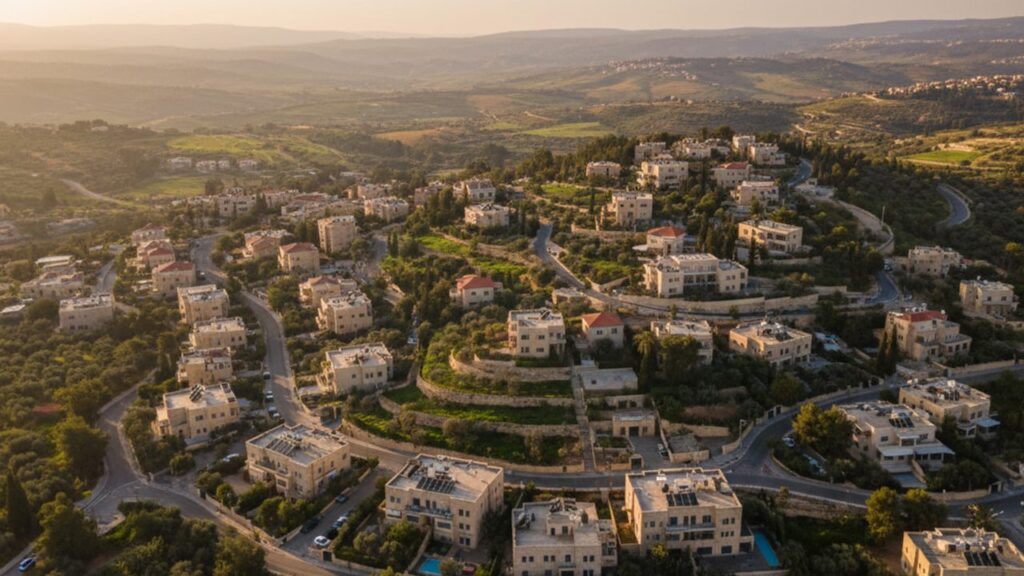

Bet She’an is a small city in the Northern District with a long archaeological history and a modern community-oriented lifestyle in Israel. This guide outlines its location, history, transport links, services and what daily life is like for residents.
Bet She’an at a Glance
City: Bet She’an • Country: Israel • District: Northern District • Population: 19825 • Area: 7.33 km² • Nearest major city: Haifa • Distance: 58 km • Main transport connection: Route 90 (north–south Highway 90 along the Jordan Valley) and the Jezreel Valley railway line connecting Beit She’an with Afula and Haifa • Known for: Extensive Roman and Byzantine ruins (Beit She’an National Park / ancient Scythopolis), archaeological tourism, location in the Beit She’an (Jordan) Valley and regional agricultural activity; hot, semi‑arid valley climate • Historic origins: Earliest settlement in the 6th–5th millennia BCE; long sequence of occupation from Late Neolithic through Bronze and Iron Ages, Hellenistic (Scythopolis), Roman and Byzantine periods and later Islamic, Crusader, Mamluk and Ottoman phases before the modern municipality
Insider's Guide to Israel
and can't-miss places most tourists never find.

Where Is Bet She’an?
Bet She’an sits in the Beit She’an Valley in Israel, part of the Jordan Valley system. It is in the Northern District and occupies a strategic valley location at the western edge of the Jordan Rift.
The city faces Mount Gilboa to the west and lies to the south‑east of the Sea of Galilee (Lake Tiberias). Route 90 passes through the valley and provides the main north–south road connection, while the Jezreel Valley railway links the city to the regional rail network toward Afula and Haifa.
Nearby urban centres include Afula (approximately 27 km), Tiberias (about 33 km) and Nazareth (around 37 km); the major Mediterranean port city of Haifa is approximately 58 km away.
History of Bet She’an
Bet She’an is one of the region’s longest‑occupied sites. Archaeological evidence shows settlement from the Late Neolithic / Chalcolithic (6th–5th millennia BCE) through the Bronze and Iron Ages. During the Late Bronze Age it functioned as an Egyptian administrative centre and later was an important site in the Israelite period.
In the Hellenistic era the city was reestablished as Scythopolis and it expanded under Roman and Byzantine rule. Significant Roman and Byzantine remains — including a theatre, a cardo and a hippodrome — survive at the modern archaeological park and demonstrate the city’s urban importance in antiquity.
After the Byzantine period the site continued to be occupied through Early Islamic, Crusader, Mamluk and Ottoman periods. The modern municipal entity exists within that long historical framework; the ancient tell (Tel Beit She’an) and the Roman/Byzantine urban remains are distinct from the contemporary town and are managed as archaeological and tourism sites.
Bet She’an Population
The city’s recorded population was 19,825 in 2022. As a small city in the Northern District, Bet She’an functions as a regional service and residential centre rather than a large metropolitan hub.
Population figures position Bet She’an as a modestly sized municipal locality; local demographic details such as growth rates and age structure are handled by municipal and national statistics agencies and can vary year to year.
What Is It Like to Live in Bet She’an?
Daily life in Bet She’an combines a quiet, low‑density residential feel with ready access to regional services in nearby Afula. Residents commonly describe the community as friendly and suitable for families, with a pace that is slower than Israel’s larger cities.
Infrastructure covers municipal education, local health services and basic shopping; for more specialised services and a wider range of shops residents often travel to Afula or other regional centres. The city has an intercity bus terminal and a local railway connection linking into the Jezreel Valley rail line, which together support regional travel.
Outdoor access is a strong feature: the valley setting, nearby Mount Gilboa and the Sea of Galilee offer short drives to natural areas. At the same time, the valley climate is hot and semi‑arid, which affects outdoor comfort and the local agricultural landscape.
Overall the city suits families, long‑term buyers seeking more space and privacy, remote workers wanting a quieter base with regional links, and those who value proximity to archaeological sites and countryside over the amenities of a large city.
Areas and Neighbourhoods in Bet She’an
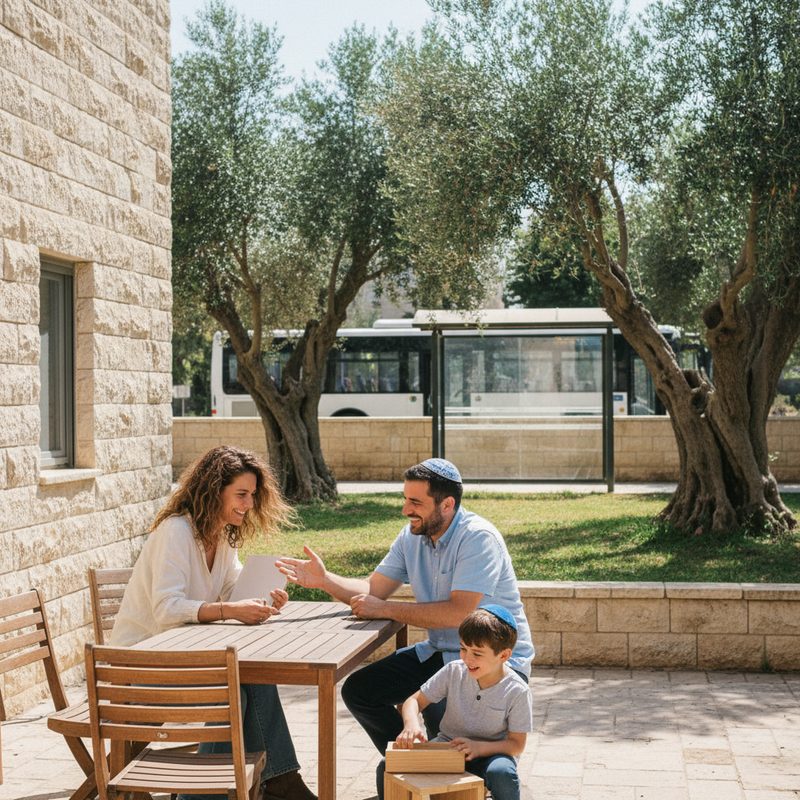
Bet She’an’s residential geography combines a central urban core with surrounding neighbourhoods that include older housing stock and newer developments. The city offers a mix of apartments, private homes and newer build projects in several named neighbourhoods.
City Center / Merkaz Ha’Ir (מרכז העיר)
Location and character: The city centre is the commercial and administrative heart, with shops, municipal services and public facilities clustered together.
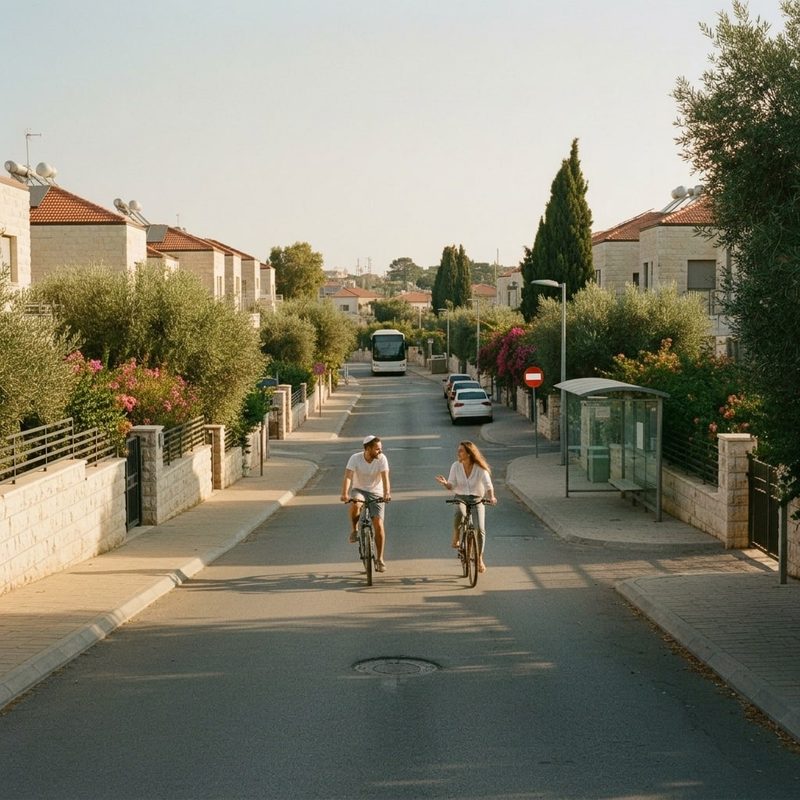
Housing and transport: Housing here includes older apartment blocks and smaller residential units; the area is served by local bus routes and is the most walkable part of the city for daily errands.
Who it suits: Good for residents who prioritise proximity to shops, schools and municipal services and prefer shorter local journeys.
Kiryat Rabin (קריית רבין)
Location and character: A residential neighbourhood within the municipal boundaries, featuring family‑oriented housing.
Housing and transport: Contains a mix of apartments and houses and has access to local bus services that connect to the city centre and regional routes.
Who it suits: Suited to families and those seeking an established residential area with local amenities nearby.
Nofim HaGilboa / Nofim (נופי הגלבוע / נופים)
Location and character: Located toward the western side of the city with closer visual links to Mount Gilboa; this area is associated with more recent residential development in the local market.
Housing and transport: Offers newer apartment buildings and private homes compared with older parts of the town; residents use local buses and car travel for regional connections.
Who it suits: Appeals to buyers seeking newer construction and views toward the surrounding hills.
Eliyahu (אליהו)
Location and character: A neighbourhood in the municipal fabric, primarily residential in nature.
Housing and transport: Typical housing mix of apartments and family homes; served by the city’s local transport network.
Who it suits: Suitable for families and residents wanting straightforward access to neighbourhood schools and services.
Hishkon / Chisakhon (חיסכון)
Location and character: Another residential quarter with a local community feel and proximity to city facilities.
Housing and transport: Contains varied housing stock and relies on local bus routes and private cars for mobility.
Who it suits: Practical for residents focused on affordability and close‑by community networks.
Kiryat David Levi (קריית דוד לוי)
Location and character: Noted as a newer development area in the verified neighbourhood list, representing recent expansion within the urban boundary.
Housing and transport: Development here includes newer residential projects; transport links are primarily by road with local bus access.
Who it suits: Appeals to buyers interested in newer housing stock and those planning longer‑term residence.
Education in Bet She’an
Education in the city is organised through the municipal system with multiple elementary and secondary schools serving local children. There are approximately 35 kindergartens in the city (about 24 municipal and 11 recognized/other).
Insider's Guide to Israel
and can't-miss places most tourists never find.
A local conservatory provides music and cultural education opportunities. The municipality has also been advancing projects for a new special‑education school and ongoing campus improvements.
For higher education, students typically attend regional colleges and universities in nearby urban centres such as Afula and Haifa, where a broader range of academic programmes is available.
Transport and Connectivity
Bet She’an’s main transport connections are Route 90 and the Jezreel Valley rail link. The city has Beit She’an railway station on the Beit She’an–David Levy line and an intercity bus terminal with regular regional services.
Rail travel toward the coastal axis commonly requires a transfer in Afula or Haifa; there is no regular direct Beit She’an→Tel Aviv service, and journeys to Tel Aviv with transfers typically take approximately 2.5–3.5 hours depending on connections. By car the driving distance to Tel Aviv is approximately 115–120 km and the trip usually takes about 1.5–2 hours depending on route and traffic.
Regional distances: Afula is about 27 km away (roughly a 25–35 minute drive), Tiberias about 33 km, Nazareth about 37 km, Haifa about 58 km (approximately 70 minutes by road depending on traffic), and Ben Gurion Airport is around 117 km distant.
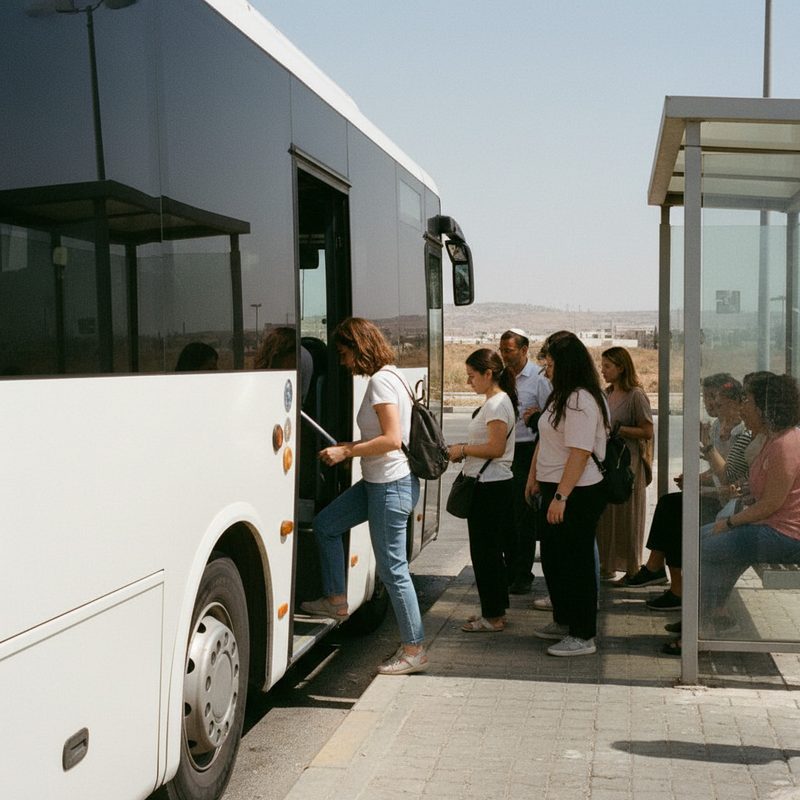
Buses provide frequent regional links to Afula, Tiberias, Haifa and central Israel, while local services cover neighbourhoods within the city. For regular commuters to larger employment centres a private car or carefully timed rail/bus connections are often necessary; being fully car‑free is possible for local daily errands but can be challenging for routine intercity commuting.
Nature and Outdoor Spaces
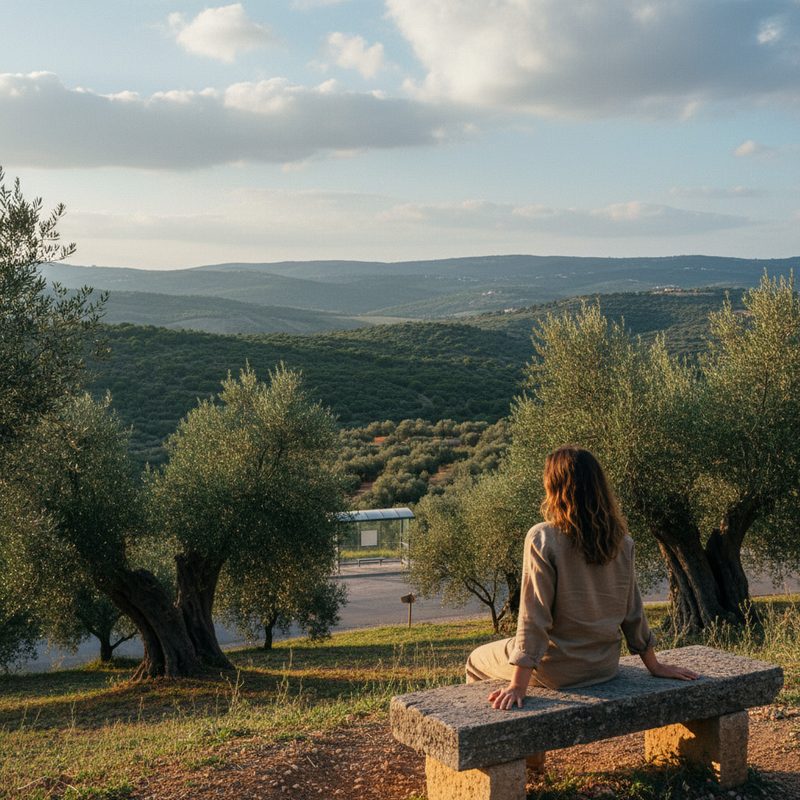
The surrounding landscape is a defining part of life in Bet She’an. The city occupies the valley floor with agricultural plains and is overlooked by Mount Gilboa to the west. The Sea of Galilee lies to the north‑northwest, providing further freshwater landscapes within relatively short driving distance.
Local outdoor attractions are anchored by the archaeological park at Tel Beit She’an and the adjacent Roman and Byzantine ruins, which also function as open‑air historical spaces. The valley setting and nearby hills offer hiking, countryside drives and agricultural scenery; the climate is hot and semi‑arid, shaping seasonal outdoor activities.
Amenities and Things to Do in Bet She’an
Bet She’an’s most prominent visitor and cultural amenity is Beit She’an National Park, where extensive Roman and Byzantine ruins — including the theatre, cardo and hippodrome — attract archaeological tourism and local cultural events. Tel Beit She’an and the ancient site are central to the city’s identity and visitor offer.
Locally there are shops, restaurants and municipal services focused on daily needs; for a wider retail or entertainment offer residents commonly travel to Afula or other nearby cities. The city has healthcare facilities offering medical support, sports amenities and a conservatory for cultural and music activities.
Markets, periodic events and small local eateries provide regular community life. Sports and outdoor recreation are supported by the valley setting, and cultural programming often ties into the archaeological sites and municipal initiatives.
Cities and Towns Near Bet She’an
Several towns and cities lie within easy driving distance and serve as regional hubs for services, education and commerce. Afula (approximately 27 km), Tiberias (about 33 km), Nazareth (around 37 km), Haifa (roughly 58 km) and Tel Aviv (around 115–120 km) are the most commonly referenced nearby centres for residents traveling for work, education or specialised services.
Nearby cities and towns: Afula — 27 km, approx. 29 min; Tiberias — 33 km, approx. 33 min; Nazareth — 37 km, approx. 35 min; Haifa — 58 km, approx. 70 min; Tel Aviv — 117 km, approx. 90 min.
Advantages of Living in Bet She’an
Affordable housing and space: Compared with Israel’s larger urban centres, Bet She’an offers more affordable options and a mix of housing including newer developments and private homes.
Community atmosphere: The city is described as friendly and family‑oriented, with neighbourhoods that support everyday community life.
Access to nature and heritage: Immediate proximity to the Beit She’an Valley landscape, Mount Gilboa and the archaeological park provides outdoor and cultural activities close to home.
Regional links: Regular intercity bus services and the Jezreel Valley rail connection give access to Afula, Haifa and other regional centres for work and services.
Things to Consider Before Moving to Bet She’an
Limited local specialised services: For specialised medical care, higher education programmes and a wider retail or cultural offer residents often travel to Afula, Haifa or other larger towns.
Commuting and transport: Direct rail links to the coastal metropolitan axis are limited and journeys to Tel Aviv normally require transfers or a car; commuting to distant employment centres can be time‑consuming.
Climate: The hot, semi‑arid valley climate means summers are very warm and can affect outdoor comfort.
Entertainment and nightlife: Local options for nightlife and late‑night cultural amenities are limited compared with larger cities.
Who Is Bet She’an Best For?
Families
Bet She’an suits families seeking more space, a community atmosphere and access to local schools and neighbourhood services.
Commuters
Commuters to nearby regional centres (Afula, Tiberias, Haifa) can manage daily travel; longer commutes to central Israel are possible but often require transfers or a car.
Young Professionals
Young professionals who prioritise affordability, quieter living and regional connectivity may find Bet She’an appealing, though limited local nightlife and specialised employment options are factors to weigh.
Students
Students typically attend colleges and universities in nearby urban centres such as Afula and Haifa; living in Bet She’an can work well for those who prefer lower housing costs and can commute for studies.
Retirees
Retirees who value a calm environment, accessible local services and proximity to outdoor spaces and cultural heritage sites may find Bet She’an a comfortable option.
