
Kfar Tavor Area Guide
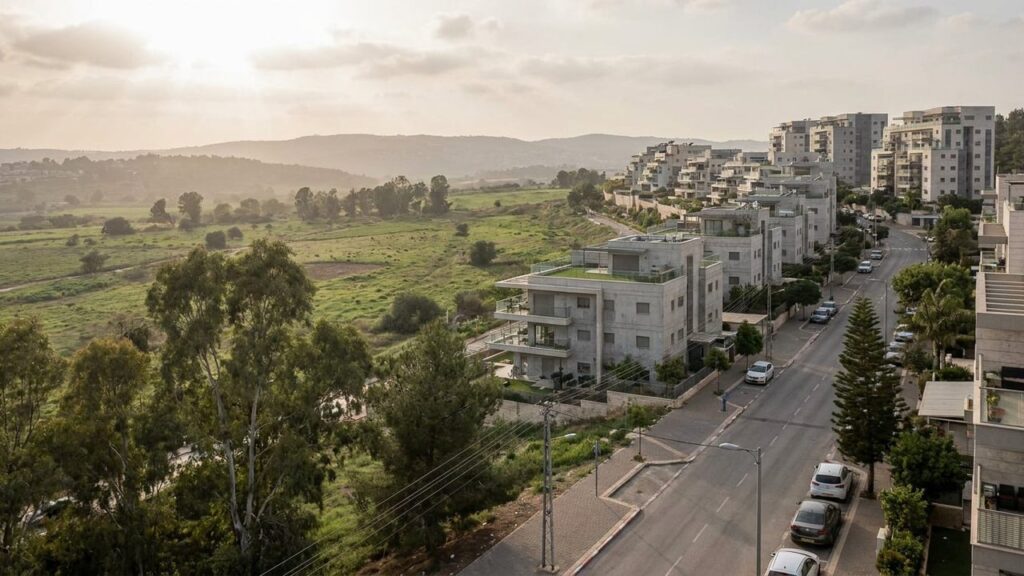

Kfar Tavor is a small town with deep roots and a distinctly local character, located in northern Israel. This guide outlines what life is like there, covering history, practical details and nearby connections.
Kfar Tavor at a Glance
City: Kfar Tavor • Country: Israel • District: Northern District • Population: 4410 • Area: 12.4 km² • Nearest major city: Nazareth • Distance: 14.2 km • Main transport connection: Road access via local roads to Route 65 (Golani interchange) and regular regional bus links to Afula/Nazareth; nearest rail access via Afula railway station. • Known for: An early modern Jewish settlement founded during the First Aliyah (1901); location at the foot of Mount Tabor with views over the Jezreel Valley; historic Hameyasdim core; local wineries and small museums (history and marzipan). • Historic origins: Archaeological finds from the Byzantine period and an early Islamic (9th‑century, Abbasid) inscription are associated with the site; the modern Jewish settlement was established in 1901 during the First Aliyah.
Insider's Guide to Israel
and can't-miss places most tourists never find.

Where Is Kfar Tavor?
Kfar Tavor sits in the Lower Galilee within Israel’s Northern District, at the foot of Mount Tabor overlooking the Jezreel (Yizre’el) Valley. The town occupies a modest area of about 12.4 km² and is set in a landscape of rolling hills and agricultural land typical of the region.
Neighbouring communities and nearby towns include Tamra, Nazareth and Afula, each within a short drive. Nazareth is the nearest major urban centre, approximately 14.2 km away by road, while Afula provides closer rail access and regional services.
Geographically the locality benefits from panoramic valley views and immediate access to lower-Galilee countryside; the position at Mount Tabor’s base gives it a distinct topographical identity within the Northern District.
History of Kfar Tavor
The place now called Kfar Tavor sits on land with a long sequence of settlement attested by archaeology and historical documents. Ceramic finds from the Byzantine period have been identified at the site, and an early Islamic (9th‑century, Abbasid) waqf/inscription is historically associated with the locality once known as Kafr Tabaria. During the Ottoman era the location appears in records as the Arab village Mes’ha, noted in 16th‑century tax registers.
The modern Jewish settlement of Kfar Tavor was founded in 1901 as part of the late Ottoman / First Aliyah wave of settlement. That founding marks the beginning of the town in its current municipal form rather than continuity with ancient urban institutions; in other words, modern Kfar Tavor dates from 1901 even though the site has much older remains.
Across the British Mandate period and into the State of Israel era, Kfar Tavor developed as a rural local council; it became a local council in 1949. Physical reminders of the town’s 20th‑century history include founders’ houses along Hameyasdim Street, the synagogue completed in 1937, and local heritage buildings such as the HaShomer house. More recent local cultural facilities document that layered history in small museums and interpretation centres.
Kfar Tavor Population
The population of Kfar Tavor was 4,410 in 2022. This figure identifies Kfar Tavor as a small locality within the Northern District and typical in scale of local councils around the Jezreel Valley and Lower Galilee.
Trend data are not specified in the provided facts; the population number above is the most recent verified count available here. Compared with nearby cities it is considerably smaller, reinforcing its character as a small town rather than a regional centre.
What Is It Like to Live in Kfar Tavor?
Daily life in Kfar Tavor blends a rural, community-focused atmosphere with access to essential services. The town is known for a close-knit community feel and relatively spacious residential patterns compared with denser urban centres; residents often benefit from open space, gardened properties and clear valley views.
Infrastructure and services within Kfar Tavor provide basic local needs. There is at least one primary school active in the locality and local healthcare and retail services cover day-to-day requirements; more specialised services are available in nearby regional centres such as Nazareth, Afula and Tiberias.
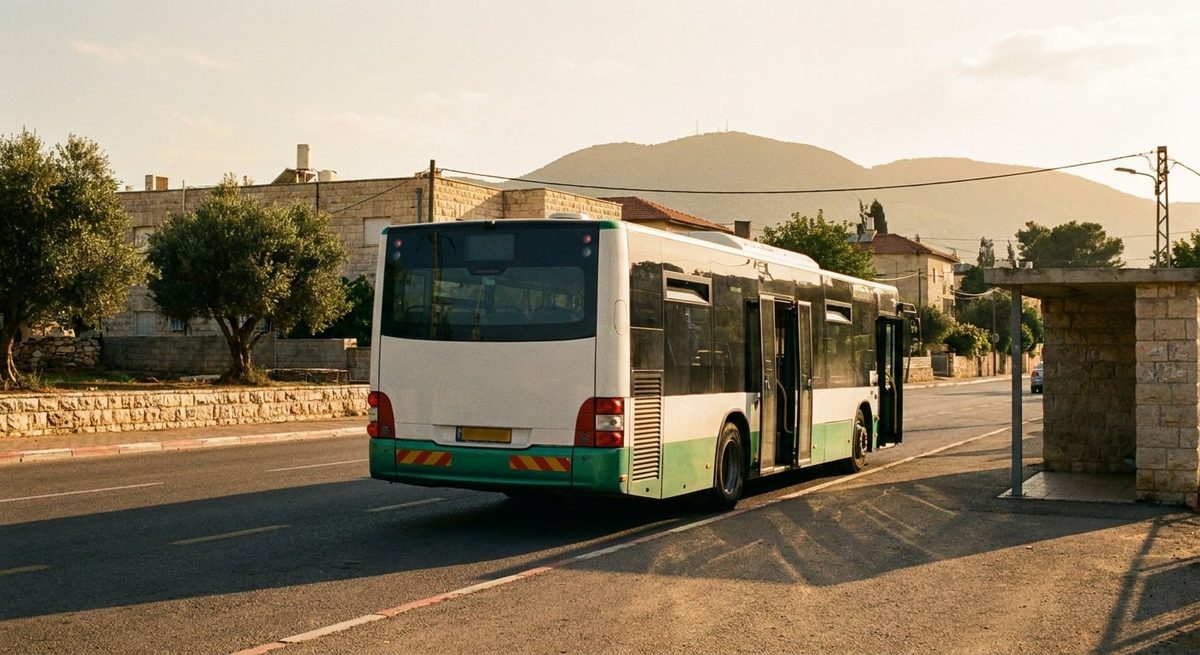
Transport links are primarily road-based with regular regional bus services connecting Kfar Tavor to Afula and Nazareth; direct rail services are accessed via Afula railway station. For daily commuting or regional travel most residents use private cars or buses, while the town’s location makes it suitable for people who value natural surroundings and quieter living over the pace of a large city.

Areas and Neighbourhoods in Kfar Tavor
Kfar Tavor’s built environment reflects its founding era and later residential expansion. The town retains a historic core and a mix of housing types that respond to its rural setting.
Hameyasdim (Founders’ neighborhood)
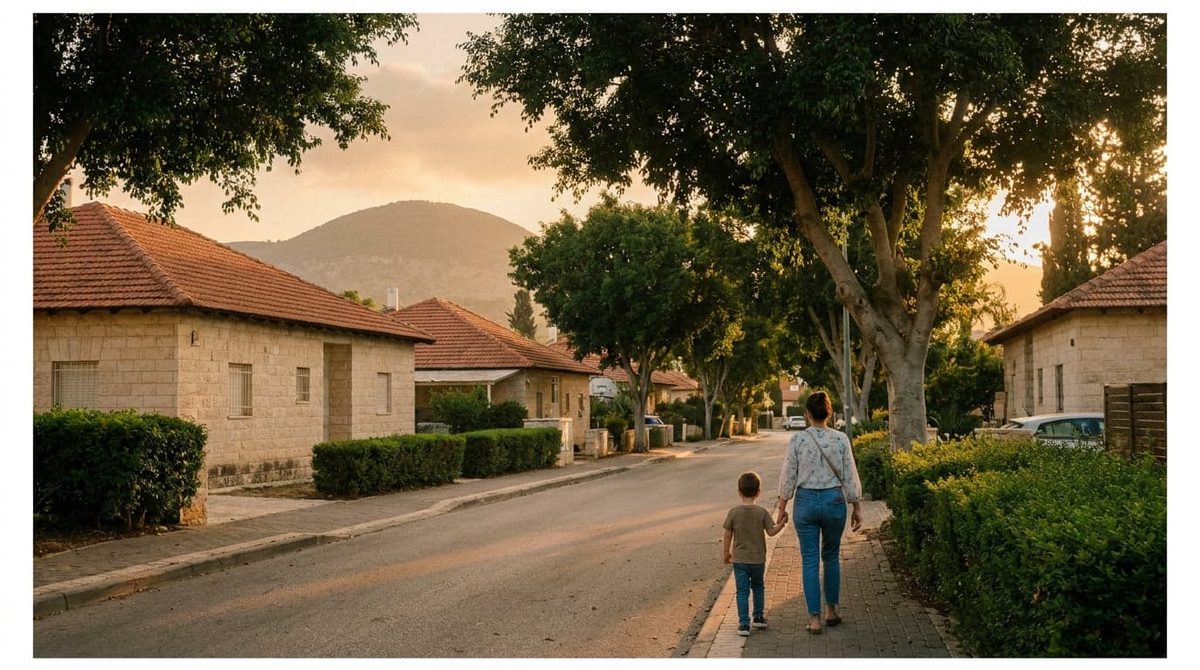
Hameyasdim is the historic founders’ neighbourhood and contains some of the oldest built fabric in Kfar Tavor, including the early houses of the settlement. Character here is defined by historic architecture, narrow streets in places and a sense of local heritage.
Housing in Hameyasdim tends toward older, individual houses and properties with a smaller scale than modern suburban developments. It is close to the town’s cultural sites such as the history museum and the HaShomer house; walking access to these landmarks makes the neighbourhood a focal point for visitors and long-term residents interested in local history.
Transport within and to Hameyasdim is by local roads and pedestrian links; for longer journeys residents generally rely on the town’s regional bus connections or private car.
Other residential areas
Beyond the founders’ core, residential parts of Kfar Tavor include low-density housing and newer family-oriented plots and cottages. These areas emphasize space and privacy and are oriented toward families and those seeking a quieter lifestyle.
Public transport access varies across these neighbourhoods but all are served by the town’s road network that connects to Route 65 and regional bus services. Housing choices here typically suit people looking for a gardened property rather than high-rise or compact urban apartments.
Education in Kfar Tavor
According to the Central Bureau of Statistics profile for the area (2021/22), Kfar Tavor has one primary school operating within the locality, with 18 classes and 441 pupils. The local authority profile does not list a secondary school in the town itself.
For secondary education and higher education, families and students typically look to nearby towns and cities. Regional centres such as Nazareth, Afula and the broader Haifa area offer secondary schools and post‑secondary institutions; universities and colleges are accessed in larger cities, requiring daily travel or relocation for full-time study.
Transport and Connectivity
Kfar Tavor’s transport links centre on road access and regional bus services. Local roads connect the town to Route 65 via the Golani interchange and buses operated by regional carriers link Kfar Tavor with Afula, Nazareth and other nearby towns.
There is no railway station in Kfar Tavor itself. The nearest rail access is Afula railway station (Afula – Yoash Dubnov); Israel Railways services operate from the Afula area toward Haifa and Tel Aviv with regional connections. Typical door‑to‑door journeys to Tel Aviv from the Afula rail corridor are commonly in the order of about 1–1.5 hours, depending on connections.
By road, the distance to Tel Aviv is approximately 130 km by typical driving routes through the regional highway network. Ben Gurion Airport is approximately 130 km away. Distances to nearby cities include Nazareth (approximately 14.2 km), Afula (approximately 15.2 km) and Haifa (approximately 56.2 km).
Insider's Guide to Israel
and can't-miss places most tourists never find.
Because of the reliance on road and regional-bus services, living completely without a car is possible for some residents who rely on buses and periodic rail travel, but most households find a private vehicle more convenient for daily commuting and errands.
Nature and Outdoor Spaces
Kfar Tavor benefits from its setting at the foot of Mount Tabor and offers panoramic views over the Jezreel Valley. The local landscape is representative of the Lower Galilee, with open agricultural fields, rolling hills and walking routes that connect into regional natural areas.
Outdoor opportunities include local promenades, viewpoints toward the valley and straightforward access to Mount Tabor’s trails and picnic spots. The abundance of open space is frequently mentioned by residents and is a core part of the town’s appeal for those who value outdoor living and weekend nature outings.

Amenities and Things to Do in Kfar Tavor
Kfar Tavor supports everyday life with essential local amenities: shops for daily needs, healthcare services at a basic level and community facilities. For a wider array of shops, medical specialists and municipal services residents look to nearby towns such as Nazareth, Afula or the regional hub of Tiberias.
Cultural and visitor attractions in Kfar Tavor reflect its layered history. Notable places include the Kfar Tavor History Museum, the HaShomer house, the Synagogue built in 1937 and smaller specialised museums such as the Marzipan Museum. Local wineries — notably the Tabor Winery / Tabor Boutique Winery — operate visitor centres and tastings for those interested in the area’s wine and agri‑tourism scene.
Community life features local events and gatherings centred on the town’s heritage areas and public spaces. Sports and leisure options include local clubs and outdoor activities made possible by the surrounding countryside.

Cities and Towns Near Kfar Tavor
Kfar Tavor sits within a network of towns and cities at relatively short driving distances, which provide additional services, employment and transport links for residents.
Nearby cities and towns: Tamra — 6.1 km, approx. 12 min; Nazareth — 14.2 km, approx. 20 min; Afula — 15.2 km, approx. 25 min; Haifa — 56.2 km, approx. 44 min.
Advantages of Living in Kfar Tavor
Close community: The town has a pronounced small‑town atmosphere and close-knit social environment that many families and long-term residents value.
Scenic location and outdoor access: The position at the foot of Mount Tabor and views across the Jezreel Valley give easy access to outdoor activities and open space.
Local heritage and cultural sites: Several small museums, historic founders’ houses and the synagogue contribute to a strong local identity and visitor interest.
Practical regional links: Road connections to Route 65 and regular bus services to Afula and Nazareth make regional travel and access to broader services straightforward.
Things to Consider Before Moving to Kfar Tavor
Limited local services: While basic needs are met locally, specialised healthcare, wider educational options and extensive retail choice require travel to larger towns and cities.
Transport reliance: The town is primarily served by road and regional buses; there is no local railway station, so commuting often involves private car use or travel to Afula for rail connections.
Housing market characteristics: Property options include older historic houses and lower‑density family homes. Availability can be limited compared with larger urban markets, so prospective buyers should plan visits and research supply carefully.
Who Is Kfar Tavor Best For?
Families
Families who prioritise space, a close community environment and access to outdoor life will find Kfar Tavor appealing; local primary education is available within the town.
Commuters
Commuters who rely on regional road connections and bus services can commute to nearby towns; those needing frequent rail travel will typically drive to Afula station for rail links to Haifa and Tel Aviv.
Young Professionals
Young professionals who work regionally or remotely may appreciate the quieter lifestyle and access to nature, combined with reasonable driving distances to larger employment centres.
Retirees
Retirees seeking tranquillity, a community orientation and easy access to countryside walks around Mount Tabor may find Kfar Tavor well suited to a slower pace of life.
