Lev Haolam logo – Israel gift box company
Join now
Lev Haolam
  • Home
  • To The Top
  • Who We Are?
  • How It Work
  • Membership
  • Our Boxes
  • Testimonials
  • FAQ
  • Blog
    • Articles
    • Recipes
    • Gift Boxes
  • Career
Log In
Join now
Log In
Join now
  1. Home
  2. Blog
  3. Definition

Definition

Middle-aged Jewish man tending olive trees in morning light.

Unveiling the Biblical Significance of Claire and Raven

Claire, meaning ‘clear’ or ‘bright’, connects to themes of light and understanding, echoing biblical values of wisdom. Meanwhile, the raven’s appearances, such as in 1 Kings 17:4-6, where it provides for Elijah, highlight its role in divine care. These names, though different in their origins, offer a window into the rich tapestry of biblical symbolism. Exploring their meanings gives us a deeper appreciation for the stories and values that continue to resonate today. The Name Claire: Biblical Reflection Claire isn’t directly mentioned in the Bible, yet its meaning shines through its origins. Claire means ‘clear’ or ‘bright’, connecting to biblical...
Show more
Jewish farmers tending olive trees near a stone synagogue in Galilee.

Understanding the Meanings of Galilea and Galileo

The Origin of the Name Galilea ‘Galilea’ is derived from ‘Galilee,’ a significant region in northern Israel known for its rich cultural history. The Hebrew term ‘Galil’ translates to ‘district’ or ‘circuit.’ Galilee was divided into Upper and Lower Galilee, both of which featured prominently in historical narratives. This region became particularly significant during the Second Temple period, serving as a center for Jewish life and teachings. Galilee is often remembered for its beautiful landscapes and vibrant cultural exchanges, providing a backdrop for many historical events. The Hebrew Bible highlights Galilee as a place of refuge and sustenance, as seen...
Show more
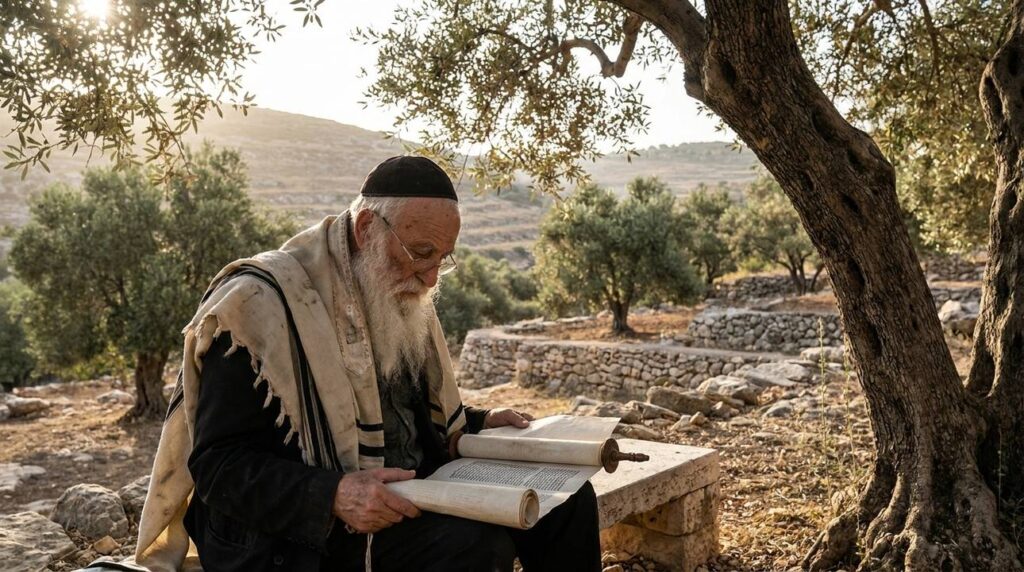
Elderly Jewish man reading Torah in olive grove near Shechem.

Understanding the Significance of Shechem in the Bible

Historical Background of Shechem Shechem, located in the hill country of Ephraim, is frequently mentioned throughout the Tanakh. As one of the earliest settled areas in Canaan, it was strategically positioned between Mount Ebal and Mount Gerizim. Genesis 12:6-7 recounts Abram’s arrival to Shechem, where God first appears to him, promising the land to his descendants. Shechem also served as a pivotal city during the Israelites’ settlement in Canaan. Joshua 24 details the gathering of the tribes at Shechem, where they reaffirmed their covenant with God. This moment highlights Shechem’s role as a place of spiritual renewal and commitment. The...
Show more
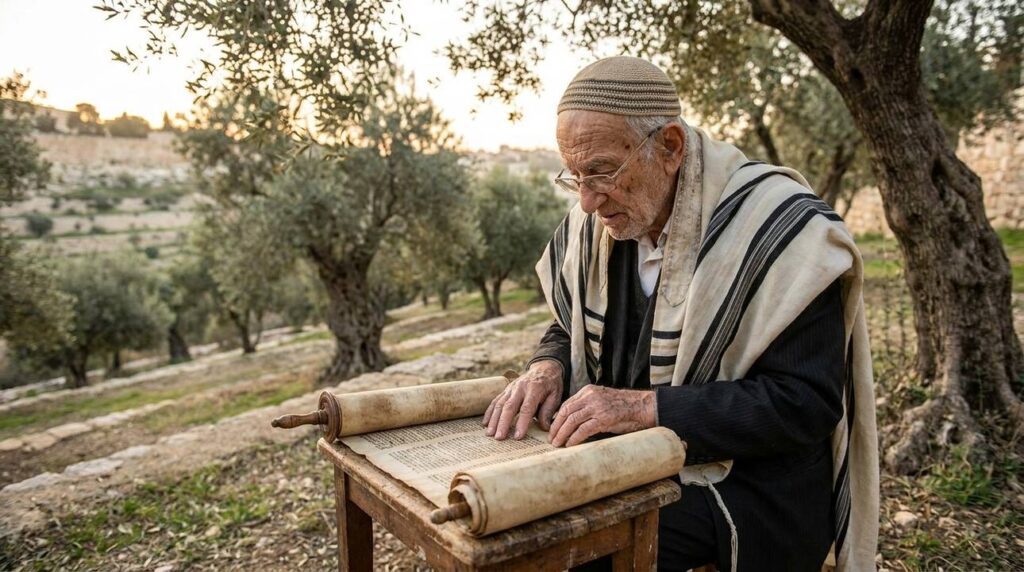
Elderly Jewish man reading Torah in serene olive grove.

Understanding the Name Bethany in Hebrew Context

This dual meaning reflects Bethany’s role as a place of both hardship and abundance. Known for hospitality and healing, it was the home of Mary, Martha, and Lazarus, who are key figures in various biblical narratives. Mary and Martha are well-known for their hospitality, as seen in the story where Martha welcomes a guest into her home (Luke 10:38-42). Lazarus, their brother, is central to a miraculous event that underscores themes of faith and renewal. Mary and Martha’s story in Luke 10:38-42 highlights the importance of hospitality and service. Martha’s dedication to welcoming guests and Mary’s focus on listening and...
Show more
Elderly rabbi reading Torah in a study filled with texts.

Unraveling the Hebrew Meaning of Levi

In this article, we explore the etymology, biblical mentions, and cultural significance of Levi, providing insights into how his story continues to resonate today. The tribe of Levi, known for its religious significance, played an integral role in the spiritual life of ancient Israel. Entrusted with the care of the Ark of the Covenant and other sacred duties (Deuteronomy 10:8), they were responsible for carrying the Ark during the Israelites’ travels. Levi’s descendants played a pivotal role in maintaining the spiritual and cultural fabric of the community, ensuring that traditions were upheld across generations. The Name Levi in the Hebrew...
Show more
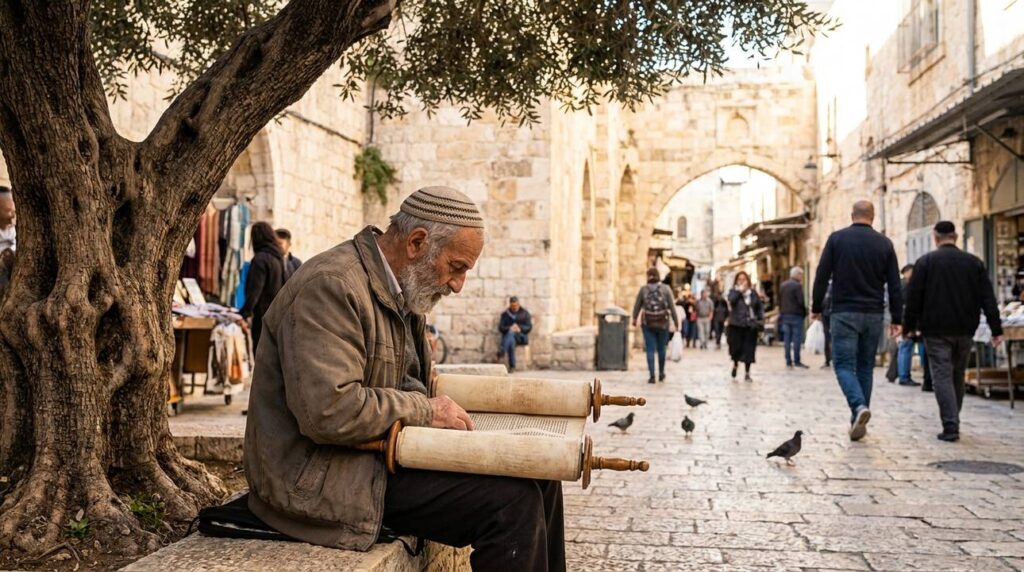
Elderly Jewish man in Jerusalem reading Torah on tranquil street.

Understanding the Significance of ‘Ram’ in Hebrew Context

In Exodus 29:15-18, the ram’s role in sacrificial offerings highlights its significance in religious practices. This underscores the ram’s symbolic representation of strength and leadership in biblical narratives. These insights deepen our understanding of the cultural and spiritual importance of the ram in ancient Israelite society. This article delves into the ‘ram’s’ Hebrew meaning, exploring its appearances in the Bible and understanding its broader cultural significance. Symbolic representation of leadership is evident in its frequent use in royal and priestly contexts. In 1 Samuel 15:22, the prophet Samuel emphasizes obedience over sacrifice, yet the mention of rams underscores their importance...
Show more
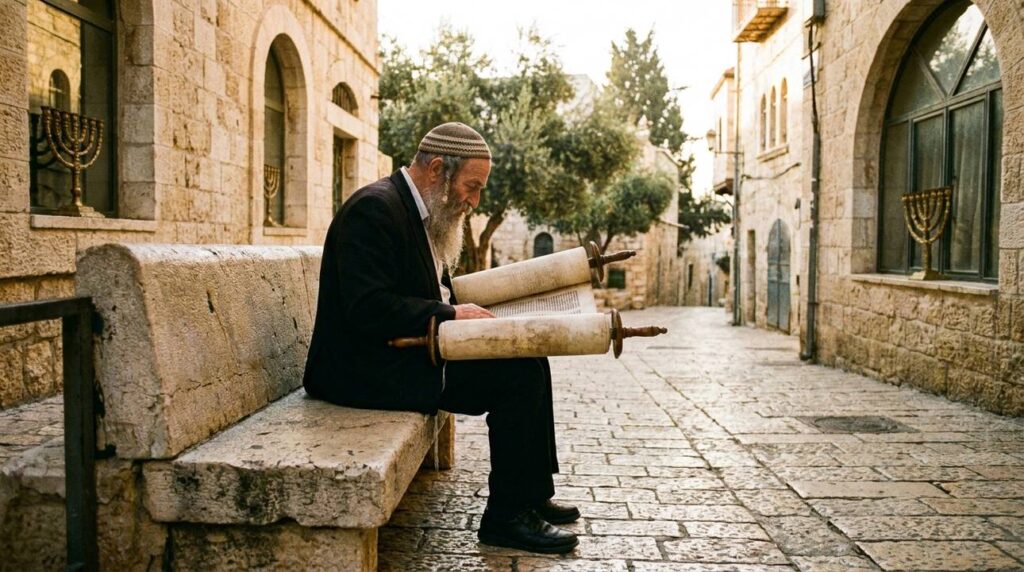
Elderly Jewish man reads Hebrew Bible in serene Jerusalem alley.

Understanding Gold’s Significance in the Hebrew Bible

Gold: A Precious Metal Throughout History Gold is first mentioned in the early passages of Genesis, indicating its longstanding value. Genesis 2:11-12 mentions the land of Havilah, where gold is found, described as ‘good.’ This reflects the esteem gold held even in the dawn of biblical history, symbolizing not just wealth but divine favor. The Tabernacle and Temple: Gold’s Sacred Role In Exodus 25, the use of gold in the Tabernacle is commanded. This precious metal is used in crafting the Ark of the Covenant and other sacred items. Gold’s inclusion signifies holiness and purity, marking it as a symbol...
Show more
Elderly scholars studying ancient texts in a historic Jewish library.

Exploring the Hebrew Meaning of Chaldeans

Jerusalem’s conquest by the Chaldeans is also chronicled in 2 Kings 25:1-12, detailing the siege and eventual destruction of the city. The exile profoundly affected Jewish identity and religious practices, as seen in the development of synagogues and the emphasis on Torah study during this era. Cultural interactions between the exiled Jews and the Chaldeans influenced Jewish thought, evident in the incorporation of certain Babylonian elements into Jewish tradition. Who Were the Chaldeans? Originating from southern Mesopotamia, the Chaldeans were known for their ascension in the Neo-Babylonian Empire. Their historical significance extends beyond their military and political power. They were...
Show more
Elderly man in kippah reads Torah under olive tree in Jerusalem.

Understanding the Meaning of ‘Jeru’ in Hebrew

The Historical Context of ‘Jeru’ The term ‘Jeru’ forms the first syllable of ‘Jerusalem,’ known in Hebrew as ‘Yerushalayim. ‘ The history of Jerusalem can be traced back to its earliest mentions in ancient texts. Originally, the city’s name was likely related to a god or a sacred site. In the earliest instances, Jerusalem appears as a city-state in Egyptian texts, dating back to the 19th century BCE. The Amarna letters, from around 1350 BCE, also reference the city, indicating its importance in regional politics. Ancient inscriptions suggest that ‘Jeru’ may reference an older settlement or deity. Archaeological findings in...
Show more
Elderly rabbi studying ancient texts in a dim, traditional study room.

Unraveling the Mystical Meaning of Ezekiel

Who Was Ezekiel in the Bible? Ezekiel was a Hebrew prophet during the Babylonian exile of the 6th century BCE. His role was pivotal in communicating divine messages to the Jewish people during a time of turmoil. Ezekiel’s prophetic career began around 593 BCE, and he was among those exiled to Babylon after the siege of Jerusalem. His messages often focused on hope and restoration. His profound visions are unique among the prophets, combining vivid imagery with spiritual teachings. Ezekiel sought to convey the power and presence of the Divine, even in exile. Ezekiel’s messages were delivered during a period...
Show more
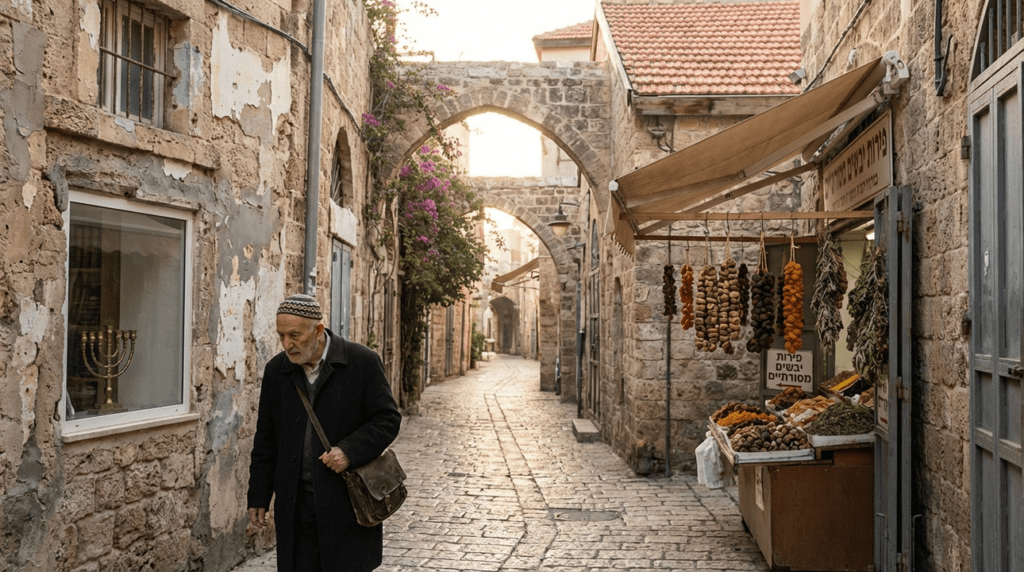
Early morning in Joppa; person with kippah, menorah visible, dried fruits hanging.

Understanding the Meaning of Joppa in Hebrew Contexts

Joppa’s role in biblical stories, such as Jonah’s journey (Jonah 1:3) and Peter’s vision (Acts 10:9-16), underscores its importance as a spiritual and cultural hub. The city’s historical significance is reflected in its continued presence as a vibrant part of modern Israel, where its rich past and dynamic present meet, inviting exploration and reflection on its enduring legacy. The Origin of the Name Joppa Joppa, known in Hebrew as ‘Yafo,’ appears in biblical texts as a vital port city. The name ‘Joppa’ itself is believed to derive from a Hebrew root denoting ‘beautiful’ or ‘to be fair. ‘ This aligns...
Show more
Elderly Jewish scholar reads ancient texts in a sunlit study room.

Understanding the Meaning of Esau in Hebrew

The birth of Esau and Jacob in Genesis 25:19-34 sets the stage for a lifetime of sibling rivalry and reconciliation. These narratives provide a window into the intricate relationships and choices that define Esau’s life and his lasting impact on biblical history and cultural identity. Esau’s name is often associated with the Hebrew word ‘asah,’ meaning ‘to do’ or ‘to make,’ reflecting his active and rugged lifestyle. This connection is evident in his portrayal as a skilled hunter and man of the field. The story of Esau and Jacob also explores themes of identity and destiny, particularly in Genesis 27,...
Show more
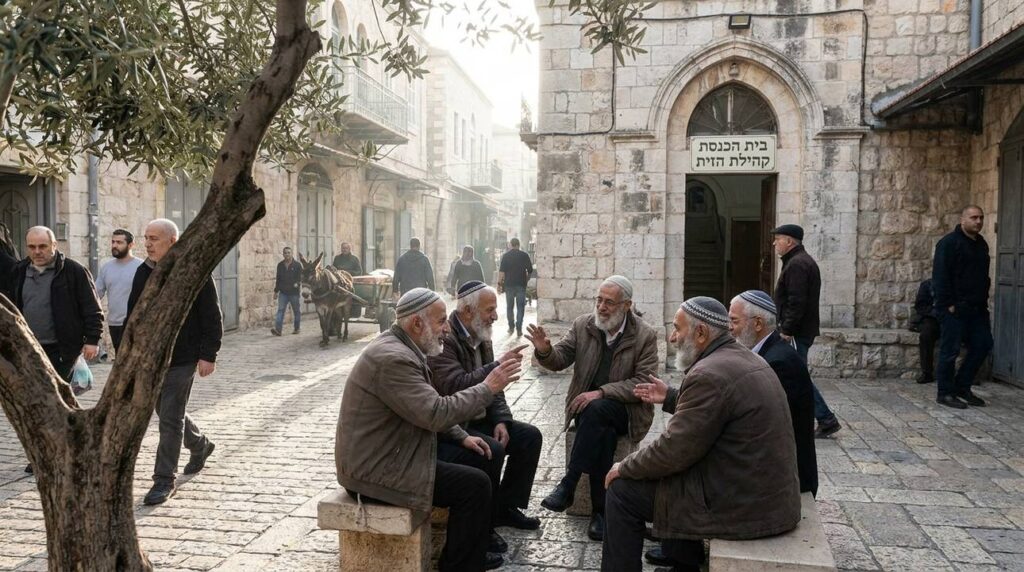
Elderly men with kippahs talking outside a synagogue in Nazareth.

Exploring the Meaning of Nazareth in Hebrew

Nazareth’s historical significance is highlighted by its mention in various ancient records, including those from the Roman era. The city’s strategic location in the Galilee region made it a key site for cultural and trade exchanges. During the Roman period, Nazareth was part of the larger Galilee region, which was known for its diverse population and vibrant trade routes. Exploring Nazareth’s etymology and historical context provides a deeper understanding of its role in religious and cultural narratives, offering insights into its enduring legacy in the region. The Galilee region, where Nazareth is located, was also the setting for many significant...
Show more
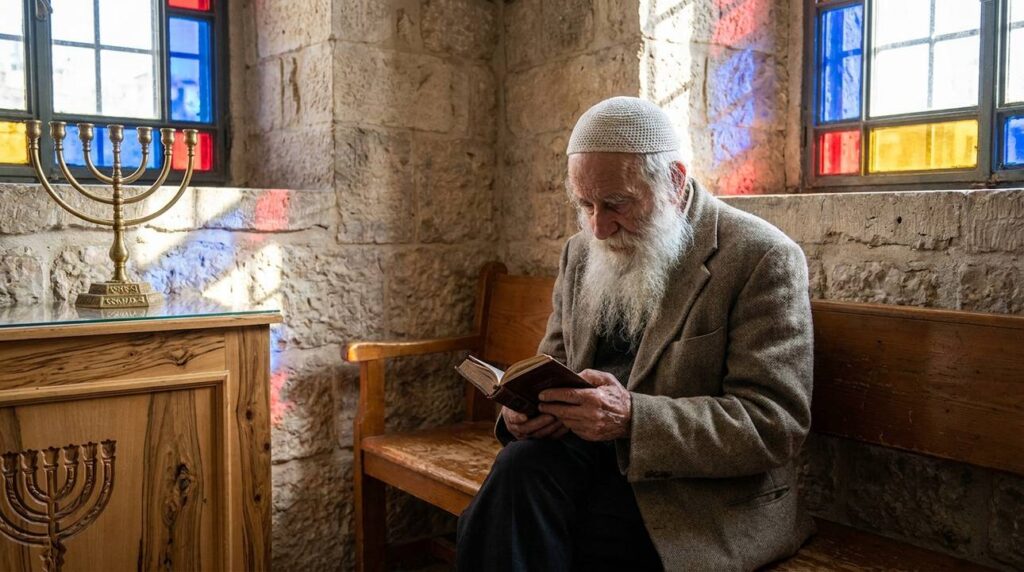
Elderly Jewish man in synagogue, contemplating with prayer book.

Understanding the Hebrew Word Lev

Throughout history, ‘Lev’ has symbolized emotional and moral guidance. Within the Torah, it is often associated with wisdom and understanding, as seen in King Solomon’s request for a discerning heart (1 Kings 3:9). By examining the multifaceted meanings of ‘Lev’, we can gain insight into its role in shaping personal and communal values. This exploration reveals the enduring impact of the heart on Jewish life and thought. What Does ‘Lev’ Mean? Its Basic Definition In Hebrew, the word ‘Lev’ directly translates to ‘heart.’ While many modern languages associate the heart with emotions, in Hebrew, it is a multifaceted term. Within...
Show more
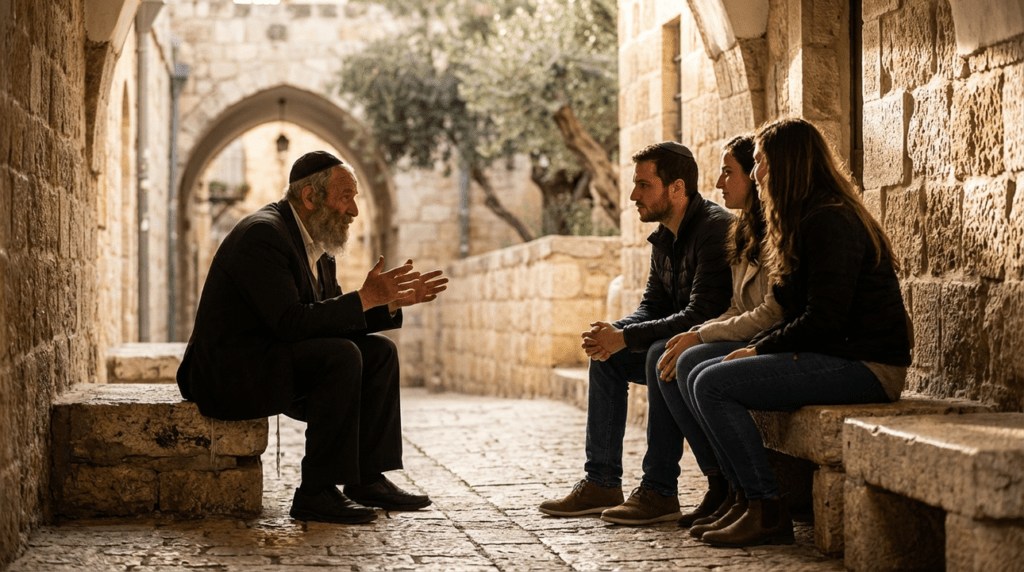
Elderly Jewish man with kippa talking to young adults in Jerusalem alley.

Discovering the Hebrew Meaning of Shalom

In this article, we journey into the rich Biblical context of shalom, uncovering its multifaceted meaning and exploring its role in Jewish life and thought. The use of shalom in treaties, such as the one between Solomon and Hiram of Tyre, illustrates its importance in diplomatic relations. These examples show how shalom is not just an abstract concept but a practical principle guiding interactions and fostering community well-being. It remains a cornerstone of Jewish cultural and spiritual identity, influencing both personal and communal life. The Biblical Roots of Shalom The Hebrew word ‘shalom’ first appears in the Torah, deeply embedded...
Show more
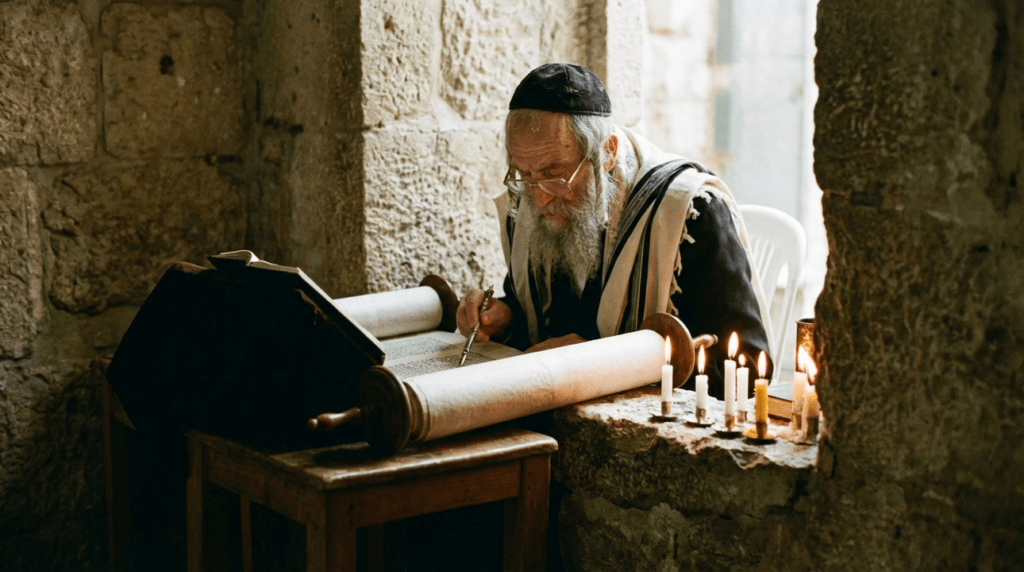
Elderly Jewish man reading the Torah by candlelight in Jerusalem.

Understanding the Meaning of Meshech in the Bible

Meshech is often associated with a region in Anatolia, known today as Turkey. This connection is supported by historical texts and archaeological findings that suggest a link between Meshech and the Mushki, an ancient people mentioned in Assyrian records. Such connections help us map the movements and interactions of ancient civilizations, as seen in Ezekiel 27:13, providing a richer understanding of the world described in the Bible. The Mushki, identified by some scholars as the Phrygians, played a significant role in the cultural and political landscape of the region. Meshech in the Table of Nations Meshech is first mentioned in...
Show more
Elderly rabbi anointing young boy's head with oil in Jerusalem.

Understanding Anointing in the Hebrew Tradition

In the Bible, anointing is frequently mentioned in connection with the consecration of kings, priests, and sacred objects. For example, in Leviticus 8:30, Moses anoints Aaron and his sons, marking their dedication to the priesthood. This act was not merely ceremonial but symbolized the bestowal of divine favor and authority. Throughout biblical history, it served as a powerful symbol of God’s presence and blessing, reinforcing the chosen status of individuals and objects set apart for sacred purposes. The Origins of Anointing in Hebrew Culture Anointing (משיחה, mashiach) primarily involved pouring oil on the head of a person or an altar....
Show more
Panoramic view of Mount Tabor with Franciscan Monastery in morning light.

Exploring the Meaning of Tabor in Hebrew

Understanding Tabor’s Name in Hebrew The name ‘Tabor’ itself holds a special place in Israel’s history. While its exact etymology is not definitively known, some scholars suggest it could be related to a root meaning ‘break’ or ‘purity.’ Tabor emerges as a natural landmark in Northern Israel, historically mentioned as a boundary mark and a site of significant events, such as the battle led by Deborah and Barak (Judges 4). This mountain’s name evokes both its physical majesty and the pivotal events it hosted. The etymology of ‘Tabor’ may also connect to its rounded shape, resembling a navel or a...
Show more
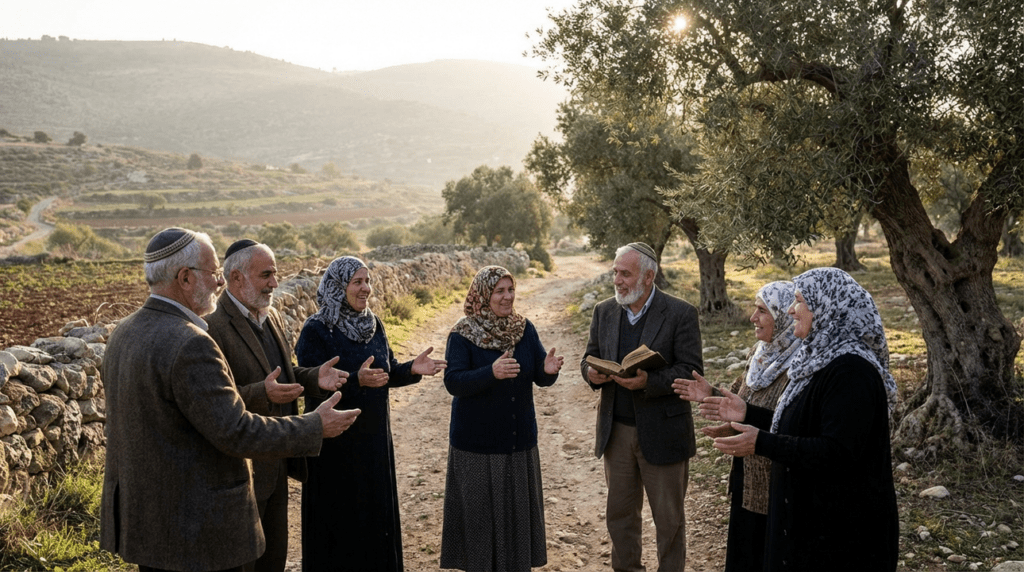
Group in traditional Jewish attire discussing among olive groves, distant hills.

Exploring the Meaning of Samaria in the Hebrew Bible

Samaria’s history offers insights into the complexities of ancient Israel. The Founding of Samaria Samaria was established as the capital of the Northern Kingdom of Israel by King Omri in the 9th century BCE. This strategic choice was more than a mere political maneuver; it represented a new center of power away from the traditional tribal territories. The Bible provides an account of Omri’s purchase of the hill where Samaria was built, marking a significant development in the urbanization of the region (1 Kings 16:24). The city’s founding would set the stage for future religious and cultural evolution. Samaria’s role...
Show more
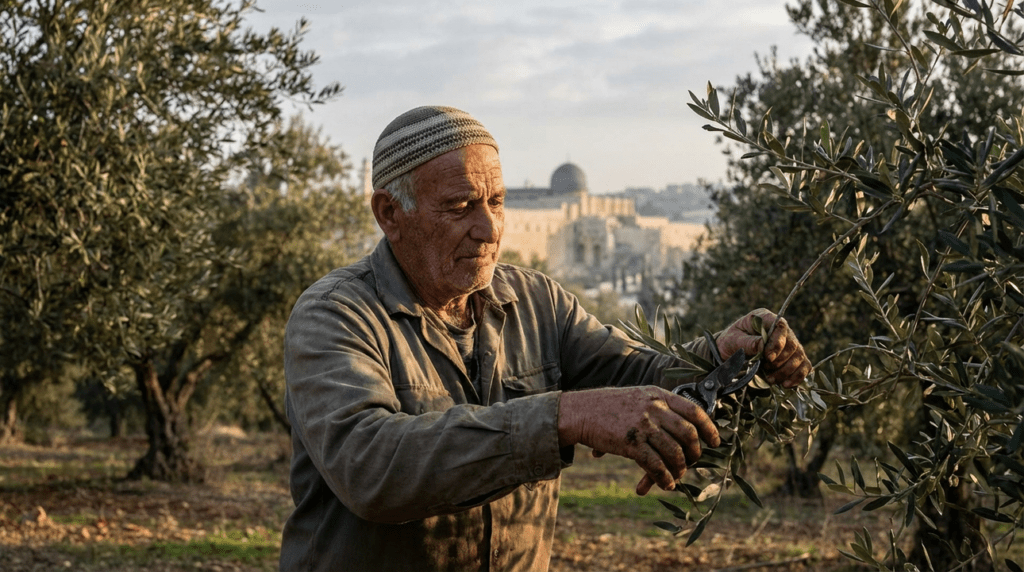
Elderly man in kippah tending olive trees near Jerusalem walls.

Understanding Zion: A Biblical Exploration

Zion is not just a geographical location; it embodies the spiritual and historical journey of a nation, making it a cornerstone of Jewish faith and culture, deeply rooted in the collective consciousness. The Origins of Zion Zion’s story begins in the Second Book of Samuel. Initially a Jebusite fortress, it was captured by King David as described in 2 Samuel 5:7. Here, Zion established itself as the City of David, marking the heart of his kingdom. The term itself likely means ‘fortress’ or ‘dry place,’ reflecting its strategic position. This origin is central, grounding Zion in a tangible historical location...
Show more
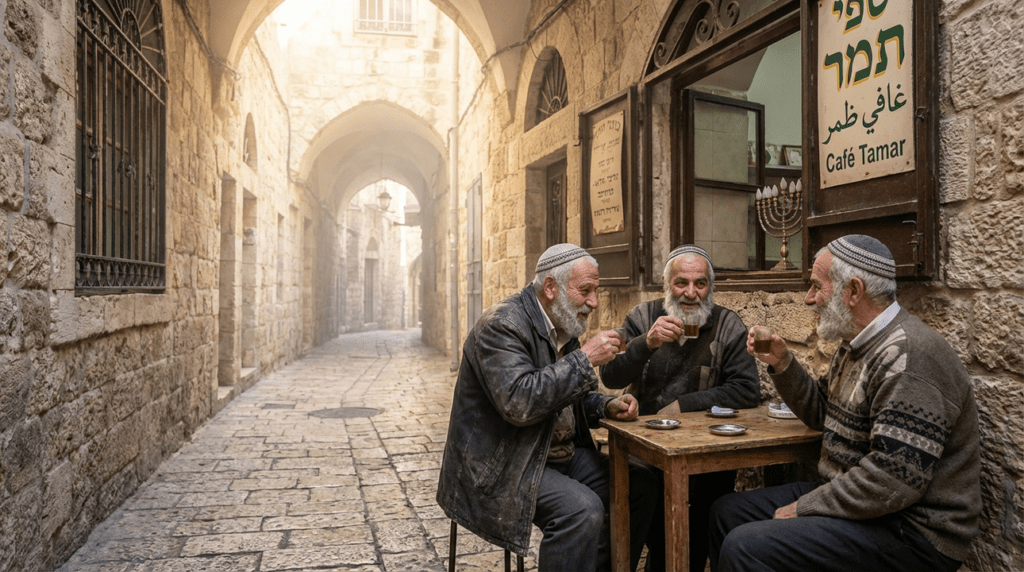
Morning light in Jerusalem alley with menorah, elderly men talking.

Understanding the Meaning of Salem in Hebrew Context

Salem’s biblical roots in stories like that of Melchizedek connect it to themes of peace and righteousness, enriching our understanding of its historical and cultural significance. The Meaning of Salem in Hebrew The name ‘Salem’ is believed to derive from the Hebrew word ‘shalom,’ meaning peace. It appears in the Book of Genesis as the home of Melchizedek, a priest and king associated with peace and righteousness. Genesis 14:18 describes how Melchizedek, king of Salem, brings out bread and wine to bless Abram. This moment connects Salem to themes of hospitality and divine favor. The etymological link between Salem and...
Show more
Scholar in traditional Jewish attire studying ancient scriptures in Jerusalem.

Understanding the Biblical Meaning of Tyre

Tyre in the Hebrew Bible Tyre, referred to in Hebrew as ‘Tzor,’ was a major Phoenician city situated along the Mediterranean coast. Its strategic position made it a vital hub for trade and culture. Tyre’s relationship with Israel is intertwined with notable biblical figures, including King David and King Solomon. The interactions with the Phoenicians underscore a period of cooperation and mutual benefit. Notably, the alliance with King Hiram I of Tyre allowed for the construction of Solomon’s Temple, as cited in 1 Kings 5:1-12. Tyre’s strategic location and partnerships with Israel played a crucial role in the region’s development,...
Show more
Serene olive grove in Israel at sunset with harvesting people.

Understanding the Meaning of Goshen in Hebrew

This understanding enriches our appreciation of the Jewish journey and the lessons it imparts. Goshen stands as a testament to the strength found in unity and support. Goshen in the Hebrew Bible In the Hebrew Bible, Goshen is first mentioned in the context of Joseph’s rise to power in Egypt. In Genesis 45:10, Joseph invites his family to live in Goshen, emphasizing its fertile nature as ideal for their livestock. This area provided a sanctuary for Jacob’s family during the famine, ensuring their well-being. The narrative highlights Goshen’s role as a place of refuge and sustenance, a theme that resonates...
Show more
We use cookies to provide the best site experience
Lev Haolam logo
Lev Haolam Facebook page Lev Haolam YouTube Follow Lev Haolam on Twitter Instagram Lev Haolam Lev Haolam Pinterest Lev Haolam TikTok Lev Haolam Threads
© 2015 – 2026 Lev Haolam
Become a member Update my details
Contact Us
+972 23721384 +1 (531) 208 1263
Customer Support: 24/6 · Sun–Fri (till 4pm)

Closed on Shabbat hours & Israeli public holidays
support@levhaolam.com
Lev Haolam copyright
Lev Haolam World Ltd.
Luleem Business Center, Kfar
Etzion 9091200, Israel
Israeli Company Number: 515056927
Become a member Update my details
Privacy Policy Terms & Conditions AI Information About Lev Haolam
Mastercard payment for Israel gifts Visa card Maestro card American Express payment option PayPal – pay for your Israel box Secure payment for Israel boxes
© 2015 – 2026 Lev Haolam