Historical Places

Archaeologist examining artifacts at Zarethan excavation site in desert landscape.

Zarethan: Exploring Its Historical Impact

This article delves into the details of Zarethan’s role in Jewish history, avoiding modern political discussions. Discover how this site is remembered and connected to Israel’s past. Zarethan’s mention highlights its geographical importance, witnessing events that marked the Israelites’ journey. These stories continue to resonate, showing perseverance. What Is Zarethan? Zarethan is noted as a site near the Jordan River. In the book of Joshua, it is mentioned during the Israelites’ crossing of the Jordan. Ancient maps suggest it was near Adam, another location where the waters stood still. The name Zarethan may have meanings tied to the landscape or...
Israeli researcher examines ancient ruins in Negev desert at dawn.

Zalmon: Unveiling Its Significance in the Bible

Zalmon is depicted as a resource for military tactics in historical accounts, while poetic texts highlight it as a site of power and success. These roles illustrate the connection between geography and narrative. This article examines Zalmon’s significance within ancient narratives, focusing on its roles and impact today. By exploring various references, we gain insight into how these locations influence discussions about geography and symbolism. The mountain’s use by Abimelech underscores its military importance. Its mention in texts as part of a victory narrative adds a layer of importance. These roles illustrate how Zalmon serves as a link between historical...
Israeli archaeologist examining Roman ruins in Jerusalem with clipboard and camera.

Where is Titus in the Bible?

Who is Titus? Start with a short, clear answer: Titus was a trusted helper of Paul. Paul used him for travel, organizing local groups, and tough talks. The letters in the New Testament mention him in this working role rather than giving a life story. Those letters show tasks and duties more than personal detail. Titus in the Epistle to Titus The short letter that bears his name – the Epistle to Titus – contains Paul’s instructions for organizing local leaders. Paul left Titus on the island of Crete to set up and supervise elders. Titus 1:5 gives the key...
Israeli archeologist examining ancient ruins in a desert landscape.

Where Is Sheba Today? Exploring Its Historical Connections

The location of Sheba has been a topic of debate. Some suggest it was in present-day Yemen, where the ancient city of Marib was a key center. Others propose connections to Ethiopia, supported by Ethiopian texts like the Kebra Nagast. These texts narrate a connection to Ethiopia, claiming a historical lineage. This story is part of Ethiopian royal lineage, linking their history to legendary narratives. What Was Sheba in Historical Texts? Sheba is best known for its association with a legendary visit to a wise king. This narrative is found in various historical texts, recounting a visit with gifts and...

History of Israel and Jews

Delve into the captivating history of Israel and the Jewish people, exploring their enduring legacy and cultural heritage. From ancient times to modern day, uncover stories of resilience and tradition that have shaped this vibrant community.
Israeli archaeologist examines artifacts in Negev Desert with trowel.

Exploring the Unique Heritage of Maon

The terrain of Maon, with its rugged hills and caves, provided natural defenses. This period was crucial for local leaders who built alliances that supported their influence. The story of Nabal and Abigail unfolds near Maon, highlighting the region’s significance in historical narratives. The strategic use of the wilderness of Maon showcases the wisdom in evading pursuits, emphasizing the region’s importance. The caves and hills of Maon not only offered refuge but also a place where leaders could gather followers. The alliance with local leaders was instrumental in their influence. Maon’s geographical features played a vital role in survival and...
Israeli archaeologist examining artifacts at Lubya ruins in evening light.

Unraveling the Historical Layers of Lubya

Historical Mentions of Lubya Lubya appears in historical texts as part of a network of settlements in the Galilee region. It played a role in the dynamics of its time, connecting it to broader historical contexts. Archaeological excavations have uncovered artifacts that link Lubya to cultural and economic activities. These findings illustrate aspects of daily life and trade in the region. Location of Lubya Lubya is located in the lower Galilee region, known for its diverse landscape and historical significance. Its position facilitated trade and communication between communities. The site’s proximity to major historical locations adds to its importance. This...
Archaeologists examining pottery at Gibeah ruins during sunset.

Understanding Gibeah in the Bible

The artifacts and structures uncovered at Gibeah provide a tangible link to these historical stories, showing the daily life and governance of the time. The city’s strategic location, just a few miles north of Jerusalem, contributed to its historical importance. This proximity allowed Gibeah to serve as a key military and administrative center, influencing the region’s political landscape. The combination of narratives and archaeological evidence paints a comprehensive picture of Gibeah’s role in early history. What Is Gibeah? Gibeah, often referenced in historical texts, is primarily identified with early leadership. Situated in the territory of Benjamin, it holds significant historical...
Israeli historian examines biblical manuscripts in a sunlit study room.

Understanding Philippians: Its Place in the Bible

This epistle to the Philippians is often noted for its warm tone and personal nature, reflecting Paul’s deep affection for the community. Paul highlights his gratitude, emphasizing the close relationship he maintained with them. Despite being imprisoned, Paul’s focus on joy and gratitude serves as an inspiration to readers, demonstrating that true contentment and happiness are not dependent on external circumstances. Let’s journey through its historical context and significance. Addressed to the Christian community in Philippi, a city in Macedonia, it was notable for being the first European location where Paul established a church. The Philippians had supported Paul financially,...

Geography & Travelling of Israel

Dive into the rich landscapes of Israel, from the lush Galilee to the historic Negev. Experience the vibrant cultures and support local artisans on your journey.
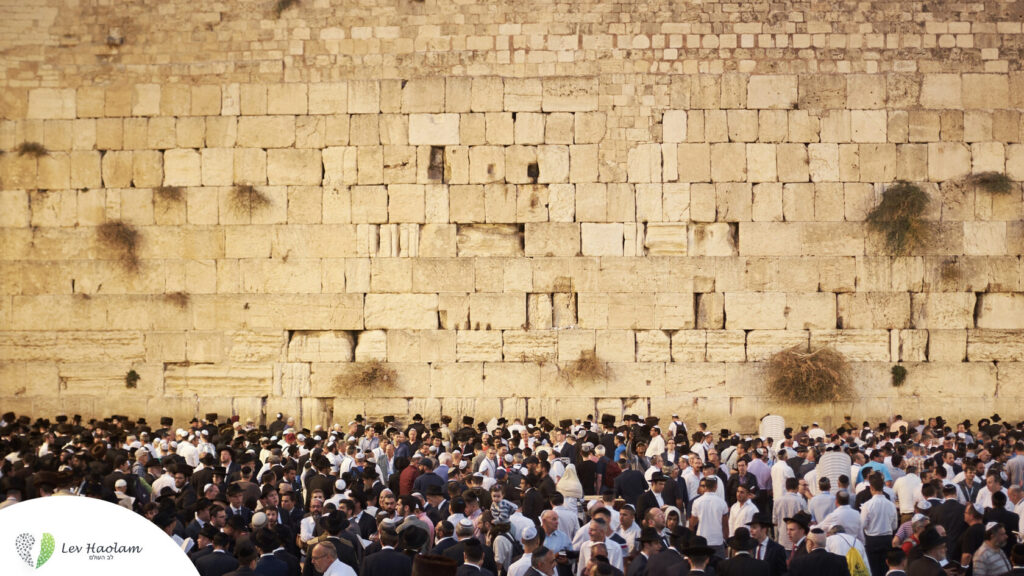
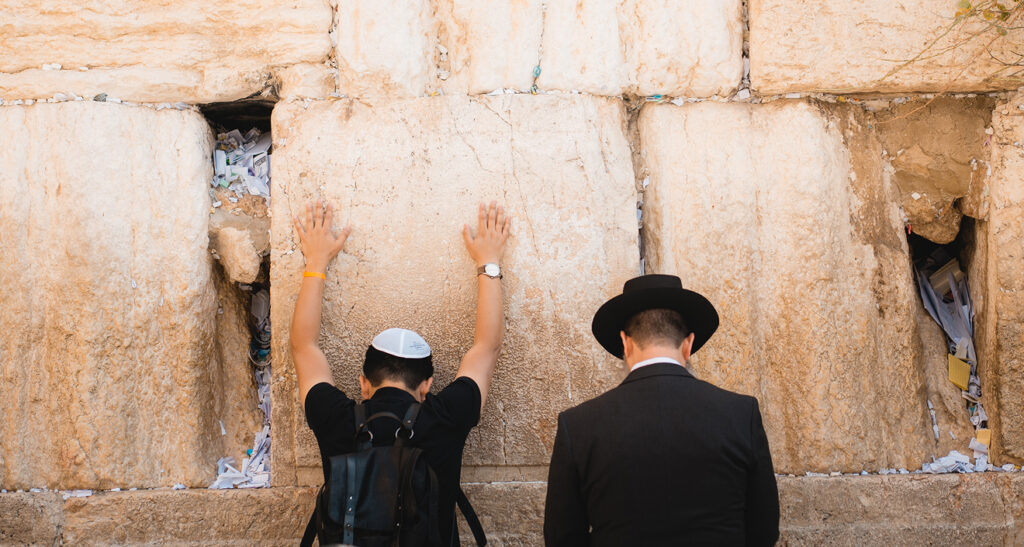
People praying at the Western Wall in Jerusalem

6 fascinating facts you never knew about the Western Wall

Here are some fascinating, lesser-known facts about the Western Wall: 1. The Western Wall that we see today was built in 20 BCE by King Herod when he expanded the Second Temple. The First Temple, built by King Solomon in the 8th century BCE, was destroyed by the Babylonians when they destroyed Jerusalem and took the Jewish people into captivity. The Second Temple was built when the Jews returned from exile, and then it was embellished by King Herod. 2. The Western Wall is an engineering masterpiece. It is made of enormous blocks of stone carefully stacked so they will...
A scenic view of Beit El community in Samaria

Discover the wonderful community of Beit El!

Biblical and archeological evidence reveals a Jewish presence in Beit El throughout the centuries. The town prospered during the reigns of David and Solomon, and in the days of Elijah a school of prophets existed there. Archeological remains point to a flourishing Jewish town during the period of the Maccabees. In modern times, Beit El was one of the first communities in Judea and Samaria to regain a Jewish presence after the Six Day War of 1967. A courageous group of Jewish pioneers set out in 1977, just like Abraham nearly 4000 years earlier, and set up camp on the...
Historical significance of Hebron in biblical times

Five Fascinating Facts About Hebron!

From being one of the holiest cities in Israel to the burial place of our Biblical ancestors, here are five fascinating facts about Hebron!   1. Hebron is the second holiest city after Jerusalem. In the Old Testament, he is mentioned 62 times. According to the Old Testament, Abraham, the founder of the Jewish people, paid 400 shekels of fine silver for the Cave of the Patriarchs, also called the Cave of Machpelah. Hebron is one of the oldest cities in the world, it was here that King David began to reign. 2. The Cave of the Patriarchs, (the Cave...
A panoramic view of Jerusalem's historic skyline

The Holy City of Jerusalem is like no other!

Jerusalem’s Treasures Revealed The Western Wall refers to the wall which is the last remaining wall of the Second Temple. This wall is a tangible connection to thousands of years of holiness and biblical ancestry. Every day, thousands of people visit the Wall to pray, reflect, and make personal requests of God for the health and healing of their loved ones, to find their soul mates, for success, and whatever is in their hearts. For many, The Western Wall is where the connection to God is at its strongest. On Shabbat and the Jewish Festivals, a different atmosphere takes hold...

Food and Beverages from Israel

Discover the diverse and rich culinary landscape of Israel. From traditional dishes to modern creations, Israeli food and beverages offer a unique taste experience. Support local producers and enjoy authentic flavors that connect you to the heart of Israel.
Freshly baked pita bread on a wooden table

What Goes Inside a Pita? A Journey Through Israel’s Regional Food Traditions

One Bread. Countless Traditions. ​ Ask ten Israelis what belongs inside the perfect pita and you’ll probably hear ten different answers. Some will tell you that tahini is the ingredient that brings everything together. Others insist that falafel should always be made fresh and served immediately. Some families pile their pita high with chopped salads, herbs, and pickles, while others prefer just a handful of carefully chosen ingredients that allow each flavor to shine. Every family has its own version – and every version is right. That’s because Israeli cuisine has never been about following one universal recipe. Instead, it...
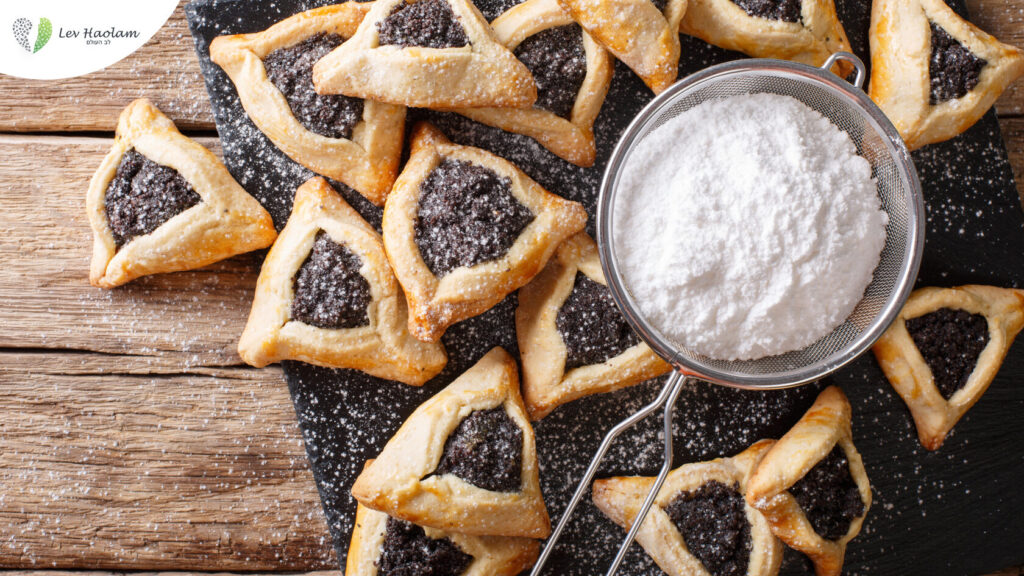
A plate of Oznei Haman cookies with poppy seeds

Do you like cookies? Then you’ve going to love Oznei Haman!

Celebrate the Purim festival with delicious Oznei Haman cookies! Oznei Haman, Hamentaschen. Whatever name you use, you need to make these famous cookies inspired by the events of the Purim story! During the rule of King Achashverosh of the Persian Empire, a plot was hatched by his evil advisor, Haman, to destroy the Jews. A series of events occurred in which the future Queen would turn out to be Esther, a Jewish girl, who along with her cousin, Mordechai, the leader of the Jews, managed to foil Haman’s wicked plans. Purim is celebrated by Jewish people all around the world....
Sabich sandwich with egg and vegetables

There’s a new player on the Israeli food scene, Sabich!

With its origins going back hundreds of years to Iraqi Jewry, Sabich has been transformed from a traditional Shabbat morning breakfast to an Israeli street food snack that rivals falafel! From the Jewish homes of Baghdad to the Streets of Israel. The ingredients of Sabich slow-cooked hard-boiled eggs, and deep-fried aubergine would make up the traditional Shabbat morning breakfast for the Jewish communities of Iraq. As those who observe Shabbat are not permitted to light a fire on Shabbat, the aubergine would be pre-fried before Shabbat. The eggs were prepared as part of the main meal for Shabbat day. This...
Golden flaky borekas filled with cheese

Borekas: Savor these flaky, delicious Israeli pastries!

When you need something tasty, filling, delicious, and a great value, borekas are the answer to hunger pangs! From cheese to mushrooms to squash and even pizza, Borekas are a delicious Israeli treat. Discover the Delicious Legacy of Borekas: A Rich Culinary Heritage Originating from the diverse culinary traditions of Israel, borekas have a past that dates back centuries. Some trace borekas’ roots to Sephardic Jewish cuisine, while others attribute their creation to Turkish or Balkan influences. Regardless of their origins, borekas are a delicious part of Israeli cuisine, beloved for their versatility, flavor, and comforting appeal. A simple yet...

Producers

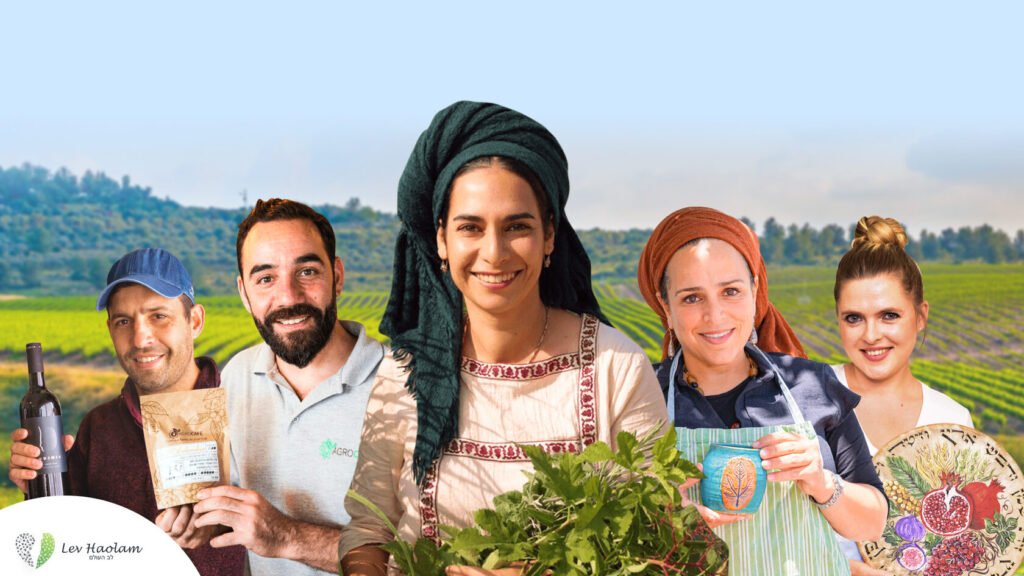
Explore the stories of Israeli farmers and artisans behind our products, from olive groves to handmade crafts in Israel, Judea, and Samaria.
Lavie Liqueurs bottles displayed on a wooden table

Discover the deliciousness of Lavie Liqueurs!

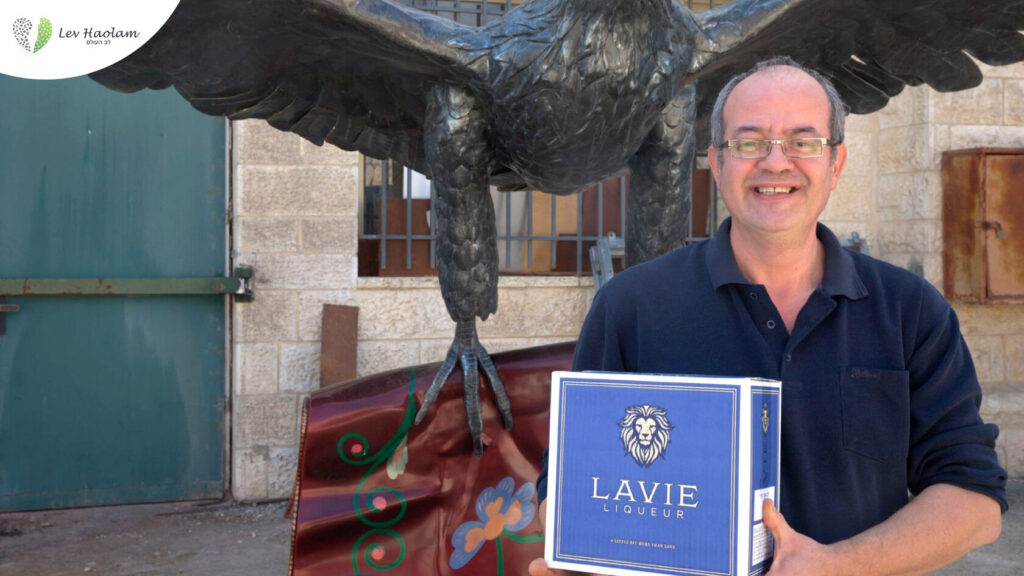
​ When Asher returned to Israel, he studied Food Science, and in 1988, when he completed his studies, he had the good fortune to marry his wife Veronique. They have been blessed with three children and, as of this count, four grandchildren! Asher settled into family life and began work with an established and well-known Jerusalem bakery, Berman’s Bakery. While employed at Berman’s Bakery, Asher took a wine-making course to build on his knowledge learned in Bordeaux. He embraced wine-making as a favored hobby in his spare time. Soon, his home became his winery! A winery in North Israel approached...
A collection of Itamar's natural perfumes on display

Uncover the magical fragrance of Perfumes Itamar!

​ In 1984, he and six other families moved to Itamar to settle the land and reintroduce a Jewish presence there. He dreamt of providing a livelihood and economic independence for people in the area, and that’s where the story of Perfumes Itamar begins. When Shimon and his family arrived in Itamar, it was a bare hilltop with stunning views of Samaria and little else. The families who settled in Itamar faced multiple challenges, from security to lack of infrastructure and jobs. Shimon and others worked odd jobs and often traveled great distances to find employment. After some years of...
Boutique chocolate crafted in Jerusalem

Boutique chocolate from the Holy Land! 

​ The spirit at Cocoa Forest is one of empowerment and collaboration! Yaara continues experimenting with unusual and unexpected pairings, but now she does it with the assistance of her outstanding employees! She encourages everyone to be part of the creative process. Yaara is obsessed with using the best quality ingredients she can source. She believes that if a recipe calls for fruit, it has to be real Israeli fruit picked at its peak and freeze-dried to preserve and maintain its flavor. Her raw materials are sourced from Israeli farmers and the best chocolate producers in the world. The cocoa...
Adanim Tea offers a taste of the Holy Land

Get to know the wonderful flavors of the Holy Land with Adanim Tea!

​ When Ariel’s father moved his family to Ofra in Samaria, it marked the turning point for the pioneering family. They wanted to live a life closely connected to the Holy Land. Professor Alon believed that cultivating native herbs and others that grow well in Israel would have the basis for exquisitely flavorful herbal teas. His intuition proved correct and led to the establishment of Adanim Tea. The business began as many family businesses do, with passion and an adventurous spirit. Ariel recalls how in the early days, he and his father would harvest herbs and flowers and dry them...
Biblical Studies

Dive into the world of Biblical Studies with our collection of insightful articles. Discover historical contexts, cultural nuances, and the timeless wisdom of the Hebrew Bible. Perfect for those seeking a deeper connection to Israel's rich heritage.
A family lighting candles to welcome Shabbat

Get to know Shabbat, the holiest day of the week!

“And God blessed the seventh day and He hallowed it, for thereon He abstained from all His work that God created to do.” Bereshit (Genesis) – Chapter 2:3 The history of Shabbat goes all the way back to the beginning… Immediately after God completed his momentous creation of the world, he prescribed Shabbat, the seventh day, as the day of rest. At the time, there were no precise instructions as to how to observe Shabbat. It became clearer with the giving of the Ten Commandments to the Jewish people at Mount Sinai. There, in the fourth commandment, it says, “Remember...
Why Giving is Taking

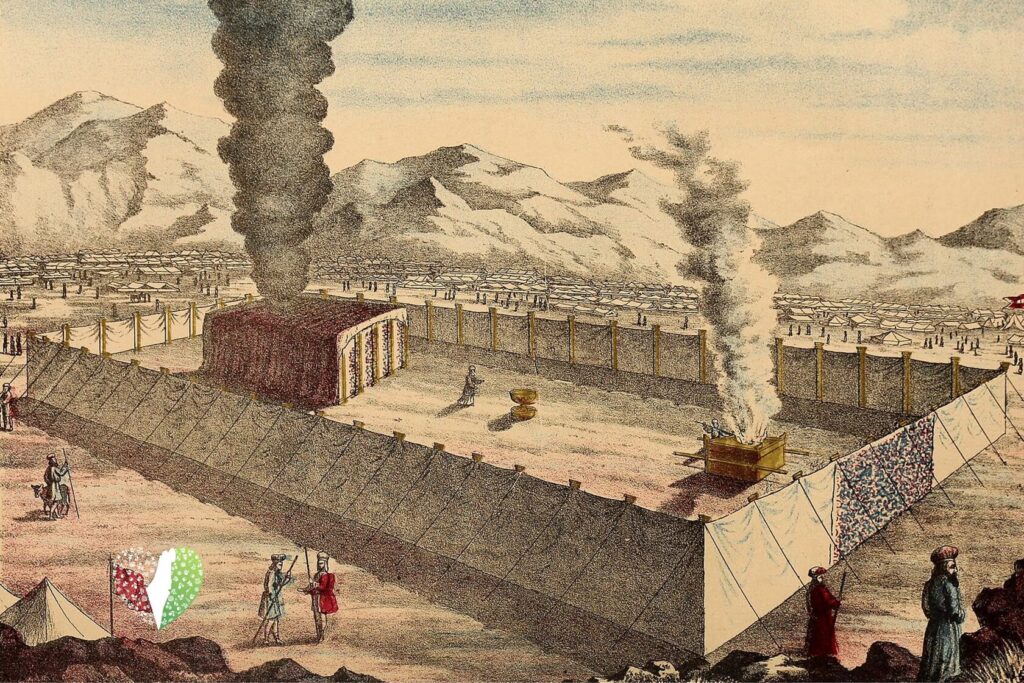
This week’s portion of the Torah deals with God’s detailed instructions to Mozes on how to build the Tabernacle - a portable sanctuary where the Almighty could dwell while the Israelites were travelling in the desert after they left Egypt. The chapter opens with His commandment to all of the Israelites to contribute materials needed for the building of the Tabernacle. The phrasing of the commandment, however, is weird: It is said “take for Me a contribution”, not “give Me a contribution”. Why “take” instead of “give”? It is known that wording in the Torah is never arbitrary; every letter, not just every word, is meaningful (Jewish mysticism teaches that God created the world while playing with the letters of the Torah. So why this choice of words? Is it some Freudian slip? Or does the phrasing imply that when we give to Him, we actually take, get something for ourselves? Later in the Torah we hear God commanding to all of the Israelites give certain (really small) amount of silver to the building of the Tabernacle. There, He orders taxation - contribution to a common cause that should be paid by everyone. As opposed to it, in the opening phrase of the chapter He stresses that contribution of the materials should be voluntary and only from the people “whose heart wants it”.Let us ask ourselves a question: Why at all donations are needed? The Almighty, who needs help of His creatures to build Himself a home, - is not the whole idea kind of weird? The meaning of the Hebrew word “contribution”, used in this chapter, is “elevation”. The idea is clear: When we contribute to a holy cause, we elevate - both the part of the material world that we give and our own soul. Maybe that is what God really wants from us: Not wood, silver, or linen, but an elevating act. He wants us to be partners in creation. By asking us to help Him, He gives us a chance to leave the physical realm and join Him into the Holy. However, you need “to want with your heart” to give this contribution. What distinguishes an elevating act of donation from a merely physical act of transfer of goods or money is the intention - the intention to become the Almighty’s partner. But how exactly “giving” is “taking”? One of the ancient Jewish sources (the Midrash Vayikra Rabbah 30:13) takes note of this strange phraseology and comments, “by donating towards the Tabernacle it’s as if you are taking Me!” In the Proverbs (19:17) a similar idea is expressed in almost businesslike terms: “One who gives graciously to the poor becomes God’s lender”. We kind of strike a deal with God: by giving money to charity, we lend Him money, helping Him take care of the needed. So, one of the ways to explain how “giving” is “taking” is this: God will pay off His debt to you, and pay off generously. Jewish sages also explain, that since everything in this world comes from God, you need to give Him His part in order to be able to use - to take - yours. Now, when the contribution is done, you can take the rest. One of the forms of the Hebrew word “give” in the Torah - “ונתנו” - is a palindrome, it reads the same backwards and forwards. Giving is a sort of action that contains the opposite - receiving - in it.
People praying at the Western Wall in Jerusalem

At the Western Wall, you can feel the ancient Biblical history of Jerusalem!

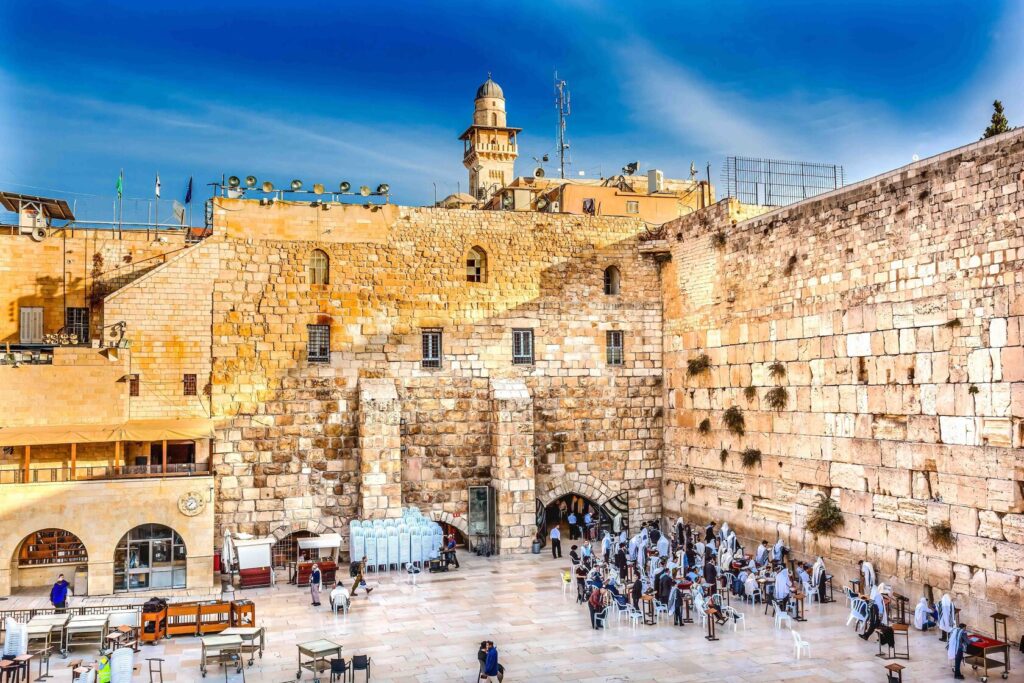
2,000 Years Old and counting. This is the Western Wall! The Second Temple stands proudly in Jerusalem. Yet King Herod decides to make his Temple even grander and begins a vast expansion project of the Temple Mount. The Western Wall forms one of the retaining walls that surround the Temple Mount. The Romans besieged Jerusalem and destroyed the Holy Temple. However, the outer wall, today known as the retaining wall, survives. Why would the Romans leave it standing? They wanted a tangible reminder that the mighty Roman Empire had succeeded in destroying the Holiest structure in all of Judaism. And...
The Seven Species of Israel displayed in a vibrant arrangement

The Seven Species of Israel: A Taste of the Promised Land

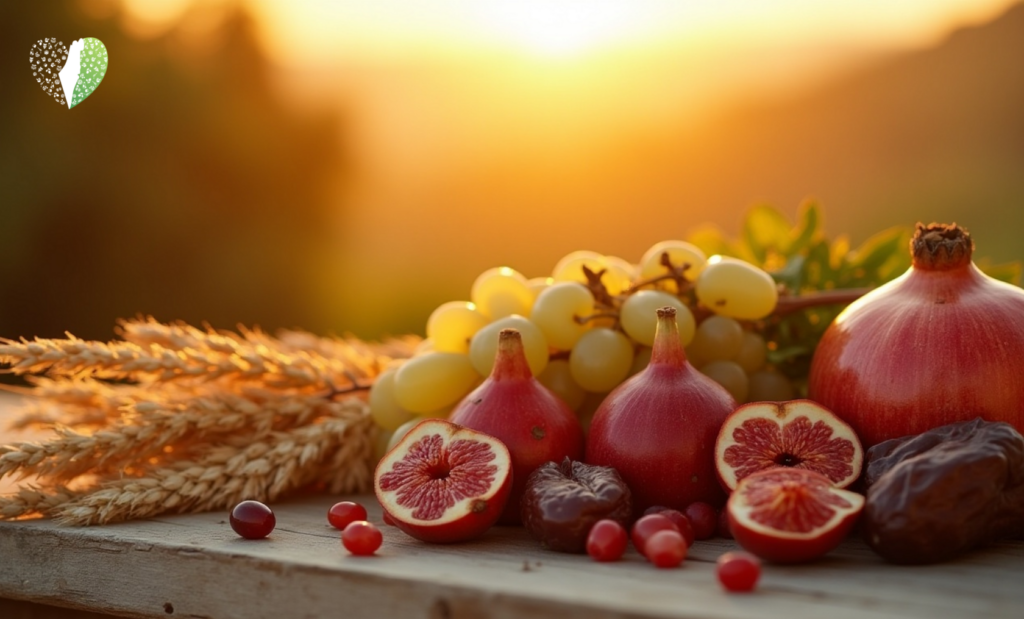
​ Wheat is one of the world’s oldest cultivated grains – and in Israel, it grows across rolling hills and valleys, just as it did in biblical times. It is the grain of sustenance and structure – used in the Temple offerings, baked into matzah at Passover, and braided into challah for Shabbat. It represents abundance, but also the human role in refining the raw gifts of nature. Wheat reminds us: we harvest with our hands, but we nourish with our hearts. ​ Barley matures earlier than wheat and was traditionally seen as the grain of the poor, used in...

Israeli Culture and Traditions

Dive into the vibrant world of Israeli culture and traditions. Learn about the diverse customs, foods, and crafts that make Israel unique. Support local artisans and small family businesses by engaging with their stories and products. Through your involvement, you help sustain these cultural treasures and keep the heritage alive for future generations.
Diverse group studying religious texts in a sunlit classroom.

Discovering the Meaning of Massah in the Bible

Rephidim was one of the stops on the Israelites’ journey and is associated with the events at Massah. This area, like much of the desert, was harsh and unforgiving, testing the faith and determination of the people. The events at Rephidim highlight the ongoing struggle between doubt and faith, a theme that resonates throughout historical narratives and is still remembered reflection today. Massah’s narrative is intertwined with the wider story of the Israelites’ departure from Egypt, a journey marked by trials and intervention. It serves as a reminder of the importance of faith and trust in moments of uncertainty, a...
Menorah candles glowing during Hanukkah celebration

Get to know Hanukkah, the festival of lights!

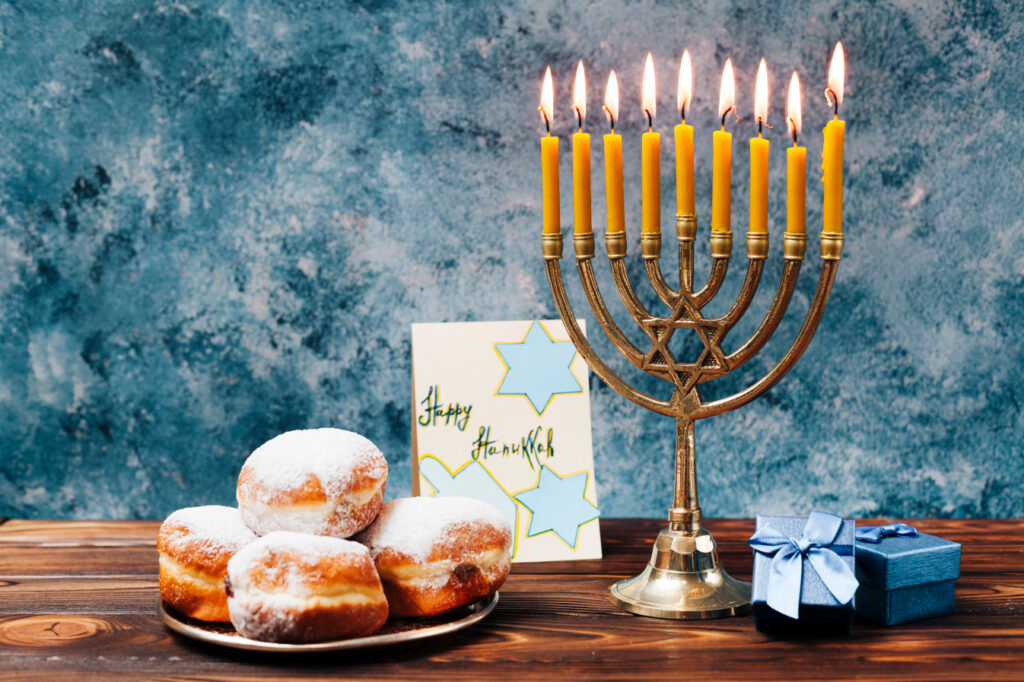
The History of Hanukkah Over 2000 years ago, Israel was ruled over by the Syrian-Greek empire. The Hanukkah story begins under the reign of King Antiochus III, from 222-186 B.C.E. At the beginning he was somewhat favorable to the Jewish people but when he lost a battle against the Roman Empire and was forced to pay heavy taxes, he passed the burden onto the people. When Antiochus died he was succeeded by his son Seleucus IV, who began to oppress the Jews of the Holy Land. Rather than physical oppression, he attempted to strip the Jews of their Judaism through...
Trees blooming during Tu Bishvat celebration

Did you know that Israel’s trees have their own New Year? It’s called Tu Bishvat!

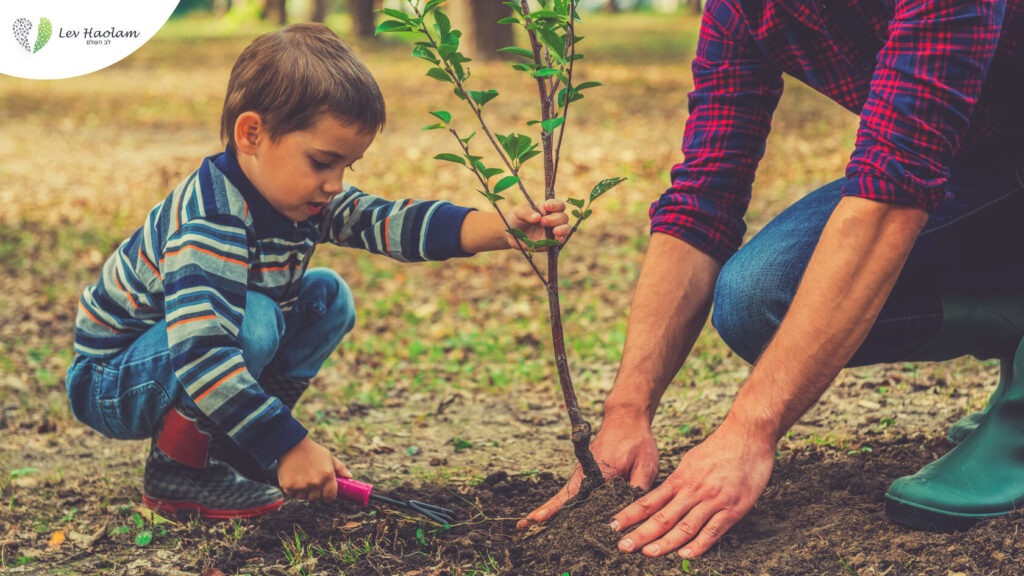
Tu Bishvat is an important date in Israel’s agricultural calendar. Knowing when the agricultural year begins enabled the farmers to correctly observe the sabbatical laws of the land! Like everything in Israel, there are rules and laws to follow! In agriculture, we observe the laws of Shmitta. We follow an agricultural cycle of seven years, the last of which is called the Shmitta year (sabbatical) in which are instructed to leave our fields and let the land rest, unworked, for the entire year. During Temple times, in the first, second, fourth, and fifth years of the cycle, farmers were required...
Colorful Purim festival celebration with costumes

Learn all there is to know about the joyful festival of Purim!

The events of the Purim story are documented in Megillat Esther, the Scroll of Esther. Here it is in a nutshell. During the 4th century BCE, there were 127 lands under the rule of the mighty Persian Empire, led by King Achasverosh. In one incident, his Queen, Vashti, refused to heed his commands and was executed, leading to a beauty pageant in which the new Queen would be chosen and crowned. That Queen would turn out to be a young Jewish girl called Esther (who, at this point, did not reveal her Judaism to the King). Next saw the appointment...

Places of Israel

Journey through Israel's sacred and historic landscapes, from Jerusalem to the Judean desert. Explore sites rich in biblical history and cultural heritage.
Israeli archaeologist examines ancient ruins at Chorazin archaeological site.

Discovering the Layers of Chorazin

The black basalt used in Chorazin’s construction is typical of the region, known for its volcanic activity. This stone gives the ruins a distinctive appearance, setting Chorazin apart from other historical sites. The town’s mention in historical texts, alongside Capernaum and Bethsaida, highlights its role in the Galilee region. These towns were part of a network of settlements that contributed to the area’s economic and cultural vibrancy. What Is Chorazin? Chorazin, or Korazin, is a town located north of the Sea of Galilee. It is best known from references in the Gospels, where it is mentioned as one of the...
Israeli archaeologist examining ancient ruins in the Negev desert.

The Historical Canaan: Modern Perspectives

Historically, Canaan connected Egypt to the south with Mesopotamia to the north. Its strategic position attracted diverse cultures and was a target for conquest by empires like Egypt, Assyria, and Babylon. The fertile lands and access to the sea supported trade and agriculture, appealing to various peoples. Historical Overview of Canaan In historical texts, Canaan is portrayed as a land of promise and conflict. It stretched along the eastern Mediterranean coast, from Lebanon into Israel and westward into Jordan. Various ethnic groups and city-states thrived here. Rich and fertile, Canaan was vital for trade and agriculture. It was a significant...
Israeli archaeologist examines ancient ruins at Pithom, Egypt with tools nearby.

Unveiling Pithom in Historical Context

The story of Pithom highlights the hardships faced by the Israelites under Egyptian rule. The city’s construction symbolizes their oppression and the harsh conditions they endured. Despite these challenges, the Israelites’ journey is one of hope and liberation, culminating in their eventual freedom from bondage. Pithom serves as a reminder of the strength required to overcome adversity, reflecting the spirit of the Israelite people and their aspirations for a better future. What Is Pithom? Pithom is first introduced in historical texts as a city built by the Israelites during their time in Egypt. It served as a storage city, crucial...
Middle-aged Israeli man reads ancient manuscript in Jerusalem library.

Understanding the Importance of Mahanaim in the Bible

The site was part of the territory of Gad, highlighting its role in tribal divisions. This underscores its central place in society, impacting culture and politics as an administrative hub. As a city entrusted to the Levites, Mahanaim had responsibilities for duties and education, emphasizing its role in maintaining practices. Its strategic location also made it a key player in regional politics, facilitating interactions between groups and serving as a center for governance. What Is Mahanaim? Mahanaim is introduced in ancient texts as a site of significant events. The name itself means ‘two camps,’ indicating diverse experiences. Located east of...

Lev Haolam

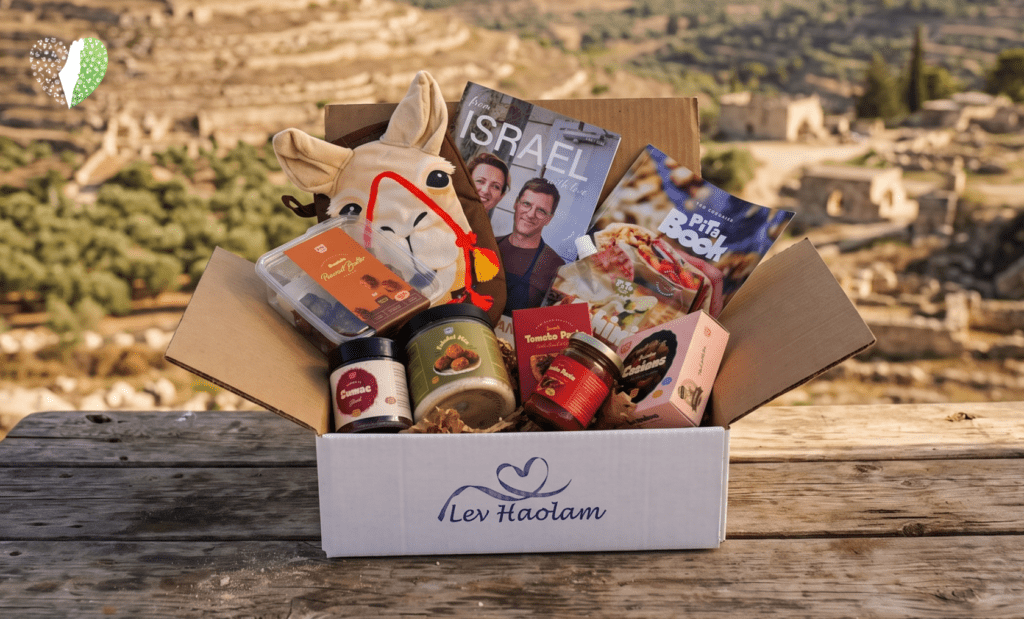
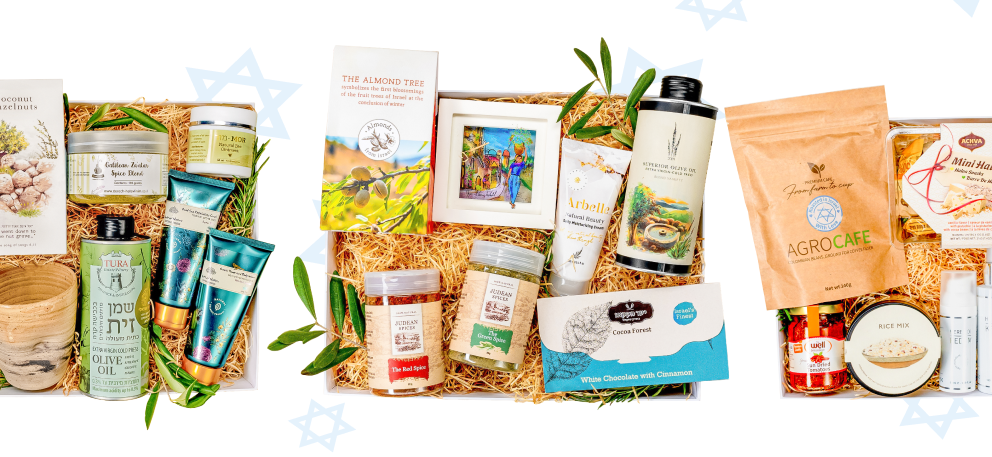
Lev Haolam offers a unique way to support Israeli families, farmers, and small producers through monthly surprise boxes, fostering global connections to the Holy Land.
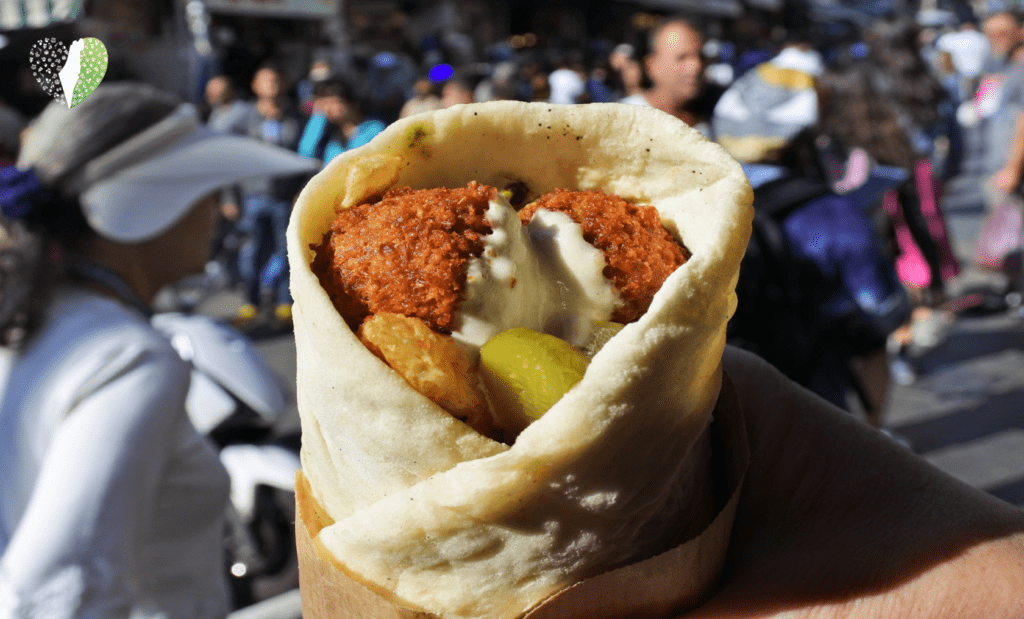
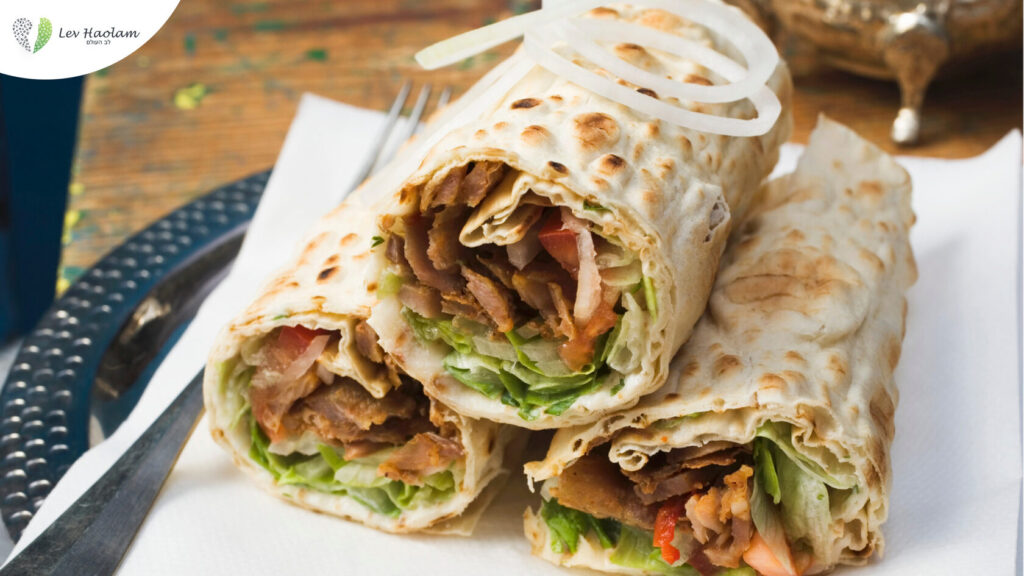
Delicious falafel wrapped in a soft pita bread

Everything in a Pita: Rediscover Your July Box

More Than Bread ​ At first glance, pita seems wonderfully ordinary. It’s served at family dinners, packed into school lunches, sold at roadside falafel stands, and found on almost every Israeli table. Whether paired with hummus, grilled vegetables, shawarma, or simply dipped into olive oil and za’atar, pita has become an inseparable part of everyday life. Its story, however, stretches back thousands of years. The Hebrew word pat, meaning “piece of bread,” appears in one of the Bible’s earliest stories of hospitality. In the Book of Genesis, Abraham welcomes three strangers into his tent beneath the oaks of Mamre and...
People unboxing Israeli products with joy and excitement

Sharing the love for Israel!

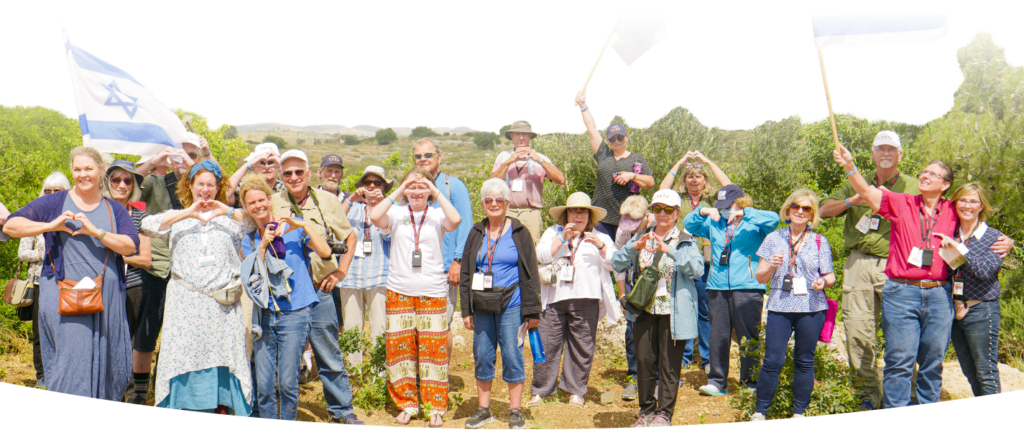
We live and breathe Israel. From our offices and warehouse in Kfar Etzion, just south of Jerusalem, we travel to find talented pioneers and artisans to discover their wonderful products, hear their stories, and see how we can support them in developing the beautiful Jewish communities of Judea and Samaria, the Galilee and the Golan Heights. The importance of the Holy Land to the Jewish people and its connection to the Bible is engrained in all that we do. Since Lev Haolam began, we have sent over 1,380,000 boxes filled with incredible Israeli products to subscribers around the world. We...

You achieve the strongest bond with Israel, regardless of any distance. 

How do we support small businesses in Israel? With your help! No matter where you are in the world, you can play an active part in supporting hundreds of pioneers and small business owners across the Holy Land! Your subscription enables us to make significant orders for the wonderful products of these talented artisans, giving them a vital economic boost to their business and giving us access to a whole variety of Israeli products to share with you! From fine wines, pure olive oils, delicious snacks, fruits, and nuts, to jewelry, Judaica, and more, we’re bringing the best of Israel...
Jewish pioneers working together during challenging times

A look back at 2023 with Lev Haolam

Despite the difficulties of the war, we still managed to keep going and do whatever we could to support the pioneers of the Holy Land! Here’s what we managed to achieve in 2023: Here are some of the goals that pioneers managed to achieve through sales in the Lev Haolam shop! Many of our suppliers and their families were also deeply impacted by the devastation of Oct 7, 2023. Some lost family members, others left their families to rush to the frontlines and have been serving with the IDF ever since, and of course, their small businesses were also hit....

Recipe

Discover a variety of Israeli recipes that bring the rich flavors of the region to your home. Each recipe supports local producers and artisans, offering a taste of Israel's culinary heritage.
A beautifully braided Challah loaf on a wooden board

Learn how to bake delicious Challah Bread!

With our expert recipe, you too can enjoy delicious Challah bread at your own table! Ingredients: 2.2 lbs (1 kg) 80/20 Hebron wholewheat flour (80% whole wheat, 20%regular flour)2 tablespoons dry yeast2 teaspoons baking powder¼ cup of lemon juice or apple cidervinegar1 tablespoon Dead Sea salt4 tablespoons honey½ cup Hebron olive oil2 large eggs + 1 egg for glazing3 cups of water, as needed Preparation: Pour all ingredients into a stand mixer bowl fitted with a dough hook and add enough until the dough comes together and becomes uniform.Cover the dough with a towel and let it rise for 90...
A bowl of vibrant red sumac spice with a wooden spoon

Learn how to cook delicious Israeli-style Sumac chicken!

Ingredients: Chicken Thighs – 2 pounds (breast is fine just be aware it cooks quicker and won’t be as juicy!)Olive Oil – 4 tbspSumac – 1 1⁄2 tbspGarlic – 4 cloves minced or crushedCumin – 1⁄2 tspAllspice – 1⁄2 tspGround Cinnamon – 1⁄4 tsp Salt – to tastePepper – to tasteLemon Juice – 4 tbsp1 Red Onion – slicedPine Nuts – 2 tbsp Steps: In a bowl, pour in the lemon juice; 3 tablespoons of the oil; sumac; crushed garlic, cumin, allspice, and cinnamon. Mix it well and then add the chicken pieces to the bowl.Season with salt and pepper...
Honey pecan pie with an Israeli twist

Come and make an Israeli-inspired Honey Pecan Pie!

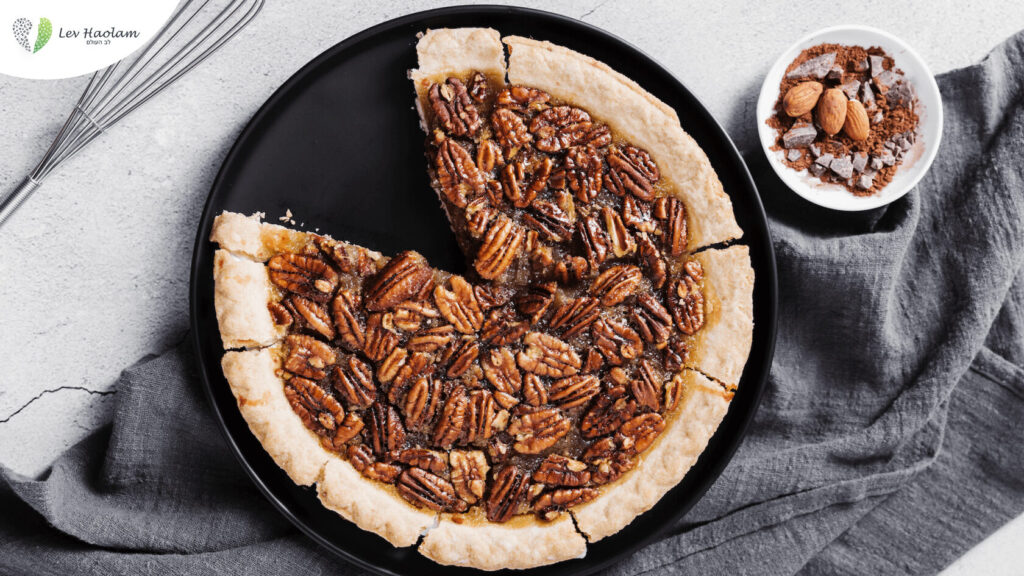
Are you ready to make Israeli-style Honey Pecan Pie?! Gather your ingredients and let’s get baking! Serves: 4-6 servings Ingredients: 4 large eggs1 cup of chopped caramel-coated pecans1 cup of light corn syrup1/4 cup of white sugar1/4 cup of packed brown sugar2 tablespoons of melted butter1 teaspoon of vanilla extract1/2 teaspoon of salt1/4 cup of runny honey1 9-inch unbaked pastry shell Method: Preheat your oven to 350°F (175°C). In a large bowl, mix the eggs, pecans, corn syrup, white sugar, half of the melted butter, vanilla extract, and salt. Stir together until they are well incorporated. This mixture will be...

Make chicken shawarma, the Israeli street food favorite at home!

​ With The Most Authentic Gift Box Directly From Israel ​ Your Bond With Israel is Crucial Now Support Israel and Forge Your Bond Dear Supporter of Israel,Welcome to Lev Haolam, the leading subscription box service based in Israel, bringing you the finest treasures from the Holy Land.We invite YOU to join our Israeli Family, where you can share your support and love for Israel and feel the love back. Join our members helping over 1820 heroic artisan families, revitalizing the Holy Land with farming and crafts, producing olive oil and dates, honey and chocolate, salt and spices, tea and...

Jewish Mysticism and Symbolism

Delve into the fascinating realm of Jewish Mysticism and Symbolism, where ancient traditions meet profound cultural insights. This category explores the mystical aspects of Judaism, offering a window into the spiritual and symbolic practices that have shaped Jewish life for centuries. From the mystical teachings of the Kabbalah to the symbolic meanings behind Jewish rituals, uncover the layers of meaning that continue to inspire and connect communities worldwide.
Symbols of heritage in everyday home settings

Sacred Symbols in Everyday Life: How Heritage Finds a Place in Our Homes

The Language of Symbols Sacred symbols say more than we can fit in a paragraph. They carry stories across generations, and every home translates them a little differently. Three appear again and again in Jewish life and Israeli craft: the pomegranate, the Tree of Life, and Hebrew letters themselves. Each symbol holds a universe – historical echoes, spiritual teachings, and everyday wisdom for how to live. The Pomegranate: Abundance You Can Hold The pomegranate appears in Scripture and traditional art as an emblem of fullness and blessing. It’s been said – poetically, not mathematically – that a pomegranate holds 613...
Pomegranate split open revealing seeds

The Pomegranate Secret: Ancient Symbol, New Year Hope

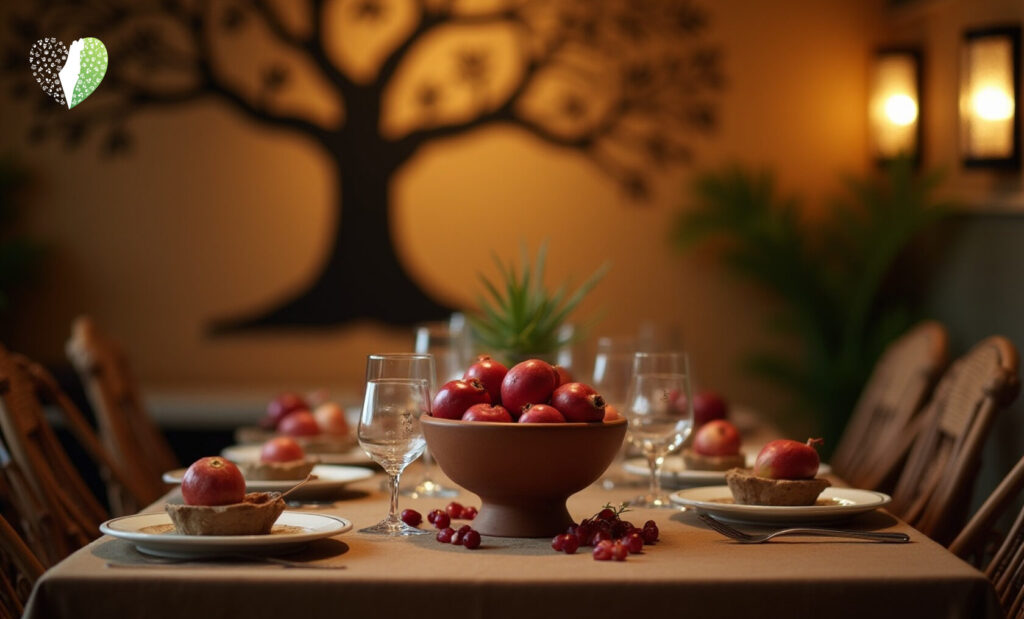
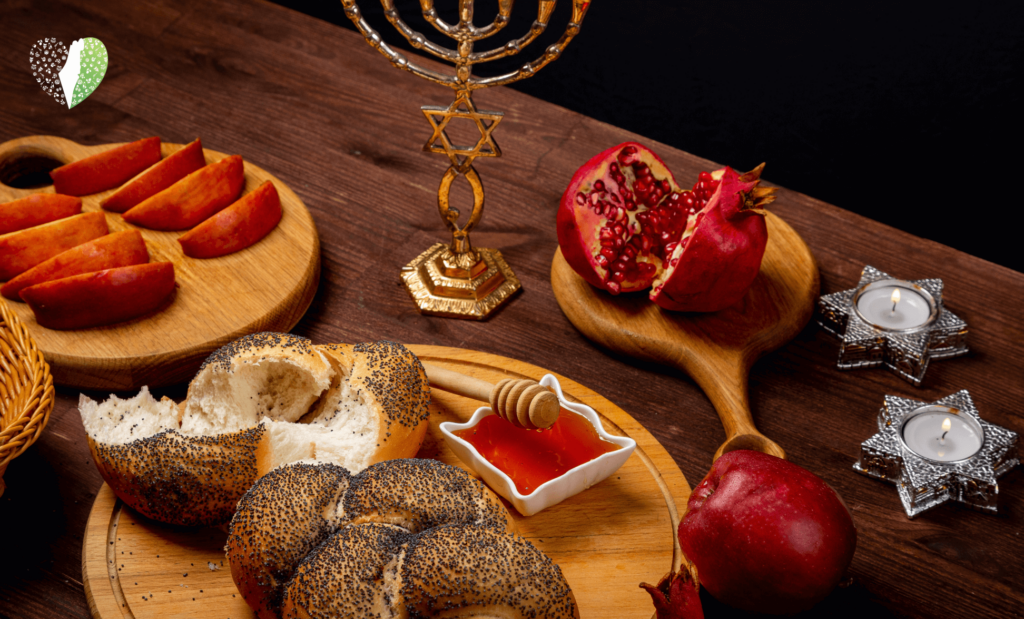
Tradition at the Table As Rosh Hashanah approaches, Jewish homes across Israel and the world fill with the scents and sights of holiday traditions: apples dipped in honey, round challah loaves, and pomegranates shining like jewels at the center of the table. When families gather, the ritual begins. Parents slice open the fruit and pass its seeds to their children with the blessing: Every seed becomes a prayer for good deeds and abundance in the year ahead. The act is simple, yet profound – linking grandparents to grandchildren, faith to tradition, the past to the future. 👉 Tip: If you’ve...
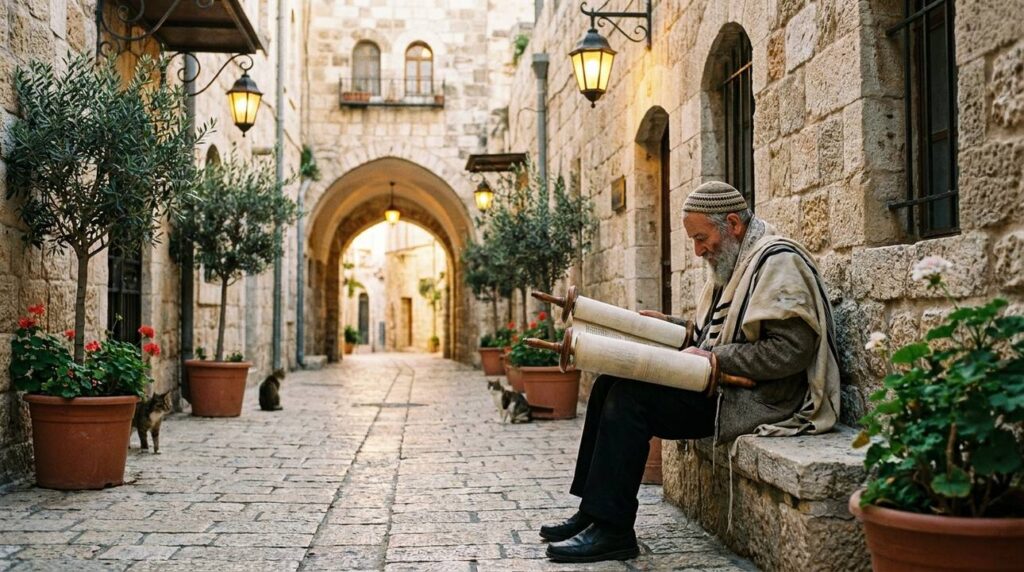
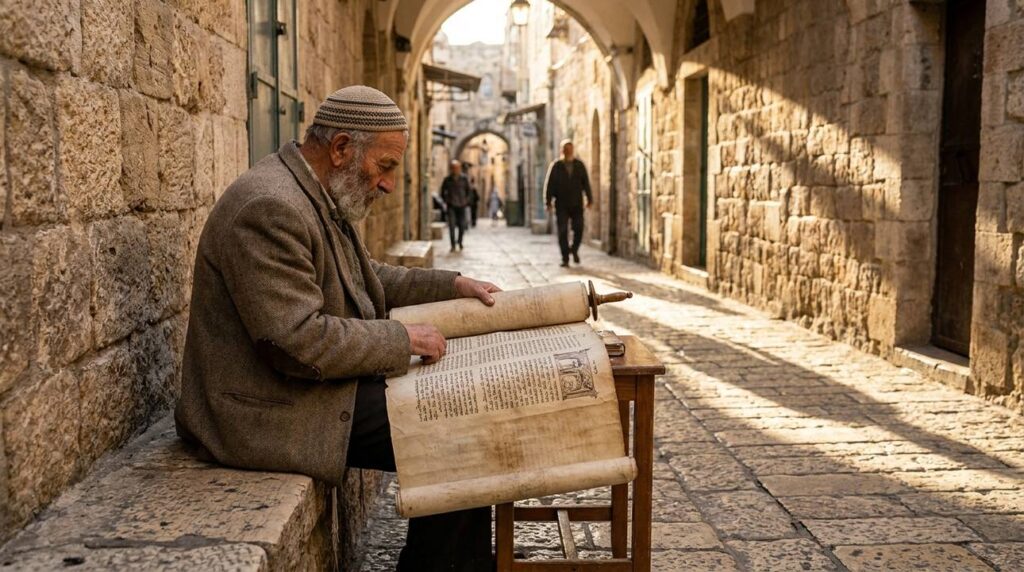
Elderly Jewish man studies ancient Hebrew scroll in Jerusalem alley.

Understanding Ezekiel’s Vision: The Wheel Within a Wheel

Ezekiel’s account is rich with imagery, including the four living creatures and the intricate wheels, each element contributing to the overall message of divine presence and order. By examining these symbols, readers can gain insight into the ways in which the divine interacts with the world and influences human affairs. This exploration invites a deeper engagement with the text and its enduring relevance in spiritual discourse. Ezekiel’s Vision: The Biblical Account In the passage from Ezekiel 1:4-28, the prophet describes a scene where he sees a ‘wheel within a wheel’. This section stands out due to its vivid and detailed...
Elderly rabbi studying ancient texts in a dim, traditional study room.

Unraveling the Mystical Meaning of Ezekiel

Who Was Ezekiel in the Bible? Ezekiel was a Hebrew prophet during the Babylonian exile of the 6th century BCE. His role was pivotal in communicating divine messages to the Jewish people during a time of turmoil. Ezekiel’s prophetic career began around 593 BCE, and he was among those exiled to Babylon after the siege of Jerusalem. His messages often focused on hope and restoration. His profound visions are unique among the prophets, combining vivid imagery with spiritual teachings. Ezekiel sought to convey the power and presence of the Divine, even in exile. Ezekiel’s messages were delivered during a period...

Surprise Boxes & Products

Delight in Lev Haolam's monthly surprise boxes, featuring a curated selection of artisan goods, delicious foods, natural cosmetics, and unique crafts from small Israeli producers.
Handmade Israeli products displayed on a wooden table

Our Most Unique Handmade Israeli Products

5 Unique Handmade Products in Our Gift Box from Israel When you subscribe to the monthly gift box from Lev Haolam, you’ll receive a package containing unique Jewish or Israeli products. You can find food products, cosmetics, houseware, wine, jewelry, art, Judaica, and more. We meet with local businesses to get you the best honey, chocolate, tea, spices, and fragrances. Here are our five unique handmade artisan crafts: We are privileged to work with hundreds of Israel’s most talented artisans who produce a huge variety of products. Faced with so much choice, leave it to us as we craft themed...
Boxes of joy from the Holy Land delivered worldwide

2023: Even more boxes of joy delivered from the Holy Land!

In 2023 we sent out 12 unique themed boxes to our subscribers around the world. Inside were products that took members on a memorable journey of discovery through the Holy Land! Let’s Unbox! Explore some more of our favorite boxes of 2023 which brought so much joy and inspiration from the Holy Land to subscribers around the world! Our first box of 2023 was inspired by the promise God made to our forefathers, Abraham, Issac, and Jacob in which he said that he would bring their descendants into “A land flowing with milk and honey.” (Deut. 31:20). The Land of...
beautifully crafted surprise package with Israeli products

Take a journey through 2023’s surprise packages!

Our Favourite Boxes of 2023 These were the boxes that took our subscribers on a journey of emotions, in which their relationship with Israel was strengthened. The products brought Israel and its pioneers directly into the homes and hearts of subscribers around the world. A package in honor of the creation of the world, the Creation package was designed to commemorate the seven days of creation through seven symbolic products, created with love in the Holy Land. On Day one, God created light, and so can you with these beautifully decorative candles by Safed candles. On Day Two the waters...

Discover the wonderful gifts of the Holy Land!

​ With The Most Authentic Gift Box Directly From Israel ​ Your Bond With Israel is Crucial Now Support Israel and Forge Your Bond Dear Supporter of Israel,Welcome to Lev Haolam, the leading subscription box service based in Israel, bringing you the finest treasures from the Holy Land.We invite YOU to join our Israeli Family, where you can share your support and love for Israel and feel the love back. Join our members helping over 1820 heroic artisan families, revitalizing the Holy Land with farming and crafts, producing olive oil and dates, honey and chocolate, salt and spices, tea and...

All About Israel

Delve into the fascinating world of Israel, where ancient history meets vibrant modern culture. Experience the diverse traditions and captivating stories of its people.
Israeli archaeologist examining artifacts at Arabah desert excavation site.

Exploring the Arabah: From Ancient Lands to Modern Understanding

What Is the Arabah? Geographically, this desert region within the Jordan Rift Valley extends about 112 miles from the Dead Sea to the Gulf of Aqaba. The area is characterized by its stark, dramatic landscapes and unique ecology. The towering cliffs and vast sand dunes create a striking contrast against the clear blue skies, offering breathtaking views. Historically, it served as a backdrop for various events, linking narratives of nomadic life and significant journeys. It was frequently mentioned as an area traversed by travelers and leaders. This passage highlights its importance as a transit route in historical times. Arabah in...
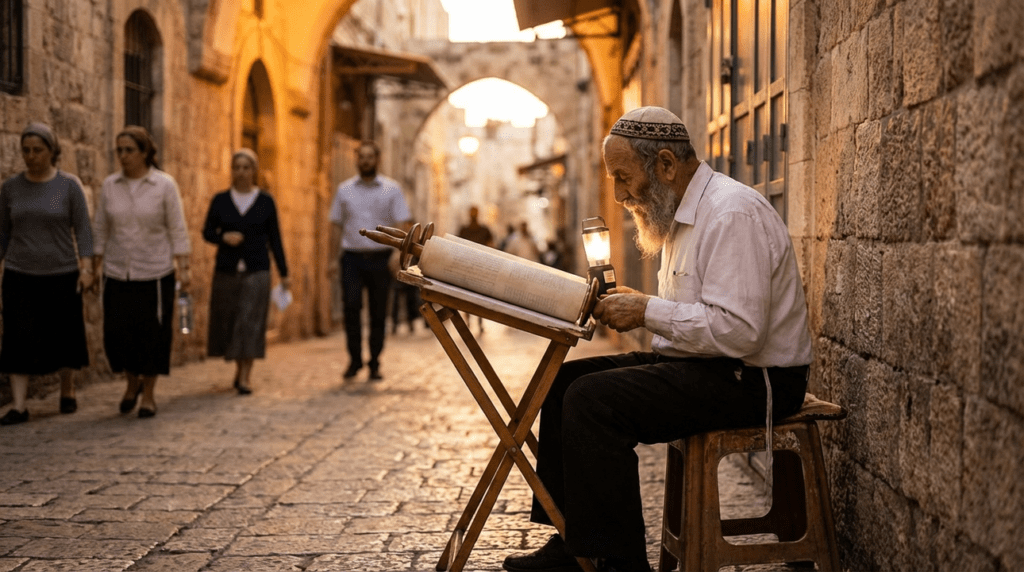
Elderly man in Jewish attire reads Torah in Jerusalem alley.

Discover Fascinating Facts About Jerusalem

A Brief History of Jerusalem Jerusalem’s history is a fascinating journey through time. It is one of the oldest cities in the world, with evidence of human settlement dating back to 3000 BCE. Around 1000 BCE, Jerusalem became the capital of Israel, and the First Temple was built, centralizing worship in the city. Throughout the centuries, Jerusalem has been a focal point for religious and cultural identity, attracting pilgrims, scholars, and rulers from all over the world. Jerusalem has been at the heart of many historical events, from the Babylonian exile to the Roman conquest. The city’s rich history is...
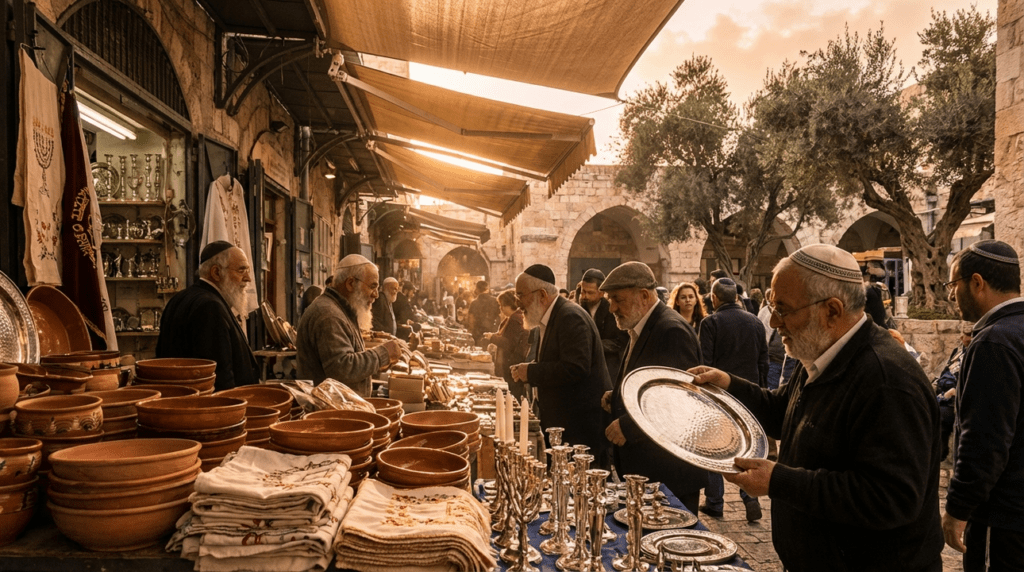
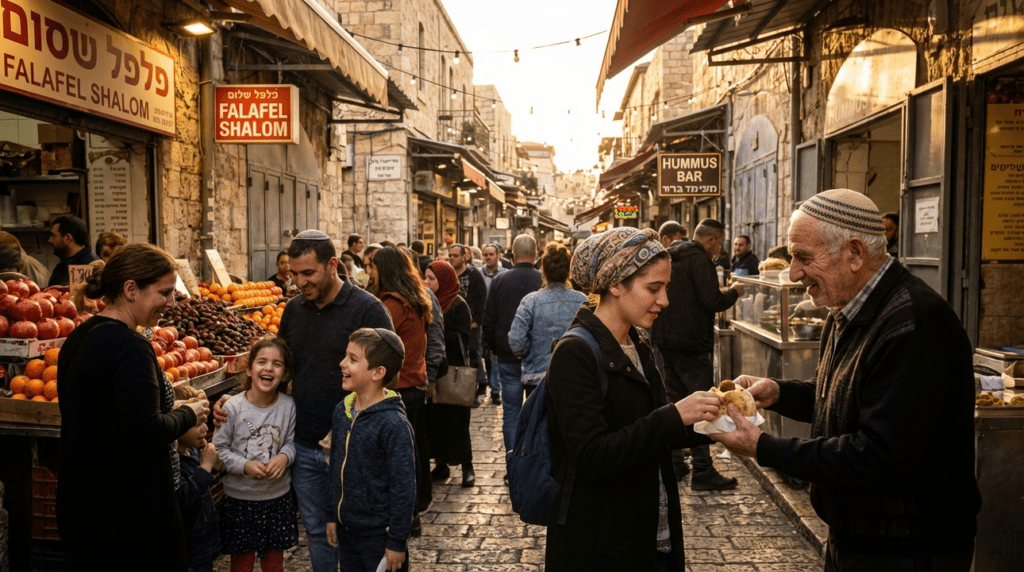
Jerusalem street market with people, stalls, menorah, and lanterns during sunset.

Must-See Places in Jerusalem for Every Visitor

This vibrant city offers an unforgettable experience, combining sacred sites with bustling markets and serene parks. The Mahane Yehuda Market, known for its vibrant atmosphere, is a must-visit for its fresh produce and local delicacies. Join us as we discover what to see in Jerusalem, ensuring your visit is memorable and fulfilling. From historical landmarks to cultural experiences, Jerusalem offers something for everyone, making it a city of endless exploration. The Old City: A Journey Through Time The Old City of Jerusalem is a historically and spiritually significant area, featuring prominent sites from religious history. Visitors can explore the Western...
Morning light over Capernaum, residents in traditional attire among olive trees.

Discovering Modern Day Capernaum: A Journey by the Sea of Galilee

In this exploration, we delve into the essence of modern day Capernaum, uncovering the stories and places that make it unique in the landscape of Israel. The site is part of the larger Galilee region, which has been a focal point for many historical events, including those involving figures like Deborah and Barak in Judges 4:6-16. Visitors can walk through the ruins and imagine the vibrant life that once filled its streets. This makes it a place where history and modernity intertwine seamlessly, offering insights into ancient and contemporary life. The Historical Significance of Capernaum Capernaum, originally mentioned in ancient...

Israeli Products and Crafts

Dive into the vibrant world of Israeli products and crafts. Our collection showcases the creativity and tradition of local artisans, offering you a chance to support small businesses and bring authentic Israeli culture into your life. From handcrafted jewelry to exquisite ceramics, each piece tells a story of dedication and passion. Join us in celebrating the beauty of Israeli craftsmanship.
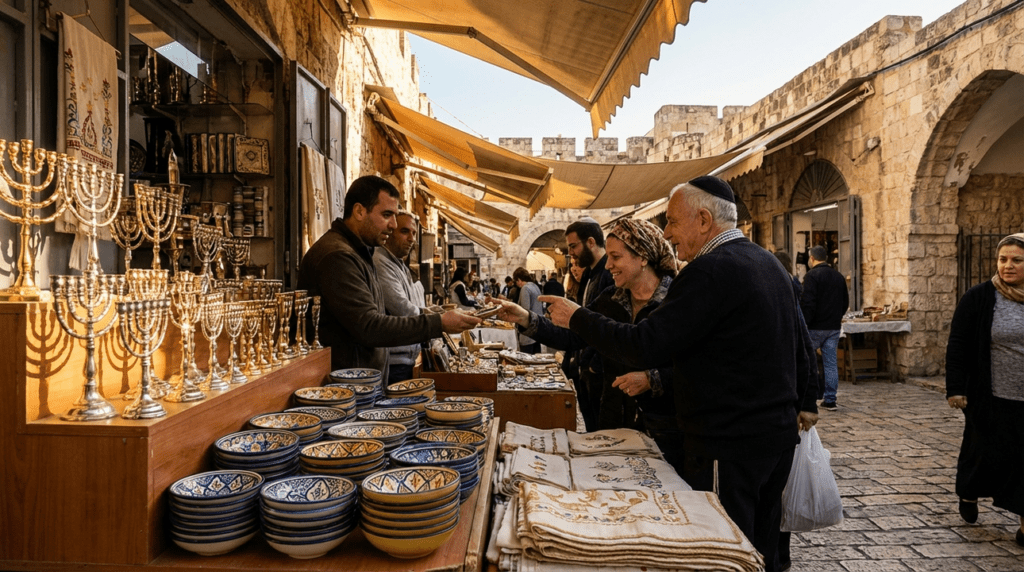
Jerusalem market scene with vendors selling traditional Israeli products.

Exploring the Best Israeli Skin Care and Craft Products

Whether you’re seeking to enhance your beauty routine or bring a touch of Israel into your home, our guide to Israeli products will inspire and connect you. These products serve as a bridge to Israel’s vibrant culture and enduring spirit. By choosing these items, you are partaking in a tradition of craftsmanship that has been passed down through generations, much like the heritage of the land itself. The Legacy of Israeli Skin Care Israeli skin care is renowned for its use of natural ingredients sourced from the land. The Dead Sea, mentioned in Genesis 14:3 as the Salt Sea, provides...
Elderly Jewish woman prepares food in a sunlit rustic kitchen.

Unveiling the Delight of Israeli Foods

The influence of Jewish diaspora communities, such as those from Eastern Europe and North Africa, can be seen in dishes like gefilte fish and couscous. This fusion of culinary traditions creates a rich and varied dining experience, celebrating the multicultural essence of Israel. Gefilte fish, traditionally served during Passover, is a testament to the Ashkenazi influence, while couscous reflects the flavors of North African Jewish communities. Is Israeli Food Mediterranean? Israeli cuisine can often be classified as Mediterranean, known for its reliance on fresh vegetables, olive oil, and grains. Dishes like hummus and falafel are staples that showcase regional influences....
Jewish market in Jerusalem with vendors selling crafts under olive trees.

Exploring Jewish Businesses and Crafts Near You

These creations often draw inspiration from biblical narratives, such as the story of Ruth and Naomi, who exemplify loyalty and faith. Supporting these artisans helps keep these stories alive and vibrant. The Uniqueness of Israeli Crafts Israeli crafts carry a distinct flavor, blending ancient traditions with modern creativity. From colorful pottery to intricate embroidery, these crafts are a testament to rich Jewish heritage. Pottery, for example, has been an essential part of daily life since the time of King Solomon, who is said to have used clay vessels in his palace, as mentioned in 1 Kings 7:46. Embroidery often features...
Early morning market in Jerusalem with locals shopping traditional goods.

Discover the Best Souvenirs from Israel

Visiting Israel offers a unique opportunity to explore a land rich in history and culture. As you wander through bustling markets or serene landscapes, finding the perfect souvenir becomes part of your journey. The Mahane Yehuda Market in Jerusalem is a vibrant spot where you can find everything from spices to handcrafted goods, capturing the essence of Israeli life. In this article, we explore the best souvenirs from Israel and the stories behind them. These items capture the spirit of a nation, connecting you with its artisans and traditions. From handcrafted jewelry to artistic creations, each item carries a narrative...

Hebrew Language and Literature

Immerse yourself in the world of Hebrew language and literature. Explore stories that connect you to Israel's rich cultural heritage, supporting local artisans and their craft.

Seven INCREDIBLE facts about Hebrew you need to know!

​ With The Most Authentic Gift Box Directly From Israel ​ Your Bond With Israel is Crucial Now Support Israel and Forge Your Bond Dear Supporter of Israel,Welcome to Lev Haolam, the leading subscription box service based in Israel, bringing you the finest treasures from the Holy Land.We invite YOU to join our Israeli Family, where you can share your support and love for Israel and feel the love back. Join our members helping over 1820 heroic artisan families, revitalizing the Holy Land with farming and crafts, producing olive oil and dates, honey and chocolate, salt and spices, tea and...
Elderly Jewish scholar studying ancient texts in a dim, book-filled room.

Mastering Biblical Hebrew: Tips and Insights

Understanding the original language of these texts allows for a richer appreciation of their messages and the cultural contexts in which they were written. As learners delve into passages such as the Song of the Sea in Exodus 15, they uncover layers of meaning and historical significance. Why Learn Biblical Hebrew? Biblical Hebrew offers a direct connection to sacred texts, making it invaluable for anyone interested in theological studies or historical linguistics. Understanding the nuances of this ancient language allows for deeper insight into the cultural and spiritual contexts of the Bible. Take the word ‘ruach’, which means both ‘spirit’...
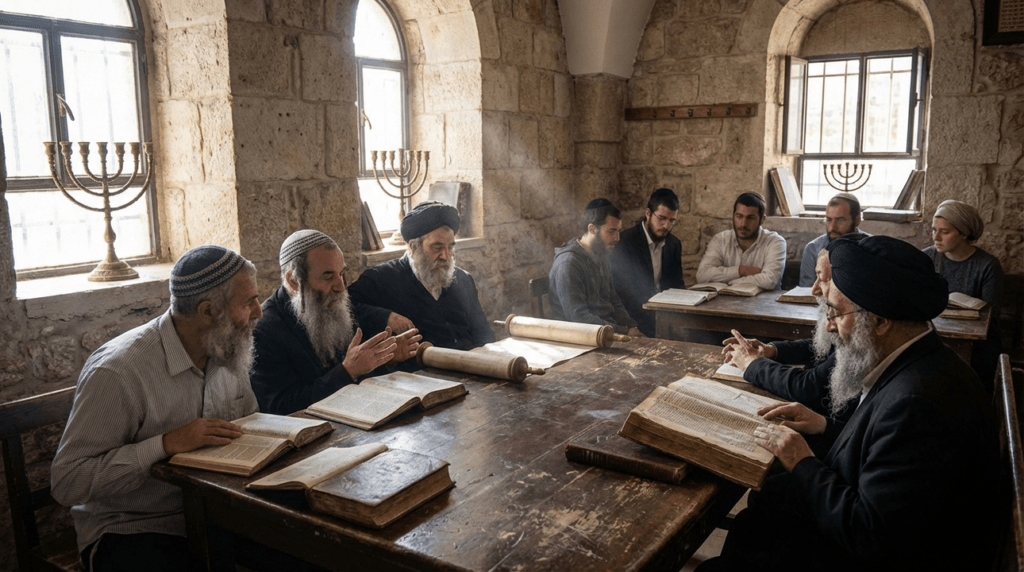
Group studies ancient texts in a Jerusalem synagogue with menorahs.

Delving into Hebrew Bible Study Insights and Language

The word ‘chesed’ appears in various contexts, illustrating themes of mercy and compassion. Understanding these nuances in the original language offers a richer perspective on the text’s messages. Learning Hebrew allows readers to appreciate the Bible’s literary beauty and cultural depth. This link to the original language enhances the spiritual experience, allowing for a more intimate relationship with the biblical narratives and teachings. The Hebrew Bible’s poetry, such as in the Song of Songs, uses wordplay and parallelism that are best appreciated in its original form. Engaging with these texts in Hebrew allows for a deeper appreciation of their literary...
Elderly Jewish man in Jerusalem reads Torah in cobblestoned alley.

Understanding the Aleph: More than a Hebrew Letter

The Aleph, the first letter of the Hebrew alphabet, holds profound meaning in Jewish culture. It is not just a character in writing but a symbol of unity and spiritual gateways. Often worn as a necklace, it serves as a reminder of connection and beginnings. In Jewish mysticism, Aleph is linked to the concept of ‘Ein Sof’ (the Infinite), representing the divine presence. In this article, we delve into the deep cultural and spiritual significance of Aleph, a timeless symbol cherished in the Jewish tradition. Its role in Kabbalah, for instance, highlights its importance as a bridge between the earthly...

Charity and Social Responsibility

Discover the impact of your support on small businesses and artisans in Israel. Learn how your contributions help sustain local producers and preserve cultural heritage.
Middle-aged Jewish man planting olive trees in a grove.

The Impact of Supporting Israel Charities

These organizations are not just about giving—they enable you to engage with Israel’s vibrant society and contribute to its future. By supporting these initiatives, you become part of a movement that values inclusivity, innovation, and the well-being of all individuals, helping to build a brighter tomorrow for generations to come. Understanding Israel Charities Israel is home to numerous charitable organizations dedicated to various social causes, from education to health care. These charities work to bridge gaps in society, offering support where needed. They are essential in maintaining social equity and promoting well-being. Organizations like Yad Sarah provide medical equipment to...
Elderly Jewish men in kippahs picking olives in a grove.

Supporting Israel through Meaningful Contributions

Discover how you can meaningfully contribute to Israel by supporting local communities and projects. Your involvement helps foster development and strengthens connections, much like the historical alliances formed during the reign of King Solomon. In this article, we explore various ways to provide assistance, focusing on programs that leave a lasting impact. The aim is to offer guidance on donating effectively, ensuring your support reaches those who truly need it. Supporting Israel reflects values found in Proverbs 19:17 about kindness and generosity. Your contributions can echo the collaborative spirit of King Solomon’s alliances, which brought prosperity and peace to his...
Actors in ancient Israelite garments reenact Passover story in Jerusalem.

Understanding the Enslavement of the Israelites in Egypt

The story of the Israelites’ enslavement in Egypt is a cornerstone of Jewish history. According to Genesis 46, the Israelites initially moved to Egypt during a famine, invited by Joseph, who had risen to power there. Over generations, their growing numbers led to fear among the Egyptians, resulting in their enslavement. Understanding how they came to live in a foreign land and eventually be enslaved offers insights into their enduring spirit and resilience. This account is deeply embedded in religious and cultural memory, reminding us of their journey from hardship to hope. The Arrival in Egypt The narrative begins in...
Vendors and customers at Jerusalem market during early morning setup.

Discover Ways to Support and Help Israel

Supporting Israel is a journey of connection and discovery. By contributing to its communities and businesses, you can make a tangible difference today. For instance, purchasing products from local artisans not only supports their livelihood but also preserves traditional crafts. You might explore the bustling markets of Jerusalem or Tel Aviv, where each purchase tells a story of resilience and creativity. Explore the various ways you can engage and help Israel thrive. From volunteering in community projects to participating in cultural exchanges, each action strengthens the bond between you and the vibrant Israeli society. Support through engagement and economic contribution...

Jewish Community and Charity

Join us as we delve into the vibrant stories of the Jewish community, highlighting how your support helps sustain local traditions, families, and artisans. Through our insights, learn about the meaningful connections and mutual benefits that arise from supporting Israeli producers and artisans. Celebrate the spirit of community and discover how your involvement contributes to preserving heritage and fostering growth.
Outdoor market in Jerusalem with stalls selling traditional Israeli foods.

Discover Food Companies that Support Israel’s Vibrant Communities

Supporting Israel through your everyday food choices can create a meaningful impact. Many companies not only provide delicious products but also contribute to sustaining Israeli communities and small businesses. For example, by choosing products from companies like Strauss Group, founded in 1933, you help support a legacy of innovation and community support. In this blog, we explore these food companies committed to making a positive difference. Your choices help sustain a vibrant cultural heritage. This commitment echoes the collaborative spirit seen in the Bible, such as when Nehemiah rebuilt the walls of Jerusalem with the help of the community (Nehemiah...
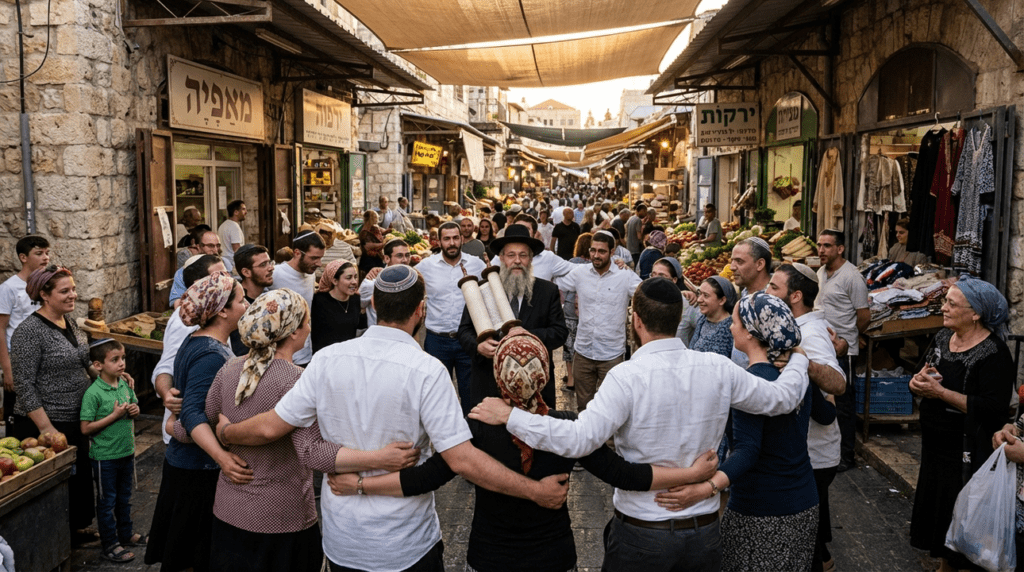
Group in Jerusalem market wearing kippahs and headscarves at dusk.

Supporting Israel: Unity and Commitment

The phrase ‘Stand with Israel’ transcends simple expressions of allegiance. It has evolved into a powerful declaration of solidarity, symbolizing a collective commitment to support and sustain the Israeli community. This is reminiscent of the unity shown during the Exodus, as described in Exodus 12:37-38, when the Israelites left Egypt together. In this article, we delve into the significance behind these words and the meaningful ways individuals can join this global movement. Standing with Israel can involve participating in cultural events, supporting local businesses, or engaging in educational programs that highlight Israel’s rich history and culture. Each of these actions...
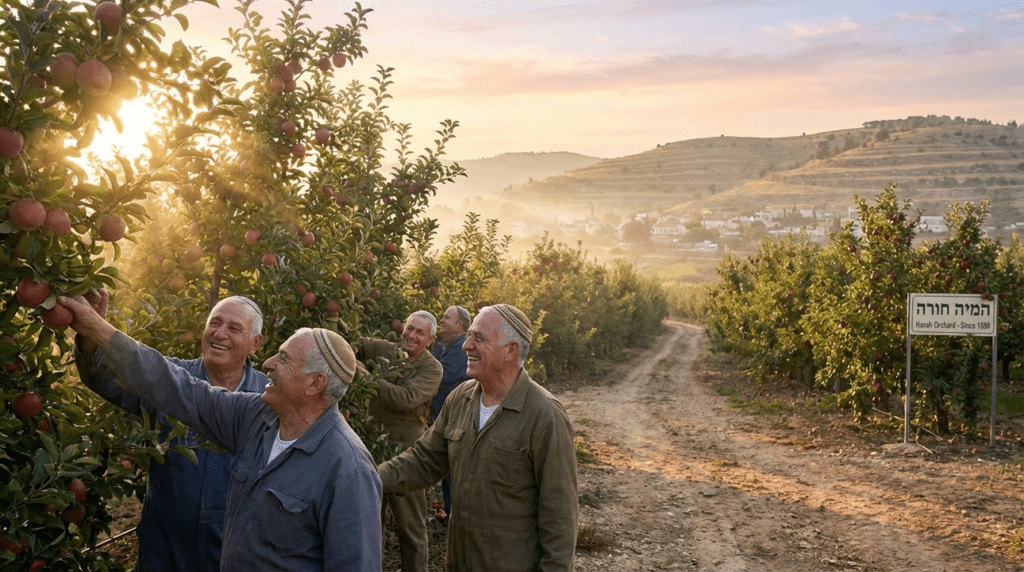
Israeli farmers in kippahs picking apples in sunlit orchard.

Discover How Apples Support Israel’s Communities

Apples have long been cherished in Jewish culture and tradition. In the Bible, apples are often associated with beauty and love, as seen in the Song of Songs 2:3, where the beloved is compared to an apple tree among the trees of the forest. From biblical times to modern practices, they hold a special place in the hearts of many. During Rosh Hashanah, apples dipped in honey symbolize the hope for a sweet new year, a practice deeply rooted in Jewish customs. Their importance extends beyond simple consumption—they symbolize sweetness and health, especially during holidays like Rosh Hashanah. Ultimately, apples...

Kosher Products and Traditions

Delve into the fascinating realm of kosher products and traditions. Discover how these time-honored practices bring authentic Israeli flavors to your table while supporting local artisans. From traditional recipes to modern interpretations, learn how kosher products connect us to a rich cultural heritage. Your support helps sustain small family businesses and keeps these cherished traditions alive.
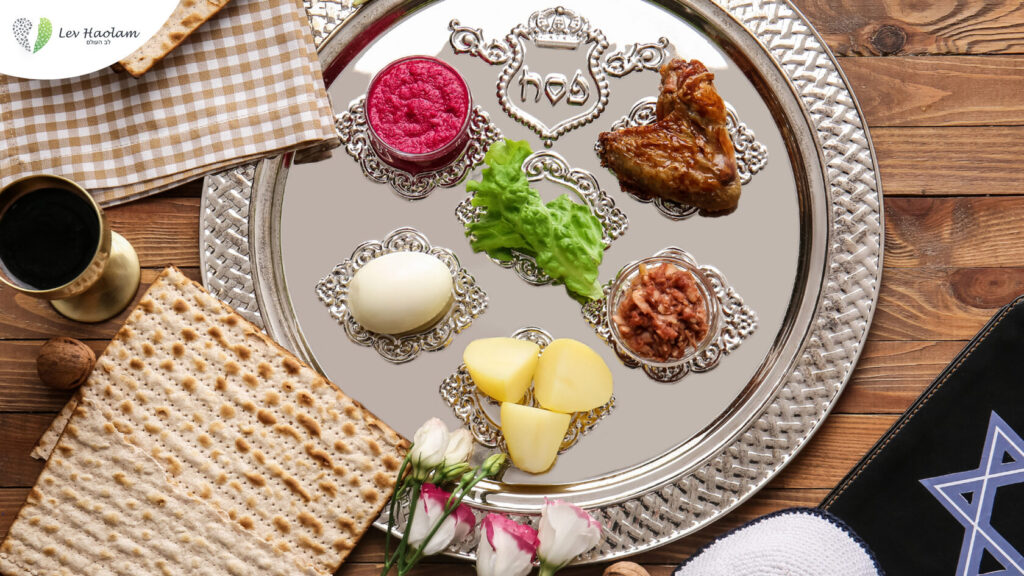
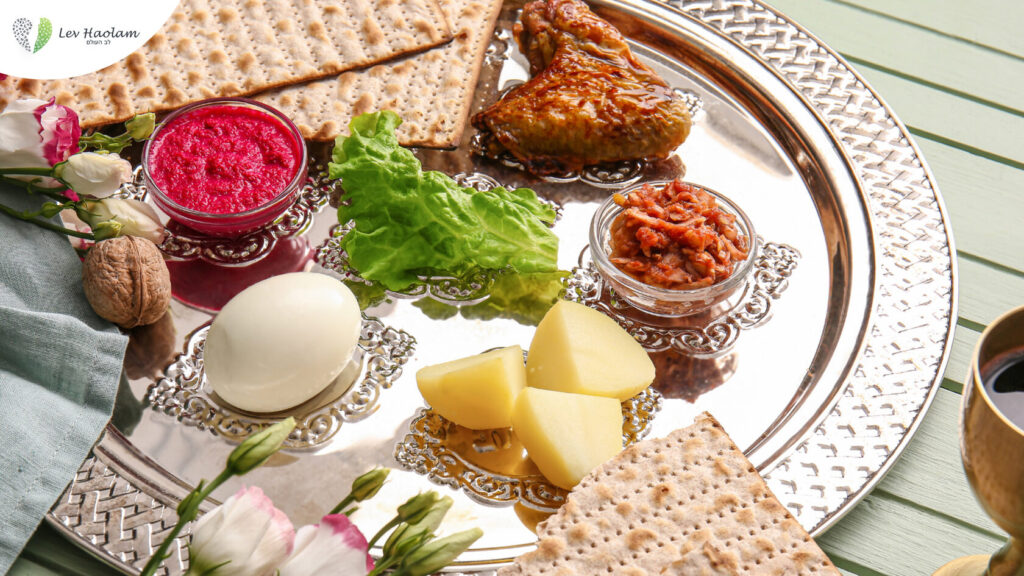
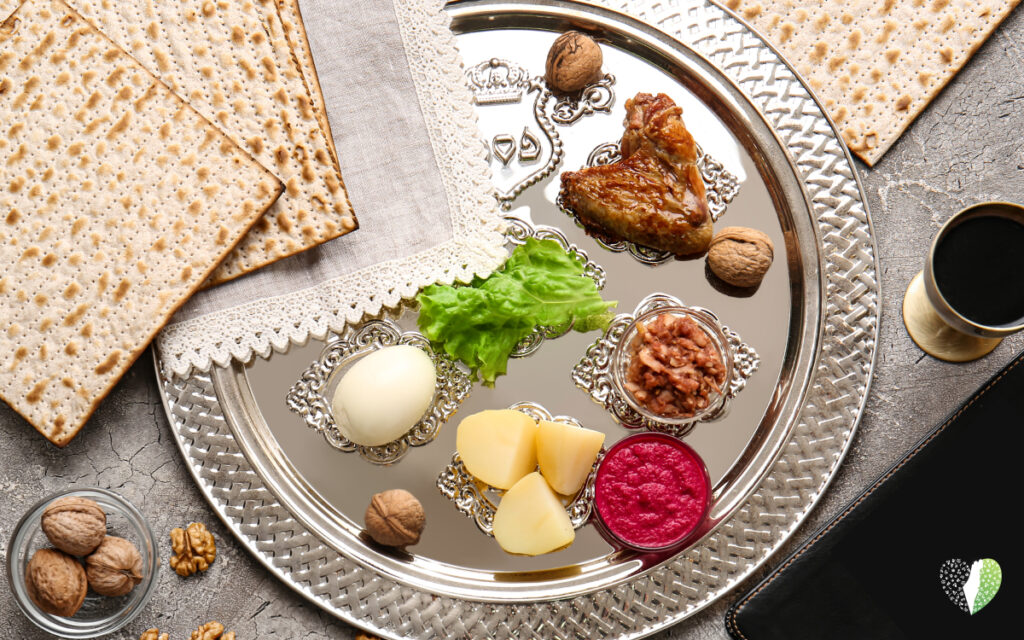
Traditional Passover Seder plate with symbolic foods

Let’s get cooking for Passover!

From Matzo to horseradish, these are the foods we eat at the Passover Seder! At the table on Seder night lies the symbolic foods of Passover which are placed on the Seder Plate, along with plenty of Matzah and wine! Some items may vary slightly, as with all different cultures and traditions, but the concept remains the same: celebrating our freedom! Here are some items you can expect to find at a traditional Passover Seder. Matzah This is our bread for the next seven days (eight if you don’t live in Israel). These thin cracker-like matzos come in round and...
Passover Seder table set with symbolic foods

Prepare for an Authentic Passover Seder with Lev Haolam

Enhance your Seder meal with Lev Haolam’s authentic products, making your Passover celebration rich in meaning, symbolic foods, and connection to Jewish heritage. The Spiritual Meaning of the Passover Seder Meal The Passover Seder meal is more than just a meal; it is a sacred ritual that unites families in reflection on the story of the Exodus. As the first event of the eight-day Passover holiday, the Seder marks a time for Jewish families to connect with their heritage, celebrate their freedom, and reaffirm their faith. This meaningful meal centers around the retelling of the Exodus story and the consumption...
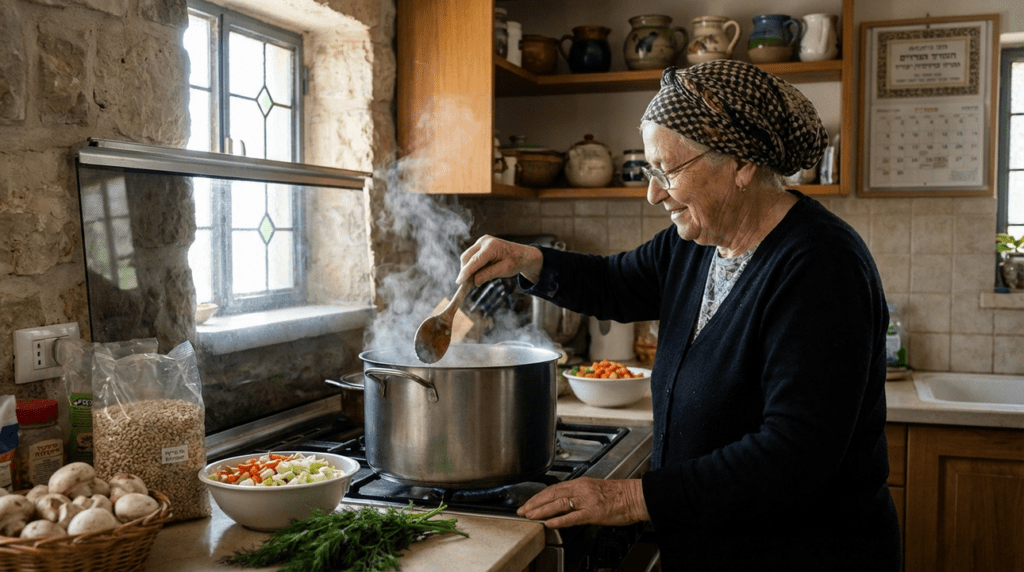
Elderly Jewish woman stirring soup in a sunny, rustic kitchen.

Exploring Jewish Mushroom Barley Soup: A Kosher Tradition

The Basics of Kosher Cooking To fully grasp the significance of mushroom barley soup in kosher tradition, one must understand the dietary laws known as kashrut. These laws are derived from the Torah, with detailed instructions found in Leviticus 11 and Deuteronomy 14. Kashrut dictates which foods are permissible and how they should be prepared, ensuring adherence to religious principles. Key kosher rules include the separation of meat and dairy, based on Exodus 23:19, and specific methods for slaughtering animals, known as shechita. These guidelines transform every meal into a practice of faith and tradition, reinforcing cultural identity and spiritual…

Jewish Community and Support

Dive into the heartwarming stories of Jewish communities in Israel, where mutual support and solidarity help families and neighbors thrive together.
Elderly Jewish man reading the Torah in a sunlit room.

Discovering Tikkun Olam: A Journey through Jewish Thought

The evolution of tikkun olam reflects a dynamic interpretation of Jewish values, adapting to new challenges while remaining true to its core principles. In modern times, it has become associated with social justice, environmental stewardship, and community engagement. This adaptability highlights its enduring relevance and capacity to inspire positive change. Through this exploration, we aim to deepen the understanding of how tikkun olam continues to shape lives today. The Origins of Tikkun Olam The phrase ‘tikkun olam’ first appeared in early rabbinic literature. Initially, it referred to specific legal matters addressed to maintain societal stability. In the Mishnah, a collection...
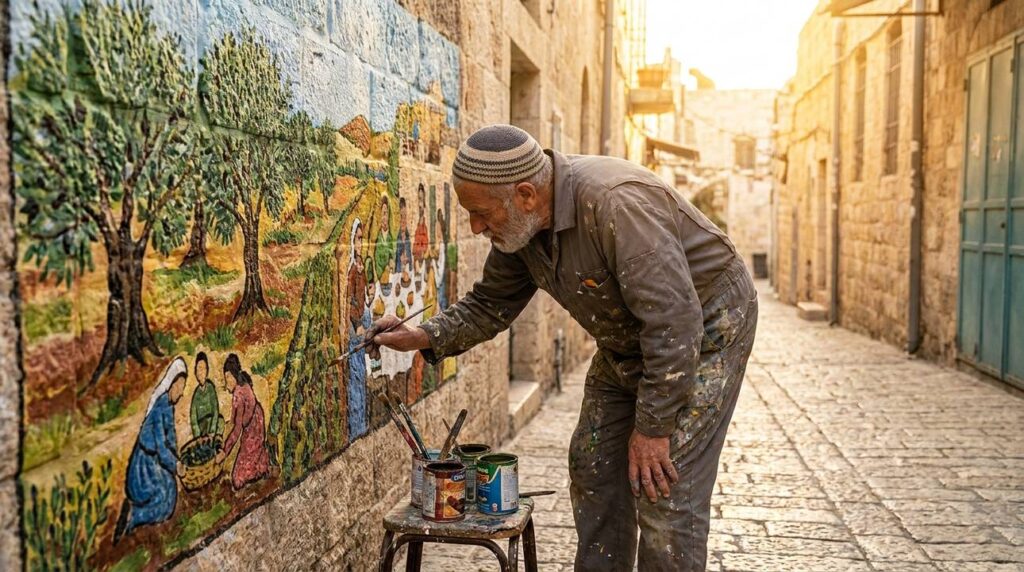
Elderly man in kippah painting a mural in Jerusalem alley.

Exploring Artists and Products Supporting Israel

Artists That Support Israel Numerous artists worldwide express their support for Israel through their creative works. These artists often incorporate themes of Israeli culture, history, and landscapes into their art, drawing attention to the beauty and diversity of the country. Through paintings, sculptures, and other mediums, they provide a visual narrative that speaks to the resilience and spirit of the Israeli people. These artworks often serve as a conversation starter, fostering understanding and connection across cultures. Many of these artists collaborate with galleries and organizations that promote Israeli art globally, ensuring that their work reaches a broader audience. Notable institutions...
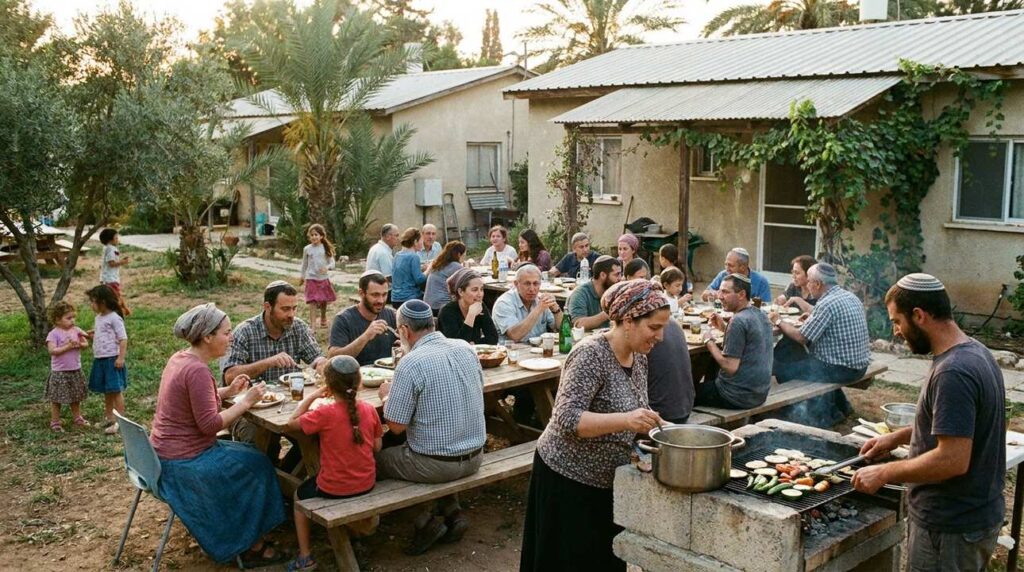
Group of people cooking and dining outdoors in a kibbutz.

Understanding the Reasons Behind Support for Israel

Jerusalem’s mention in 2 Chronicles 6:6 underscores its importance as a chosen city. This historical and spiritual significance draws many to support Israel, fostering a deep connection. The article delves into the diverse motivations for backing Israel, from cultural appreciation to economic collaboration. These relationships enrich both the supporters and the nation, creating a tapestry of connections that celebrate Israel’s unique place in the world. Cultural ties draw individuals to support Israel, a nation rich in traditions and histories. Jerusalem, a city of historical significance, has roots going back to King David’s time (2 Samuel 5:7). It’s a place where...